

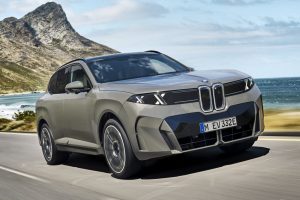


China has unveiled a new carbon-peaking action plan that targets new energy vehicles (NEVs) accounting for 30% of the country’s total vehicle fleet by 2030, reinforcing its long-term strategy to decarbonize the world’s largest automotive market.
The State Council released the “15th Five-Year Plan” Carbon Peaking Action Plan, outlining measures to help China achieve its goal of reaching peak carbon emissions before 2030.
The target implies that China’s NEV fleet will need to more than double over the next five years.
According to the Ministry of Public Security, China had 43.97 million NEVs on the road at the end of 2025, representing 12.01% of the country’s total vehicle fleet. Battery electric vehicles (BEVs) accounted for 30.22 million units, or nearly 69% of all NEVs.
Commercial Vehicle Electrification
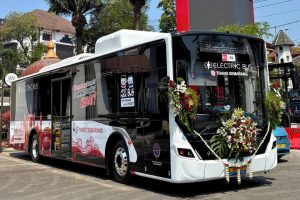
The plan also sets a target for new energy commercial vehicles to account for 25% of the fleet by 2030.
Authorities will accelerate the electrification of public-sector vehicles while promoting the adoption of new energy vehicles at construction sites, mines, ports and airports. The roadmap also supports wider deployment of new energy heavy-duty trucks.
To support the transition, the government plans to expand charging and battery-swapping infrastructure, alongside refueling facilities for green hydrogen, ammonia and methanol. The plan also calls for the development of zero-carbon road transport corridors along major freight highways.
China also intends to build zero-carbon waterway corridors and encourage vessels powered by electricity, liquefied natural gas, biodiesel and green methanol.
Broader Energy Transition Goals
Beyond transportation, the roadmap outlines several clean energy targets for 2030.
The plan aims to reduce carbon dioxide emissions per unit of gross domestic product by 17% from 2025 levels while increasing the share of non-fossil energy in total consumption to 25%.
China also plans to expand installed wind and solar power capacity to more than 2.8 billion kilowatts by 2030, while nuclear power capacity is expected to reach approximately 110 million kilowatts.
Installed new energy storage capacity is targeted to reach 300 million kilowatts, alongside approximately 160 million kilowatts of pumped-storage hydropower capacity.
Industrial Decarbonization
The action plan also includes the construction of around 100 national-level zero-carbon industrial parks and approximately 500 zero-carbon factories during the 15th Five-Year Plan period.
In addition, China plans to establish a national low-carbon transition fund to encourage private investment in carbon reduction and climate-related projects.
The roadmap also calls for continued investment in strategic industries including new energy, new energy vehicles and power batteries, while supporting emerging sectors such as hydrogen energy and green fuels.
Key industrial sectors, including steel, cement, petrochemicals and aluminum production, are also required to accelerate energy efficiency and carbon reduction measures as part of China’s broader decarbonization strategy.


