




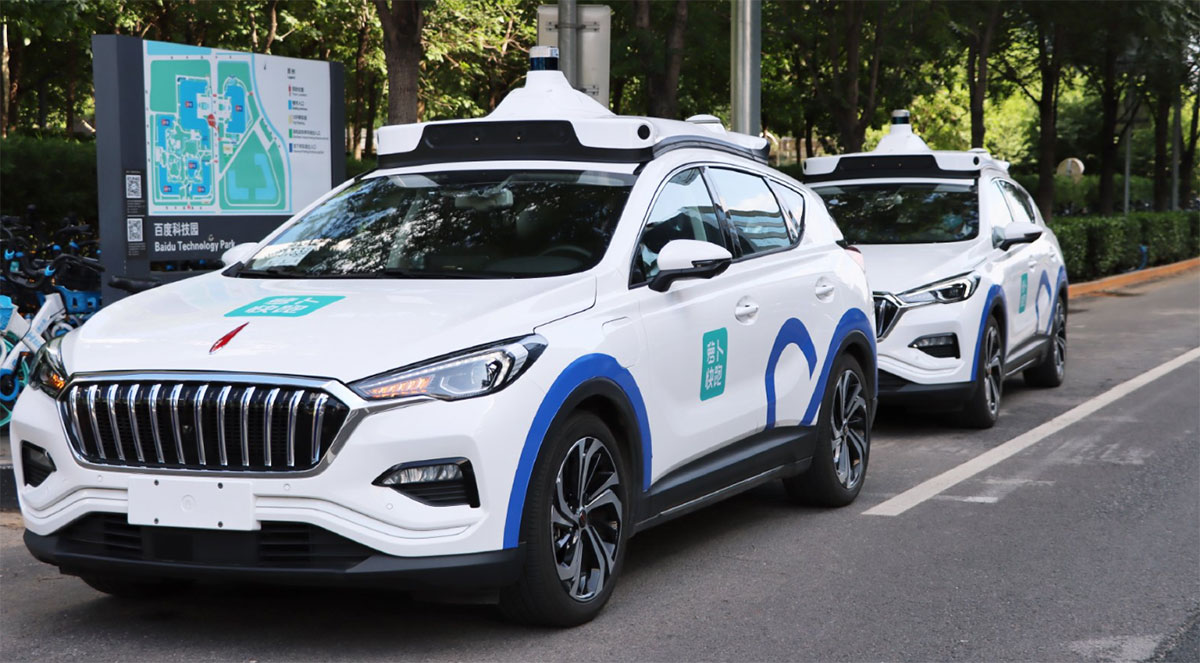
China’s autonomous driving industry continues to expand its Robotaxi operations despite heightened regulatory scrutiny following a major disruption involving Baidu’s Apollo Go service earlier this year.
The sector is currently operating under a regulatory review period after an incident in Wuhan on March 31, 2026, during which nearly 100 Apollo Go vehicles reportedly stopped operating simultaneously.
Regulatory Review Following Wuhan Incident
The disruption prompted a response from Chinese authorities, with the Ministry of Industry and Information Technology, the Ministry of Public Security, and the Ministry of Transport holding a joint meeting in mid-April to address safety concerns and require corrective measures.
According to reports from Caixin, regulators have adopted a more measured approach than some industry observers initially expected. However, restrictions on the deployment of newly added autonomous vehicles remain in place.
Industry sources cited by Chinese media indicate that many newly introduced Robotaxi vehicles are currently unable to enter passenger service as part of the ongoing review process.
Market observers expect the current regulatory period to continue through at least the end of June.
Fleet Expansion Continues
Despite the additional scrutiny, leading Robotaxi operators have continued expanding their fleets and maintaining growth targets.
Pony.ai reported that its global Robotaxi fleet exceeded 1,700 vehicles as of May 24, representing an increase of approximately 250 vehicles compared with figures disclosed in its 2025 annual report.
The company has raised its year-end 2026 fleet target to 3,500 vehicles and expects revenue to increase significantly compared with 2025 levels.
WeRide reported in its first-quarter 2026 earnings results that its domestic Robotaxi fleet reached approximately 1,000 vehicles by the end of April, an increase of about 200 vehicles since late March.
Meanwhile, Baidu said its Apollo Go service completed 3.2 million rides during the first quarter of 2026, representing growth of more than 120% compared with the same period a year earlier. Weekly peak order volumes reportedly exceeded 350,000 rides in March.
Industry Calls for Differentiated Regulation
As the regulatory environment evolves, industry executives are advocating for a framework that evaluates companies based on operational performance and safety records rather than applying uniform restrictions across the sector.
WeRide Chief Executive Officer Han Xu said autonomous driving regulation should gradually become more differentiated as the industry matures.
“We expect that as time progresses, regulation will become more differentiated based on safety performance, operational records, and technical capabilities,” Han said.
He also suggested that companies with weaker safety performance should face stricter limitations than operators with established safety records.
Focus on Safety and Commercialization
Pony.ai Chief Financial Officer Wang Haojun said stricter oversight and higher market entry requirements are a natural part of the industry’s transition from pilot projects to large-scale commercial operations.
According to Wang, companies that demonstrate strong safety performance and operational reliability are likely to be better positioned to gain public acceptance and regulatory approval as autonomous driving services expand.
The comments reflect a broader industry view that safety performance may increasingly become a key differentiator as regulators seek to balance innovation with public safety concerns.
Sector Continues Commercial Growth
China remains one of the world’s most active autonomous driving markets, with Robotaxi operators continuing to expand commercial services across multiple cities.
While the recent regulatory review has slowed the deployment of some new vehicles, fleet growth and ride volumes indicate that major operators continue to pursue long-term commercialization plans.
Industry participants are now watching closely to see how China’s regulatory framework evolves as autonomous driving services move from limited pilot programs toward larger-scale commercial deployment.