




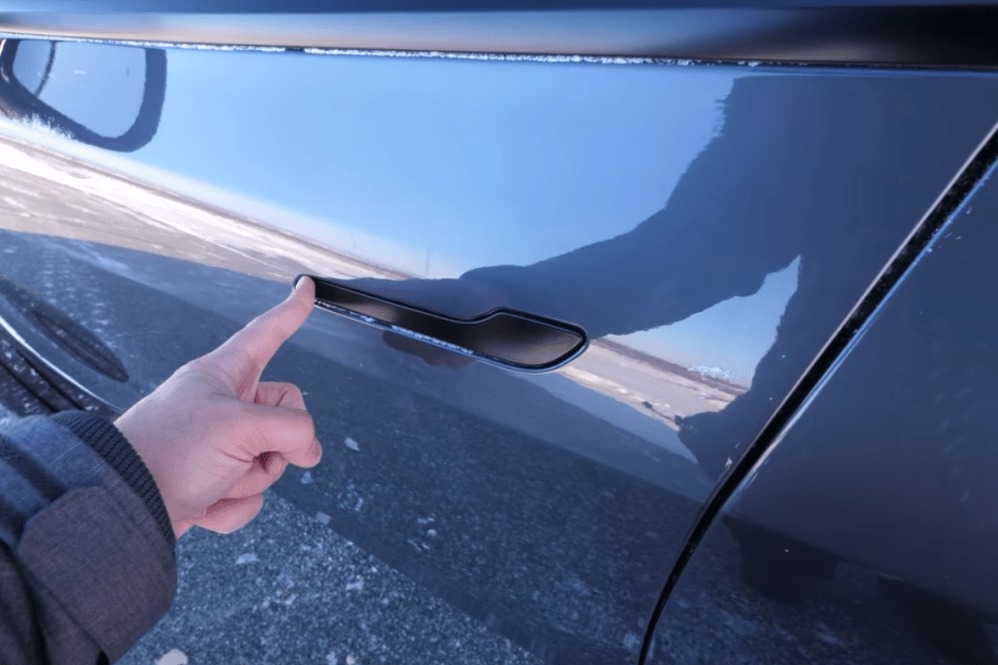
China is preparing to ban fully retractable and flush car door handles, a popular design element on many electric vehicles including Tesla models, citing safety risks that regulators say outweigh aerodynamic benefits.
Industry sources told state media that authorities are finalising new mandatory standards, with a draft expected this month and enforcement slated to begin in July 2027 following a one-year transition. Automakers would still be permitted to use semi-retractable or conventional handles, but future designs must include a mechanical backup system in case of power failures.
While carmakers have argued flush handles reduce aerodynamic drag, research cited by regulators found the efficiency gain is minimal — just 0.005 Cd, saving around 0.6 kWh per 100 km. The added electric motors also increase vehicle weight and cost. Reliability data shows electronic handles fail eight times as often as mechanical ones, despite costing three times more, with one manufacturer reporting they accounted for 12% of repair cases.
Safety concerns have accelerated regulatory action. According to the China Insurance Automotive Safety Index, vehicles with hidden handles achieved only a 67% success rate in doors opening after side crashes, compared with 98% for traditional handles. Officials also pointed to real-world incidents in which frozen or water-damaged systems trapped occupants, forcing them to break windows to escape.
China’s National Accident In-Depth Investigation System reported a 47% rise in accidents linked to door handle failures in 2024, with hidden designs responsible for over 80% of cases. The China Consumers Association separately recorded a 132% jump in complaints involving children’s fingers being pinched by automated handles.
Not all automakers adopted the trend. Great Wall Motor chairman Wei Jianjun has criticised flush handles as “heavy, costly and dangerous,” while some foreign brands, including Volkswagen and FAW-Audi, have opted for semi-hidden designs with mechanical failsafes.
The move comes amid a wider global debate on vehicle safety and user interface design. European regulators are also weighing measures that would penalise cars burying critical controls such as hazard lights and wipers inside touchscreen systems.
Source: Weixin