
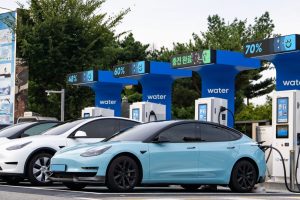




China will require all electric vehicles sold domestically to be equipped with mechanical door handles on both the inside and outside, effectively phasing out fully electronic door-opening systems that have become common on modern EVs. The regulation will take effect on January 1, 2027, with a transition period allowing already approved models to comply by January 1, 2029.
The change follows a multi-agency safety review triggered by a series of fatal crashes in which electronic door systems were suspected of failing after power loss, complicating escape and rescue efforts. Flush, motorised door handles—first popularised by Tesla and later adopted across the EV sector—were identified as a particular concern when vehicles lose electrical power during or after severe impacts.
According to reporting by Bloomberg, the new Chinese standard goes beyond general guidance and sets precise physical requirements. Exterior handles must include a recessed grip measuring at least 60 mm by 20 mm, ensuring they can be manually grasped and pulled by occupants or first responders. Inside the cabin, emergency door releases must be clearly marked with visible signage explaining their operation.

Interior labels must meet minimum size requirements, and both interior and exterior door handles must be installed in fixed, clearly defined locations. Importantly, regulators will no longer allow automakers to rely on electronically actuated systems alone—even if supported by backup batteries or secondary pull cables.
The regulatory push gained momentum after two widely publicised crashes involving electric vehicles produced by Xiaomi, in which post-collision fires broke out and reports suggested doors could not be opened quickly enough. While investigations into those incidents are ongoing, they intensified scrutiny of emergency access in EV design and prompted authorities to act preemptively.
The rule change affects a large portion of China’s EV market. Industry estimates cited by Bloomberg suggest that around 60% of China’s top 100 best-selling new-energy vehicles used concealed or electronically actuated door handles as recently as April. Affected models include the Tesla Model 3 and Model Y, vehicles from Nio, Li Auto, Xpeng, and future China-market offerings from BMW.
Some manufacturers appear to have anticipated the shift. Geely and BYD have recently reverted to conventional exposed handles on newer models. Tesla previously indicated it was already developing compliant alternatives after early regulatory signals.

Retrofitting platforms designed around electronic handles will not be cheap. A source involved in EV development in China told Bloomberg that modifying door systems to meet the new requirements could cost more than 100 million yuan ($14.4 million) per model, factoring in tooling, testing, and certification.
Although the regulation applies only to electric vehicles—and notably excludes internal combustion models that may use similar electrically assisted latches—its implications are likely global. Automakers generally avoid producing region-specific hardware, meaning China’s requirements could drive a worldwide return to mechanical door-handle designs.
The move also adds momentum to similar discussions elsewhere. U.S. regulators are currently examining Tesla’s door systems, and European authorities have begun exploring tighter rules around emergency vehicle access.