
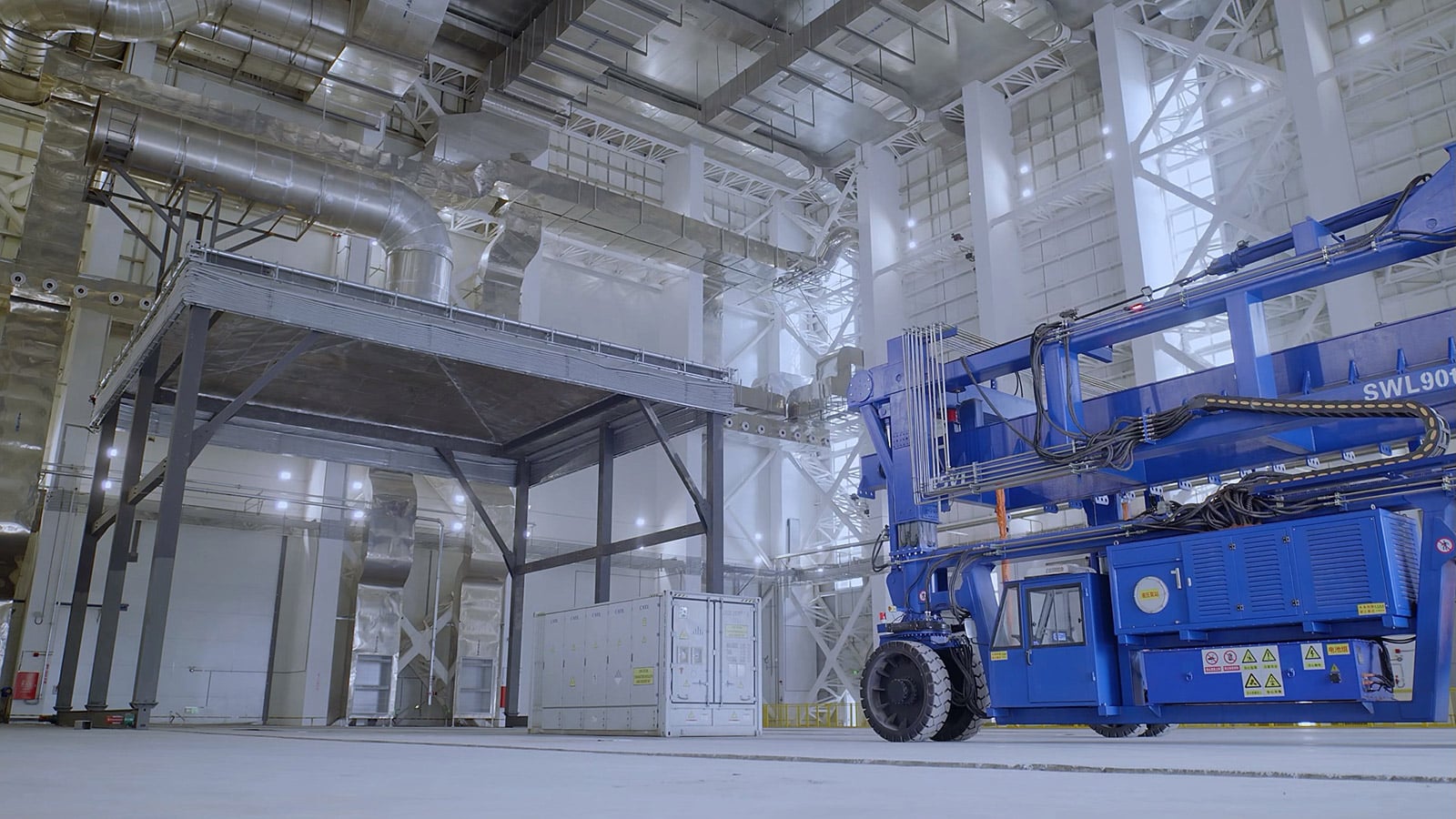
CATL has opened a major energy storage testing and validation facility in China, aiming to help developers improve project performance, accelerate grid connection and strengthen confidence in large-scale battery storage investments.
The Chinese battery manufacturer officially launched the Xiamen Energy Storage Validation Research Institute (ESVL) on Thursday, describing it as the world’s largest integrated testing and validation platform dedicated to energy storage systems.
Located in Xiamen, the facility covers approximately 10 hectares and represents an investment of about 3 billion yuan ($440 million).
CATL said the platform is designed to address growing challenges facing the rapidly expanding energy storage sector, including performance gaps between laboratory testing and real-world operation.
According to the company, nearly one-fifth of utility-scale energy storage projects globally are currently underperforming, while 46.5% of energy storage systems experience grid-connection delays exceeding two months.
These issues can affect project economics by making it more difficult for developers, investors and insurers to accurately assess operational performance, asset longevity and financial risk.
CATL said the new facility seeks to improve validation processes by shifting testing from individual components to full station-level systems.
The institute includes five specialized laboratories capable of simulating a wide range of operating conditions, including electrical grid interactions, extreme weather environments, high-voltage faults and large-scale fire scenarios.
One of the center’s key features is what CATL describes as the world’s first station-level grid integration laboratory.
The facility includes a 100-megavolt-ampere (MVA) grid simulator that can evaluate multiple energy storage systems simultaneously under realistic grid conditions.
According to CATL, the simulator is capable of testing more than 10 utility-scale battery storage containers at the same time, helping reduce commissioning and deployment timelines.
The company said the equipment is substantially larger than comparable testing platforms currently in operation elsewhere.
The center also includes a thermal safety and combustion laboratory featuring approximately 100,000 cubic metres of indoor testing space.
The facility can conduct fire safety and explosion testing on up to nine large-scale energy storage containers simultaneously, generating data intended to support future product development and safety design standards.
Wu Kai, Chief Scientist at CATL, said the growing scale of the energy storage industry requires more comprehensive validation methods.
“Scientific rigor is more critical than ever as the energy storage industry enters the gigawatt era,” said Wu Kai, Chief Scientist at CATL.
“The industry must raise quality standards to the station level and bring the validation process forward to the pre-delivery stage,” Wu added.
CATL said the ESVL platform will operate as an open testing facility serving the broader global energy storage industry.
Chen Xiaobo, Head of ESVL, said the institute is already working with international certification organizations to support globally recognized testing standards.
“The platform is open to the global energy storage industry,” said Chen Xiaobo, Head of ESVL.
According to CATL, the facility is collaborating with certification bodies including TÜV SÜD and TÜV Rheinland.
The launch comes as global demand for battery energy storage systems continues to expand alongside renewable energy deployment and electricity grid modernization efforts.
CATL said its energy storage battery shipments reached 121 gigawatt-hours in 2025, giving the company a global market share of 30.4% and maintaining its position as the world’s largest energy storage battery supplier for a fifth consecutive year.
The company said the new facility is intended to establish a stronger framework for validating long-term performance and safety, helping transform energy storage projects into more predictable infrastructure assets supported by real-world operational data.