



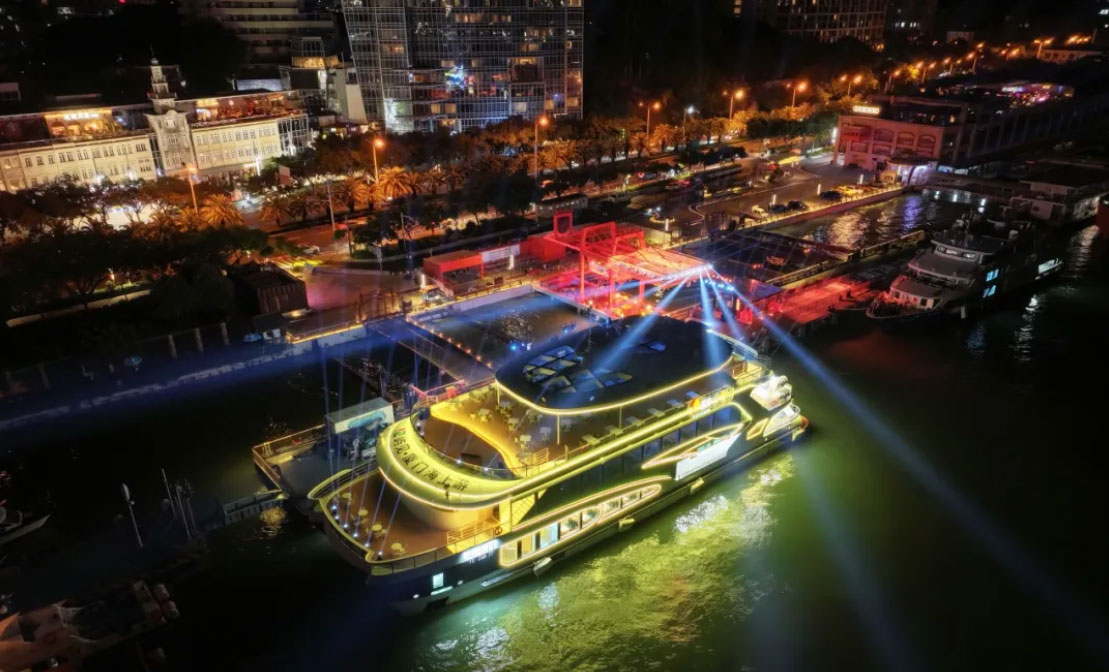
Contemporary Amperex Technology Co. Ltd. (CATL) has broadened the use of its battery technology beyond electric vehicles and aircraft with the debut of China’s first all-electric tourist passenger ship, the Yujian 77, which set sail in Xiamen Bay on July 25.
The 49-meter vessel was jointly developed by CATL and its partners and is equipped with the company’s marine battery system. According to CATL, the operation of the ship demonstrates the practicality of using pure electric propulsion for short-distance maritime travel while delivering a zero-emission and low-noise passenger experience.
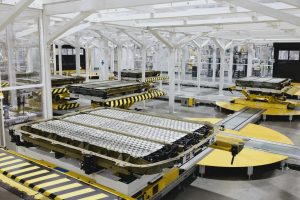
The ship features CATL’s Cell To Pack (CTP) technology and integrated Combined Charging System (CCS), offering a battery energy density of 140 Wh/kg. The onboard battery system delivers 3,918 kWh of capacity, enabling a range of up to 100 kilometers. The system incorporates No Propagation (NP) technology to prevent thermal runaway, enhancing safety at the cell level.
With the capacity to carry 358 passengers and a maximum speed of 20 kilometers per hour, the vessel also meets stringent durability and environmental standards. It is rated IP68 for protection and has passed extended salt spray testing, underscoring its readiness for marine conditions. The battery system has been certified by global classification bodies including Bureau Veritas, the American Bureau of Shipping, and Det Norske Veritas.
The Yujian 77 is expected to reduce annual fuel use by nearly 250 tons and cut carbon dioxide emissions by more than 400 tons, which CATL equates to the environmental benefit of planting over 20,000 trees.
CATL remains the world’s largest producer of power batteries, holding a 38.1% share of the global market from January to May, according to data from SNE Research. In China, the company led with 25.41 GWh of power battery installations in June, representing a 43.67% domestic market share, according to the China Automotive Battery Innovation Alliance.
In addition to maritime applications, CATL has also advanced into aviation, having unveiled its Condensed Battery technology in 2023 and successfully completed a test flight of a 4-ton civil electric aircraft in June. Plans for an 8-ton version are targeted for release between 2027 and 2028.


