
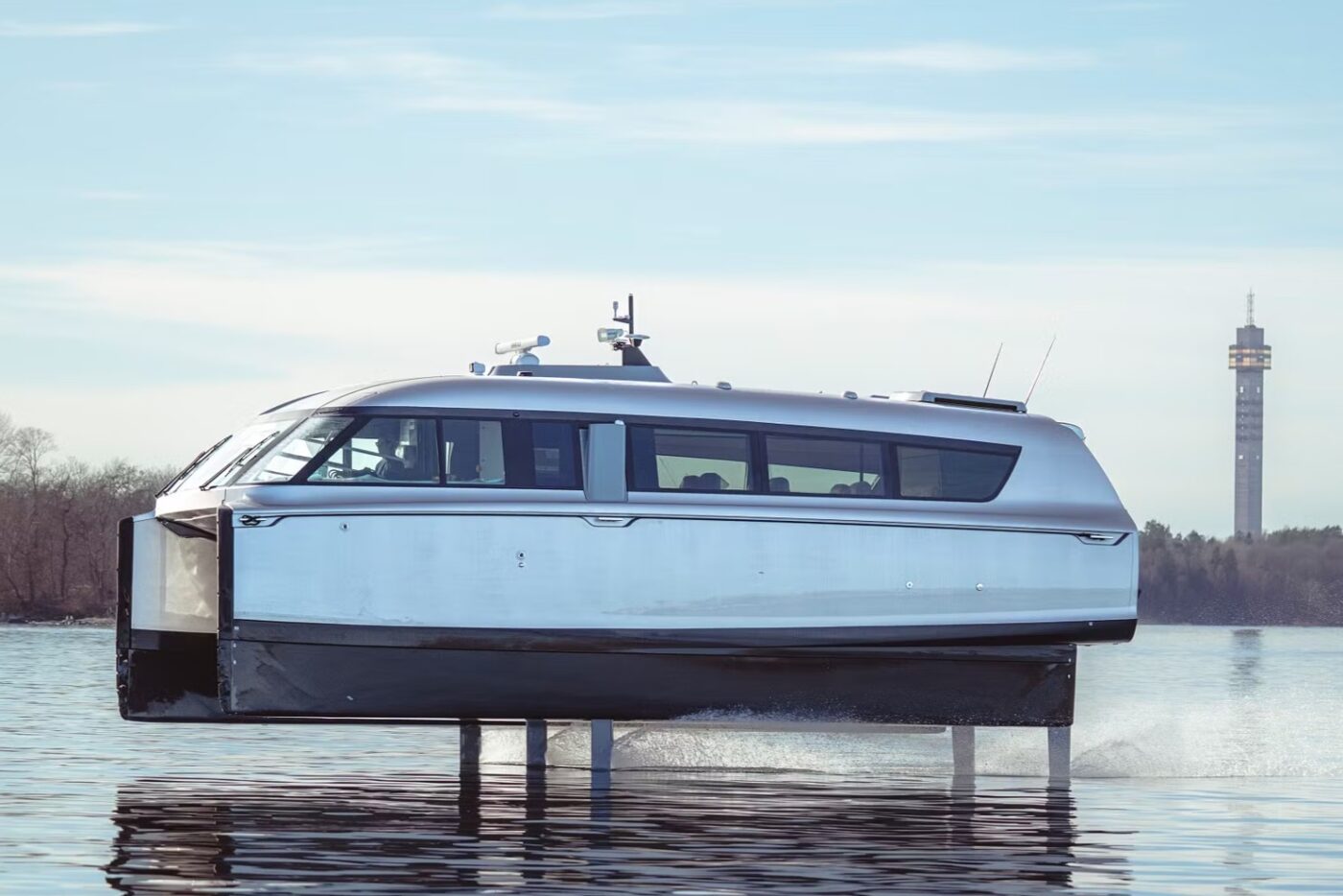
Candela has introduced the P-12 Business, an electric hydrofoil vessel designed for premium passenger transport and last-mile maritime mobility, as the company expands into commercial waterborne transit.
The first unit has been commissioned in Stockholm and is scheduled to enter service in Mumbai, with additional deployments planned in markets including the Maldives and Saudi Arabia, targeting coastal and urban transport routes.
The P-12 Business is based on Candela’s hydrofoil platform, which uses a computer-controlled system to lift the hull above the water’s surface. The design reduces drag and wave impact, resulting in lower energy consumption, reduced noise, and smoother operation compared with conventional vessels.
According to Candela, the vessel has a cruising speed of 25 knots and a range of up to 40 nautical miles, placing it among the longer-range electric vessels in its segment. During trials in Stockholm, cabin noise levels were measured at 63–64 decibels, below those typically recorded on conventional ferries.
“The P-12 Business experience merges tech and interior craftsmanship — we’ve engineered comfort into the ride itself,” said Gustav Hasselskog, chief executive and founder of Candela. “It is a surreal experience to sip coffee, converse with fellow passengers, and take in the views while travelling at 25 knots over the waves—without hearing or feeling them.”
The vessel can accommodate between 16 and 20 passengers and features a sound-insulated cabin with seating, climate control, Wi-Fi connectivity, USB-C charging, and dedicated luggage storage. Accessibility is supported through a wide, adjustable boarding ramp.
Candela positions the P-12 Business as an alternative to diesel-powered transfer boats commonly used in tourism and urban transport. The company said energy consumption can be reduced by up to 80% when operating on hydrofoils, while wake generation and underwater noise are also significantly lowered.
“It’s a win-win vessel. A vastly better experience, and it has a profound positive impact on the marine ecosystems where it operates,” Hasselskog added.
The initial rollout will focus on routes connecting urban hubs, airports, and coastal destinations in regions where short-distance maritime transport remains heavily dependent on internal combustion vessels.