





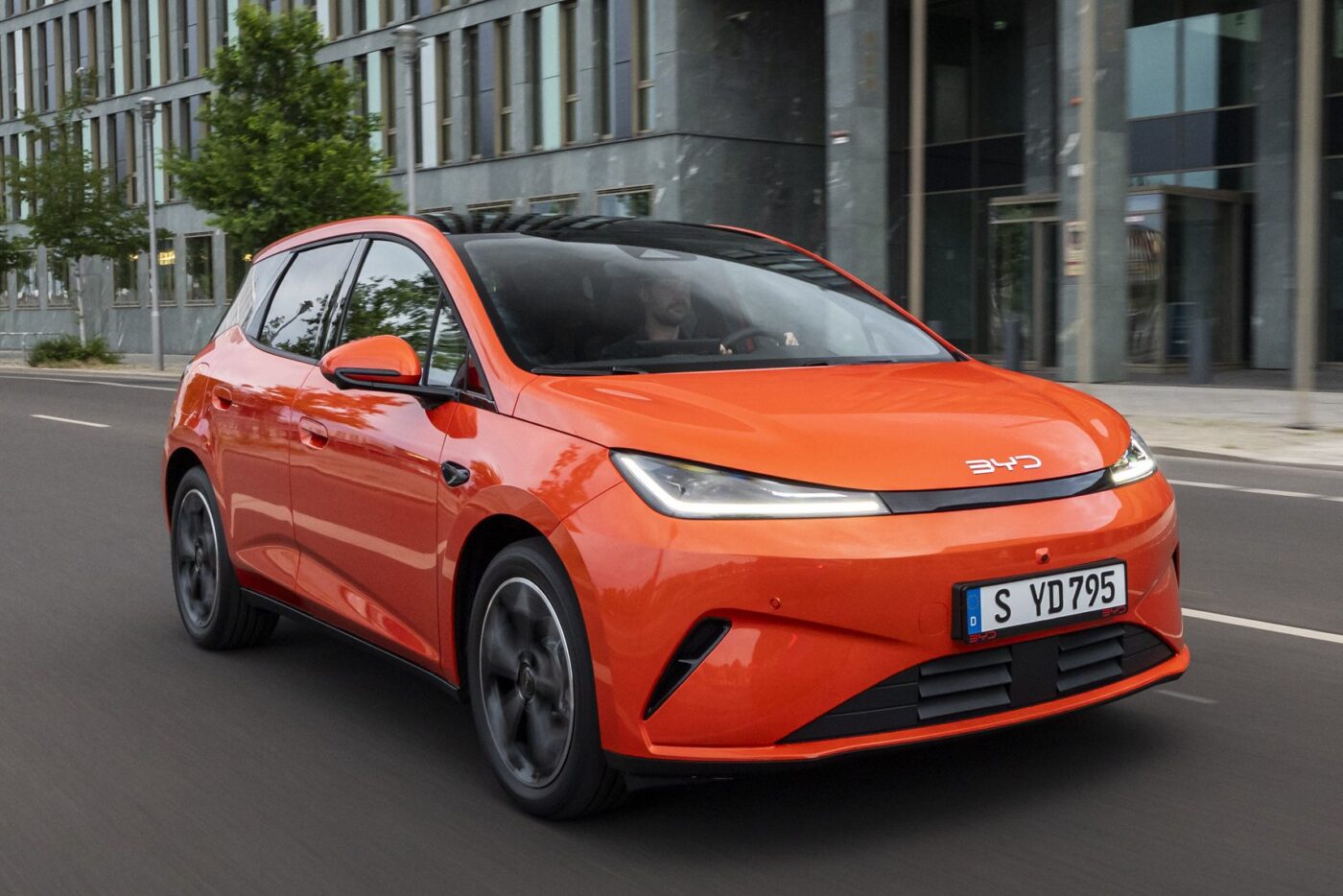
BYD has unveiled the Dolphin G DM-i for the European market, introducing a new plug-in hybrid model designed specifically for the region as the Chinese automaker seeks to strengthen its presence in the highly competitive B-segment.
The Dolphin G DM-i combines BYD’s proprietary DM-i hybrid system with the company’s Blade Battery technology and is scheduled to arrive at European dealerships this summer, with first customer deliveries expected in early autumn.
First Europe-Focused DM-i Model
According to BYD, the Dolphin G DM-i is the company’s first DM-i plug-in hybrid developed specifically for European customers.
The compact hatchback will be offered in four trim levels: Active, Boost, Comfort, and Sport.
Power comes from a 120 kW permanent-magnet synchronous electric motor producing 210 Nm of torque, paired with a 1.5-litre petrol engine. In most driving situations, the electric motor provides propulsion, while the combustion engine either recharges the battery or assists with vehicle propulsion when required.
Up to 105 Kilometres of Electric Driving
BYD will offer the Dolphin G DM-i with two Blade Battery configurations.
The entry-level Active version features a 7.42 kWh battery pack, providing up to 40 kilometres of electric driving range under the WLTP cycle.
Higher-spec Boost, Comfort, and Sport variants are equipped with a larger 18.3 kWh battery, increasing electric-only range to as much as 105 kilometres.
The automaker claims a total combined driving range of up to 1,040 kilometres.
For the larger battery variants, DC fast charging is supported at up to 39 kW, enabling charging from 10% to 80% state of charge in approximately 26 minutes.
BYD reports weighted fuel consumption of 1.4 litres per 100 kilometres with a charged battery, while CO₂ emissions range from 32 g/km to 60 g/km depending on specification.
Compact Dimensions with Practical Interior
The Dolphin G DM-i measures 4.16 metres in length and features a wheelbase of 2.61 metres, positioning it squarely within Europe’s compact hatchback segment.
Cargo capacity stands at 425 litres and can be expanded to 1,225 litres with the rear seats folded.
Depending on trim level, the vehicle is available with a rotating infotainment display of up to 12.8 inches, Apple CarPlay and Android Auto integration, a head-up display, 360-degree camera system, and Google-powered services including Google Maps and Google Assistant.
Additional features include smartphone-based NFC vehicle access and vehicle-to-load (V2L) functionality on selected versions.
Extensive Safety and Driver Assistance Features
The Dolphin G DM-i comes equipped with a comprehensive suite of driver assistance systems as standard.
These include adaptive cruise control, blind-spot monitoring, lane-keeping assistance, and front and rear cross-traffic alert systems.
The safety package reflects BYD’s strategy of offering high levels of equipment across its European vehicle range.
Strategic Importance for Europe
The launch of the Dolphin G DM-i is notable because it introduces a plug-in hybrid powertrain into a segment largely dominated by conventional hybrids and mild-hybrid vehicles.
Competitors in the compact car category, including several models from Toyota, typically rely on hybrid systems that cannot be externally charged.
The model may also carry additional strategic significance amid evolving European trade policies. The European Union’s additional tariffs on Chinese-made electric vehicles apply specifically to battery-electric vehicles, while plug-in hybrids are not currently subject to the same measures.
As BYD continues its rapid international expansion, the Dolphin G DM-i is expected to play an important role in the company’s European growth plans. BYD Chairman and CEO Wang Chuanfu has previously stated that the company aims to become the world’s largest automaker within the next five years, challenging established global leaders such as Toyota.


