
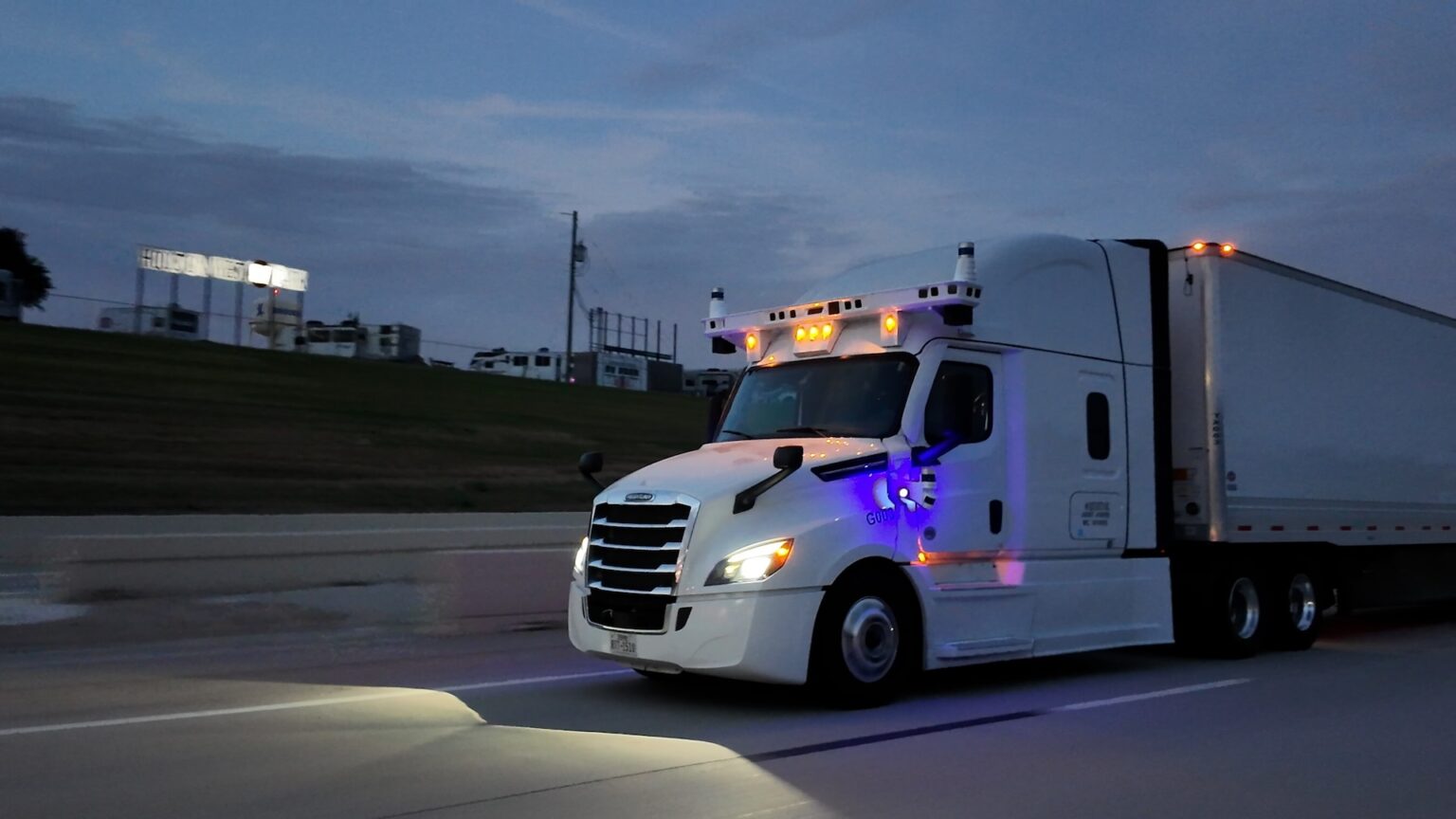
Bot Auto has finalized a broad insurance program for its autonomous truck fleet, enabling continued commercial freight service on the Houston–San Antonio corridor. The coverage, arranged through Marsh and underwritten by an A-rated carrier, spans auto liability, property, general liability, cargo, inland marine and a separately placed cyber policy.
The agreement represents a notable step for driverless freight operators seeking insurability comparable to traditional trucking, while reflecting the growing role of data-driven risk assessment in autonomous systems.
The company emphasizes that its operational model produces a different risk profile than human-driven transport, due largely to continuous data logging and software-governed vehicle behavior. Bot Auto says this transparency supports more consistent performance, precise incident analysis, and clearer explanations of on-road outcomes.
“Safety isn’t a feature we layer in, it’s the foundation of how we operate,” said Brian Moore, Chief Policy Officer. “Our autonomous trucks are engineered to behave predictably, operate within strict parameters, and log everything.” These characteristics offer insurers verifiable records that contrast with traditional reliance on driver statements, witnesses or forensic reconstruction.
Bot Auto is already running autonomous freight loads daily between Houston and San Antonio and has completed fully driverless public-road operations in Houston. With insurance secured across the fleet, the company plans to add new freight lanes as it scales, though it has not announced specific timelines or routes.
Marsh said the company met the rigorous standards required for inclusion in its autonomous vehicle insurance program. “This placement of Bot Auto’s insurance program thus marks another milestone in the advancement of autonomous trucking in the US,” noted Owen Oakley, Managing Director at Marsh.
Industry observers view the insurance arrangement as further evidence that conventional insurance frameworks can accommodate autonomous freight when paired with robust data infrastructure and predictable operating behavior. The program may also help broaden market confidence by demonstrating a structured path for underwriting driverless commercial operations.