



Bosch has secured a long-term contract from Mercedes-Benz to supply electric motors for the automaker’s next generation of electric powertrains through the 2030s.
The agreement follows what Bosch described as a strong year for its electromobility business in 2025, during which the company said it secured more than 70 customer projects globally and expanded supply relationships with over 50 automakers.
“The new order reaffirms our long-standing partnership with Mercedes-Benz and shows that we can successfully contribute our expertise to technologically demanding projects as well,” said Markus Heyn, member of the Bosch board of management and chairman of Bosch Mobility.
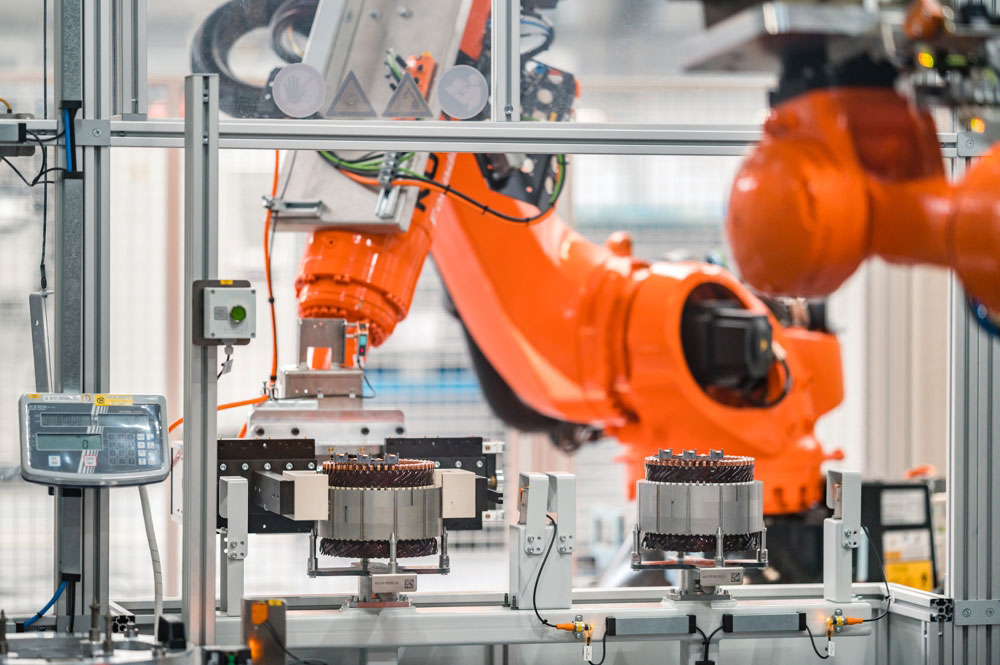
Bosch said its electric motors achieve efficiency levels of up to 98% through the use of new winding technology and rotor oil cooling systems.
According to the company, the motors are based on a scalable platform architecture that allows the motor length and output to be adjusted depending on vehicle requirements.
Bosch said the modular design enables automakers to deploy the same powertrain architecture across multiple vehicle models while reducing weight, installation space and overall system costs.
The supplier added that it expects to manufacture more than seven million electric drive components in 2026, with approximately seven electric motors produced every minute across its global production facilities.
Bosch has continued expanding its electric drivetrain business internationally as automakers accelerate the transition toward battery-electric vehicles.
In India, Bosch recently established a joint venture with Tata AutoComp Systems to develop and manufacture electric axle systems.
Marco Zehe, president of Bosch’s Electrified Motion division, said the company continues to work closely with automakers in China and other major vehicle markets.
“We already work with almost all Chinese car manufacturers, as well as with numerous international automakers operating in China,” Zehe said.
The Mercedes-Benz contract highlights continued demand for high-efficiency electric drivetrain technologies as global automakers invest in next-generation EV platforms and scalable vehicle architectures.


