
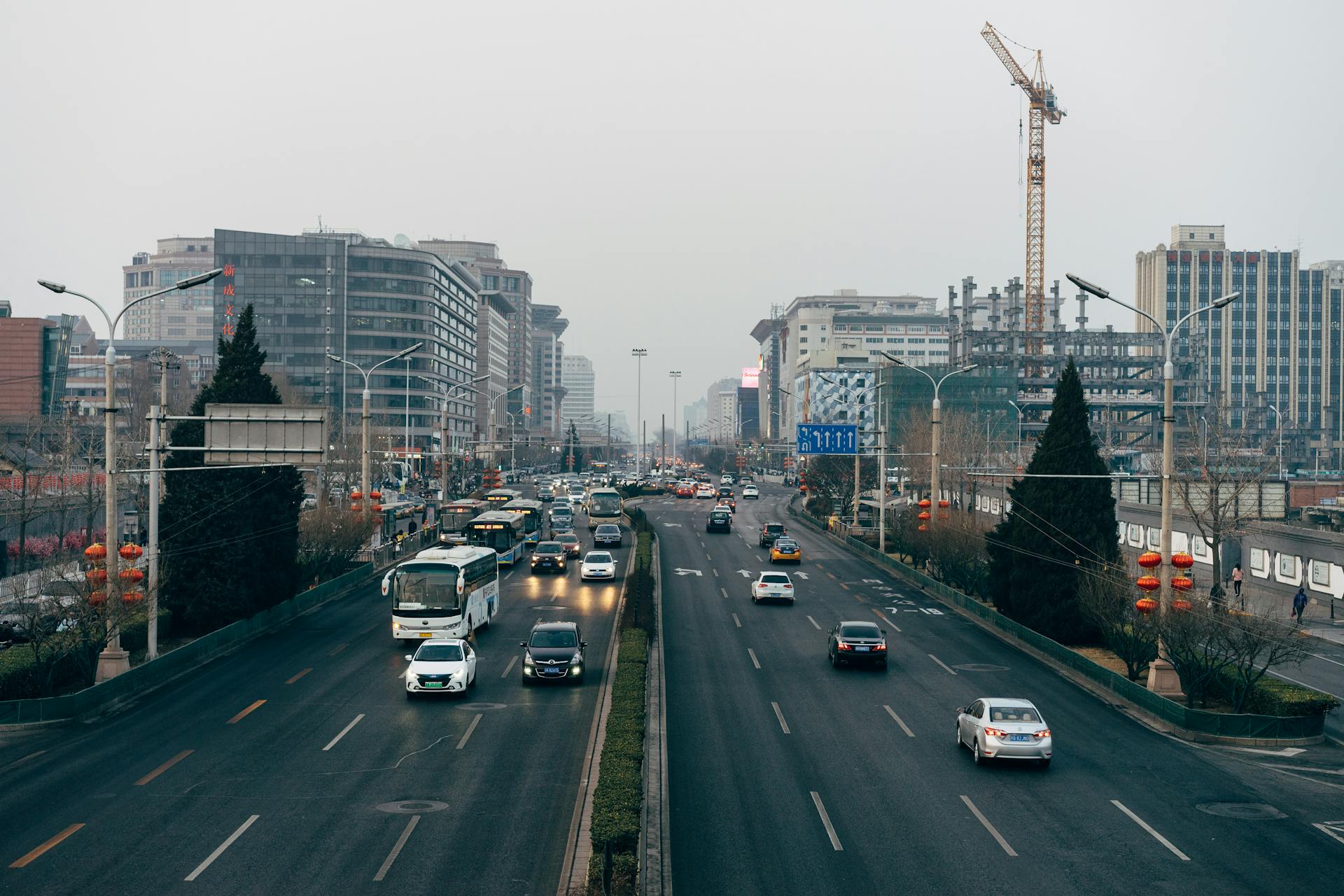
China is reinforcing its commitment to electrification in the transport sector, with Beijing becoming the latest major city to ban new gasoline vehicles from entering the ride-hailing market, according to state-affiliated China Automotive News.
The restriction, effective from July 20, prohibits the registration of new fuel-powered vehicles on ride-hailing platforms in the capital. It marks a tightening of earlier rules, which had already barred older gasoline cars with sub-National 6 emission standards from operating in the sector. Drivers attempting to register vehicles now receive notices requiring them to switch to “green-plate” vehicles, a designation used for new energy vehicles (NEVs).
The move aligns Beijing with other major cities such as Shenzhen, Guangzhou, and Dongguan, which have already prohibited fuel vehicles in the ride-hailing sector. Shenzhen began phasing them out as early as 2020, and Xi’an recently accelerated its timeline by starting a full exit of fuel cars in June—well ahead of the originally planned 2028 target.
The expanding bans come amid rapid growth in China’s NEV industry. According to the China Passenger Car Association (CPCA), retail sales of passenger NEVs reached 1.111 million units in June, a 29.7% increase year-on-year and an 8.2% rise from May. NEVs accounted for 53.3% of total retail passenger car sales last month.
As the share of electric vehicles in the overall market grows, automakers are responding by tailoring new models for ride-hailing use. Changan Automobile, for instance, has introduced the Oshan 520 electric sedan, which features a battery-swap system developed in collaboration with CATL. The model is based on CATL’s Choco-SEB platform and is designed to reduce charging downtime by over two hours per day.
With an increasing number of cities implementing similar restrictions, industry analysts expect the ride-hailing sector to become a key driver of NEV adoption across China.