South Korean robotics firm Daedong Robotics has unveiled an autonomous agricultural transport robot powered by repurposed Tesla car batteries, marking a step forward in electric vehicle (EV) battery reuse and sustainable field automation.
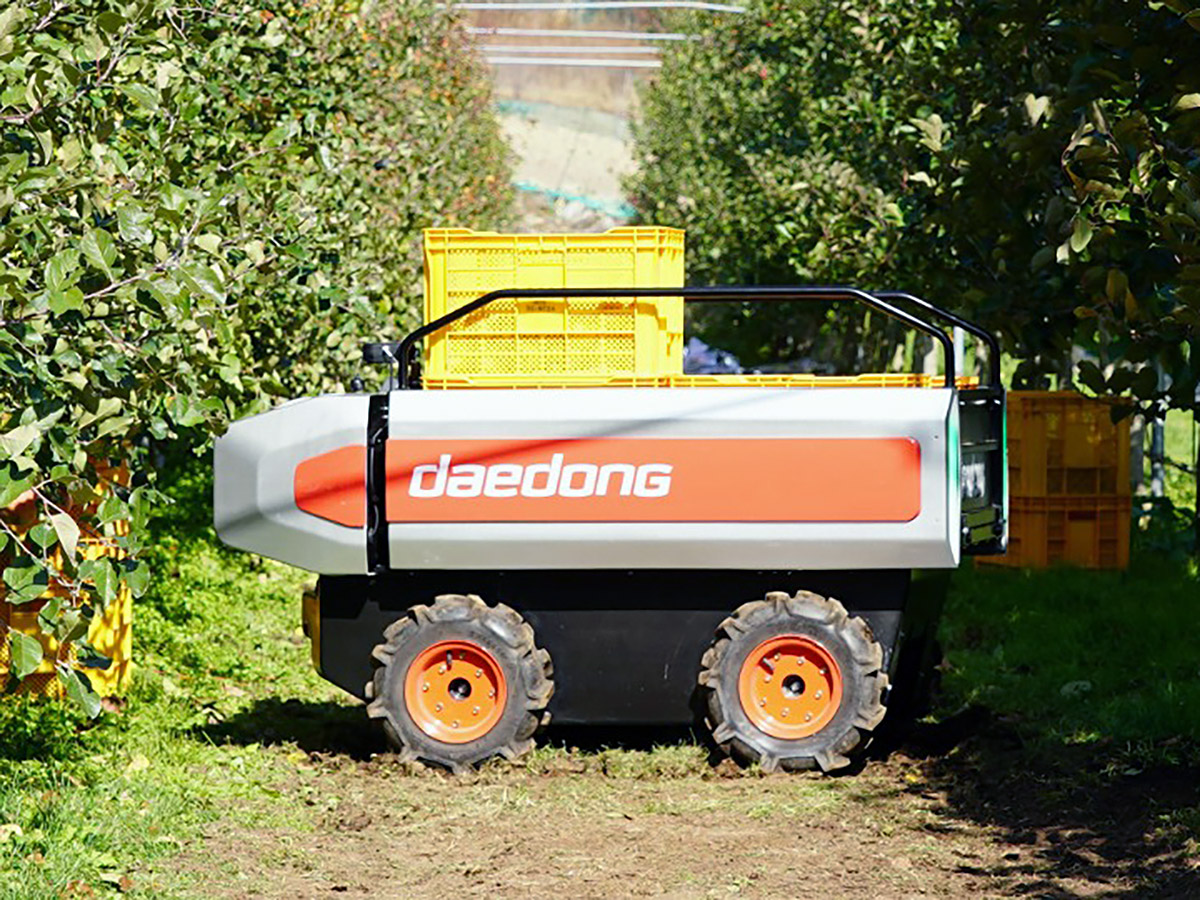
The compact robot, known as the RT100, is designed to assist farmers in harvesting operations by following them through the field, loading picked produce, and transporting it to designated locations. It uses modular battery packs repurposed from decommissioned Tesla vehicles, in a collaboration with battery upcycling company Poen.
https://www.youtube.com/watch?v=yNnQEEpCoIc
Poen sources used Tesla battery packs and tests individual LG cylindrical cells for remaining capacity. Those meeting performance thresholds are refurbished and reassembled into new battery modules, which then power devices such as the RT100. The effort offers a practical example of how aging EV batteries can be reused in secondary applications.
Daedong’s RT100 features a 4×4 drivetrain, a maximum payload of approximately 300 kilograms, and can reach speeds of up to 5 mph. It also integrates AI features, including voice command support via a mobile app, aimed at simplifying agricultural tasks in tight and uneven terrain.
The initiative aligns with a broader push in the industry to find viable second-life uses for EV batteries. According to battery recycling firm Redwood Materials, founded by Tesla co-founder JB Straubel, more than 95% of valuable metals—such as lithium, nickel, and cobalt—can be recovered from used EV battery packs. Efforts like those of Daedong and Poen reflect growing interest in circular economy solutions for battery materials.
The RT100 is among the latest examples of how former EV battery cells can power next-generation technologies, providing both environmental and economic benefits in sectors beyond transportation.