
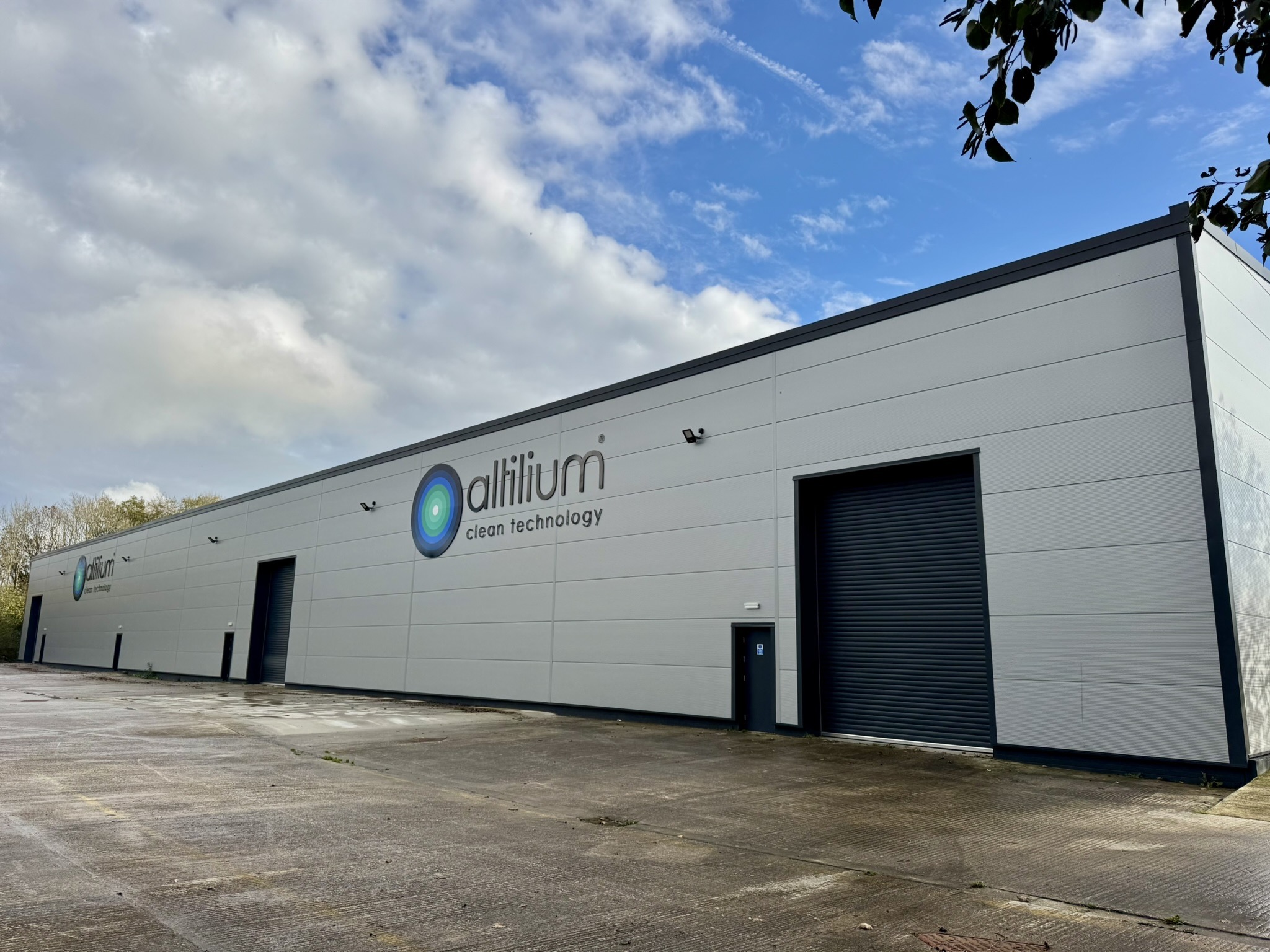
Altilium, a UK-based clean technology company focused on recovering materials from end-of-life batteries, has announced additional investment from strategic shareholders SQM and Marubeni Corporation as part of its Series B2 funding round.
The investment will support Altilium’s ongoing development of battery recycling and materials recovery facilities in the UK, including its planned ACT 3 commercial refinery in Plymouth, Devon.
ACT 3 Receives UK Government Funding
Altilium’s latest investment follows the award of £18.5 million in grant funding through the UK Government’s DRIVE35 programme, delivered by the Advanced Propulsion Centre and Innovate UK.
The funding is intended to support the development of ACT 3, which Altilium describes as a commercial refinery for recovering critical battery materials from end-of-life electric vehicle batteries.
The Plymouth facility is planned to process up to 24,000 EV batteries per year. It is expected to produce battery material intermediates including nickel mixed hydroxide precipitate (MHP), lithium sulphate and graphite.
SQM and Marubeni Participate in Series B2
SQM and Marubeni were early investors in Altilium. SQM led the company’s $12 million Series A funding round, while Marubeni participated in the subsequent Series B round.
Their additional investment in the Series B2 round provides further funding as Altilium moves from pilot-scale operations toward commercial development.
“We are proud to have the continued support of SQM and Marubeni as we advance to the next phase of our growth. Their investment is a strong endorsement of our strategy to scale a UK-based circular economy for battery materials. With the backing of our strategic partners and the UK Government, we are accelerating the development of ACT 3 and laying the foundation for a globally competitive battery recycling industry in the UK,” said Kamran Mahdavi, CEO of Altilium.
Altilium Plans Further Expansion
Altilium’s development programme has progressed through three stages, beginning with its ACT 1 bench-scale facility, followed by ACT 2 pilot operations and the planned ACT 3 commercial facility.
The company is also targeting ACT 4, which is designed to combine battery recycling with cathode active material (CAM) production. Altilium says ACT 4 would have the capacity to recycle 150,000 EV batteries annually and produce materials for use by UK battery manufacturers.
UK Battery Demand Is Expected to Grow
The investment comes as demand for batteries in the UK automotive sector is expected to increase.
According to the Advanced Propulsion Centre UK, battery demand from the UK automotive sector is forecast to rise from 13 GWh per year in 2027 to 75 GWh per year by 2035.
Altilium’s recycling facilities are intended to recover materials from end-of-life EV batteries for potential reuse in battery manufacturing. The company says this could reduce the need for imported raw materials and contribute to domestic battery material supply.