

The European Automobile Manufacturers’ Association (ACEA) has warned that Europe’s battery supply chain may not be ready to meet the localisation requirements proposed under the European Union’s Industrial Accelerator Act (IAA), based on a study commissioned by the association and conducted by Mobility Global.
The IAA is still under negotiation between the European Parliament and the Council and has not yet been finalised. Proposed by the European Commission in March 2026, the legislation aims to strengthen EU manufacturing and increase demand for European-made and low-carbon products through public procurement and support programmes.
Battery Localisation Requirements Could Outpace Supply
Under the proposed IAA framework, battery localisation requirements would be introduced in two stages. Six months after the legislation enters into force, batteries would need to contain three EU-origin components, including battery cells. Three years after adoption, the requirement would increase to five EU-origin components, including battery cells, battery management systems and cathode active materials.
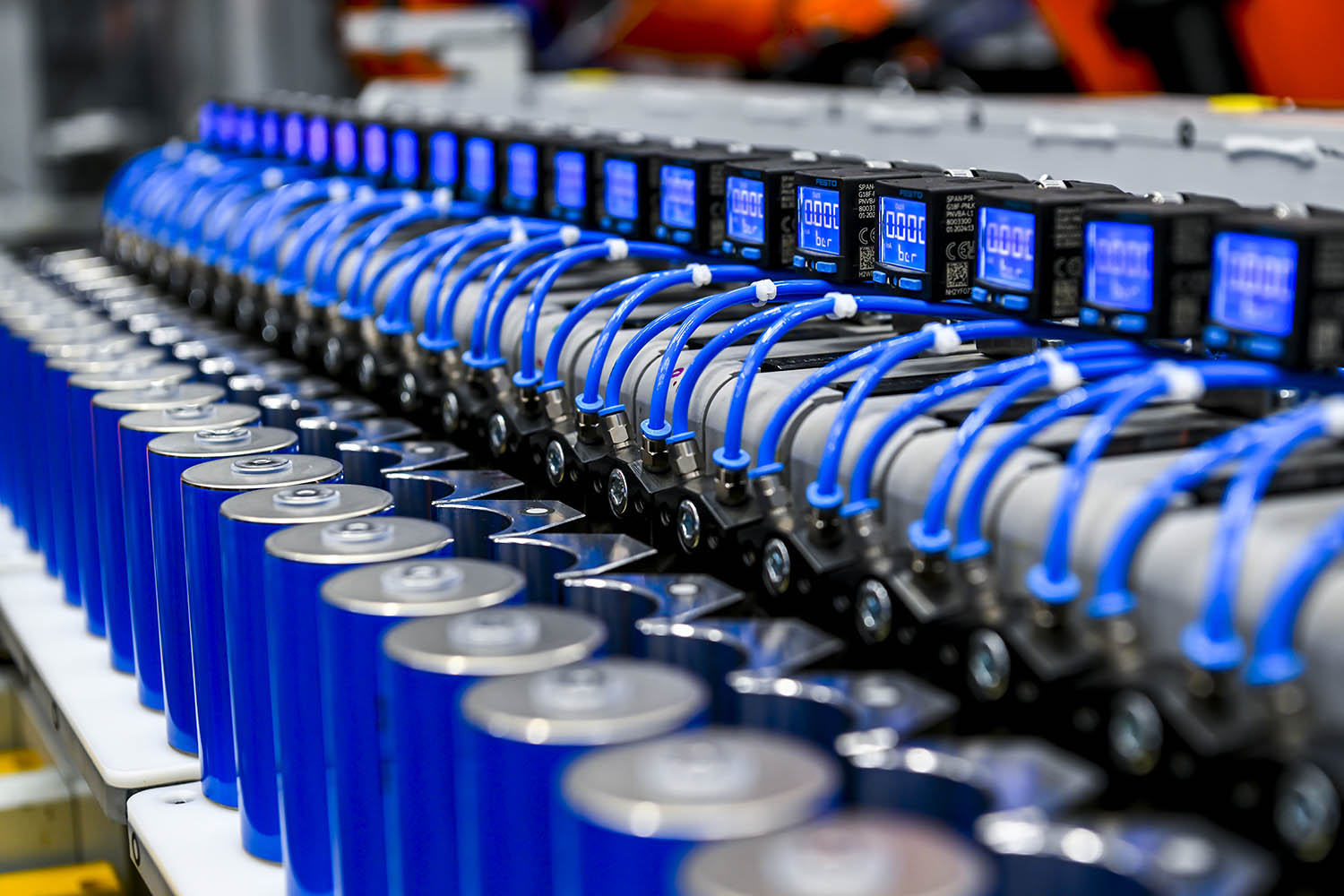
The Mobility Global analysis examined three scenarios representing different levels of demand for European-made batteries. In all three scenarios, the study found that supply would remain below demand, despite projected European battery cell production increasing to 306 GWh by 2032.
ACEA said limited supply could restrict the number of vehicles eligible for incentives linked to the proposed “Made in EU” requirements. The study estimates that around 3 million cars could be unable to qualify for associated incentives if the IAA enters into force in 2028 because of insufficient battery supply.
Commercial Vehicles Face Larger Supply Gap
The study identifies an even wider gap for medium- and heavy-duty commercial vehicles.
According to the analysis, the supply-demand gap for these vehicles would continue to increase through 2032, reaching 23 GWh, with demand approximately four times higher than available European supply.
The findings are relevant to the proposed IAA because the legislation would apply “Made in EU” requirements to access certain forms of public funding and incentives for clean technologies, including battery-electric, fuel-cell and plug-in hybrid vehicles.
Battery Chemistry Creates Additional Challenge
The study identifies several structural constraints beyond battery cell production capacity.
Most planned European gigafactories are focused on nickel-manganese-cobalt (NMC) battery chemistry, while demand is increasingly shifting toward lithium iron phosphate (LFP) batteries, which generally have lower costs. LFP production is currently dominated by China.
The analysis also finds that European-made battery cells remain significantly more expensive than imported alternatives. In addition, announced production capacity faces financing, permitting and implementation risks, meaning planned capacity cannot necessarily be treated as operational capacity.
Further upstream, Europe continues to face shortages of cathode active materials (CAM) and anode active materials (AAM). Mobility Global estimates that the supply deficit could persist until 2038-2040 even under a lower-demand scenario.
ACEA Calls for Broader Battery Investment
ACEA said the findings indicate that localisation requirements need to be aligned with the actual development of Europe’s battery supply chain.
The association recommends greater investment in upstream production, including precursor cathode active material and graphite purification facilities, to increase European production of key battery materials.
ACEA also calls for greater policy support for operating costs rather than focusing primarily on factory construction. The association specifically points to high energy costs and permitting times as areas where policy measures could affect the competitiveness and speed of European battery projects.
Global Partnerships Could Help Close Supply Gap
ACEA is also calling for clearer rules of origin and greater use of partnerships with strategic trading partners.
The association argues that policies should clarify whether near-shoring partners such as Morocco could qualify under certain EU localisation rules. ACEA said this could allow European manufacturers to use international joint ventures and potentially lower-cost production locations while addressing shortages in upstream battery materials.
ACEA has previously argued that European battery localisation needs to follow the actual pace of capacity expansion. In July, the association called for realistic battery targets under the IAA and said different requirements should account for differences between passenger cars, vans, trucks and buses.
The latest Mobility Global study therefore highlights a gap between proposed localisation requirements and the projected availability of European battery supply, with the outcome ultimately depending on investment, production capacity, operating costs and the final rules adopted under the IAA.