





European and British automotive industry associations are calling for a further postponement of Brexit-related tariffs on electric vehicles, warning that current battery supply chains are not sufficiently developed to meet upcoming trade requirements.
The European Automobile Manufacturers’ Association (ACEA) and the Society of Motor Manufacturers and Traders (SMMT) have urged policymakers in Brussels and London to delay the implementation of stricter Rules of Origin provisions scheduled to take effect on 1 January 2027.
Under the terms of the 2020 EU-UK Trade and Cooperation Agreement, electric vehicles traded between the European Union and the United Kingdom can continue to move tariff-free only if they meet specific local content requirements.
Battery Rules at the Center of the Dispute
The regulations require that at least 55% of a vehicle’s value be generated within Europe, including both the EU and the UK.
For electric vehicles, additional battery-specific conditions apply. At least 70% of the battery pack and 65% of the battery cells must originate from European production facilities to qualify for tariff-free trade.
Vehicles failing to meet these thresholds would face a 10% import tariff when traded between the UK and EU.
The rules were originally scheduled to come into force on 1 January 2024 but were postponed for three years following concerns from automakers about the availability of European battery manufacturing capacity.
Industry Says Battery Supply Chains Remain Unprepared
Automotive groups now argue that conditions have not improved sufficiently to justify the planned implementation date.
Despite significant investments in European battery manufacturing, the majority of battery cells used in electric vehicles sold in Europe continue to be sourced from Asia.
Jonathan O’Riordan, Director of International Trade at ACEA, estimates that only around 20% of electric vehicle batteries will be produced in Europe by the end of 2026 and 2027.
ACEA Director General Sigrid de Vries told The Guardian that battery production in Europe is developing too slowly and called for stronger policy measures to accelerate the industry’s growth.
“Battery supply chains are still not ready to meet these stringent requirements, which were based on assumptions that have not materialised despite major investment,” said SMMT Chief Executive Mike Hawes.
“The UK and EU must now find a pragmatic solution that avoids self-defeating tariffs on the very vehicles consumers are being urged to buy, while safeguarding investment in domestic battery capabilities.”
Concerns Grow Among Automakers
The debate comes as manufacturers assess the potential impact of the rules on future production plans.
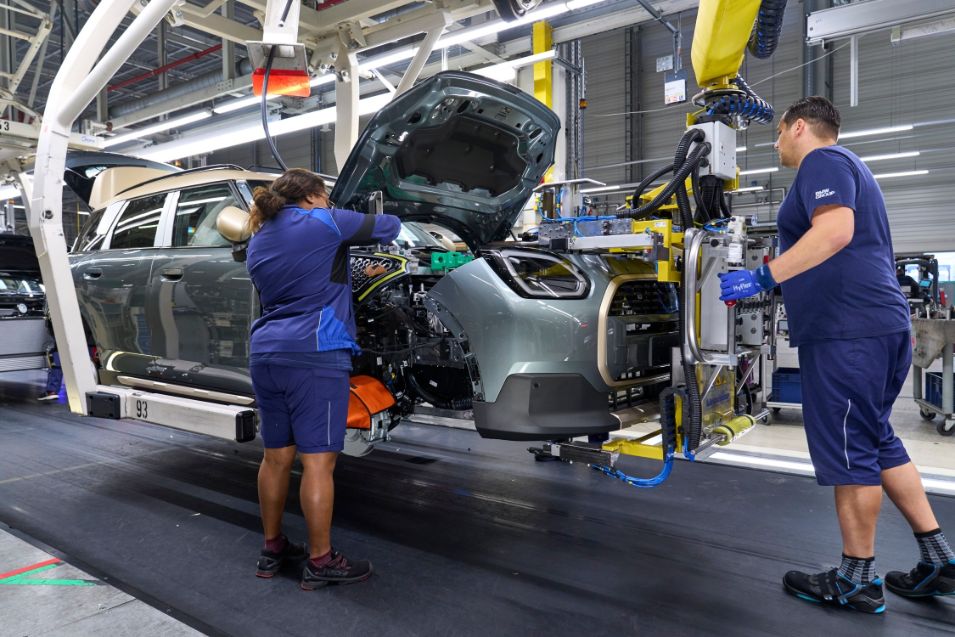
Recent reports suggested that BMW could face significant challenges producing electric Mini models at its Oxford plant if the tariffs are introduced as scheduled.
According to sources cited by German publication Automobilwoche and Wirtschaftswoche, the company believes future electric vehicle production at the UK facility could become economically unviable under the current trade framework.
Industry observers view the warnings as part of a broader effort by automakers to secure another extension before the rules take effect.
Linked to Broader EU Industrial Policy
The tariff discussions are taking place alongside negotiations over the European Union’s proposed “Made in EU” requirements under the Industrial Accelerator Act.
France has proposed allowing the UK to participate in aspects of the framework, which would require electric vehicles and other products to demonstrate substantial European value creation to qualify for subsidies, incentives, and public procurement opportunities.
As a result, policymakers are increasingly expected to address both issues simultaneously as part of wider EU-UK trade discussions.
Negotiations Continue
A spokesperson for the European Commission said discussions on Rules of Origin and related matters could take place within the framework of ongoing negotiations between the EU and the UK.
The Commission also stated that it remains in regular contact with stakeholders across the electric vehicle sector to assess their preparedness for compliance with the upcoming requirements.
With less than two years remaining before the scheduled implementation date, automakers, battery manufacturers, and policymakers are facing growing pressure to determine whether Europe’s battery supply chain can develop quickly enough to avoid new trade barriers between two of the region’s largest automotive markets.


