
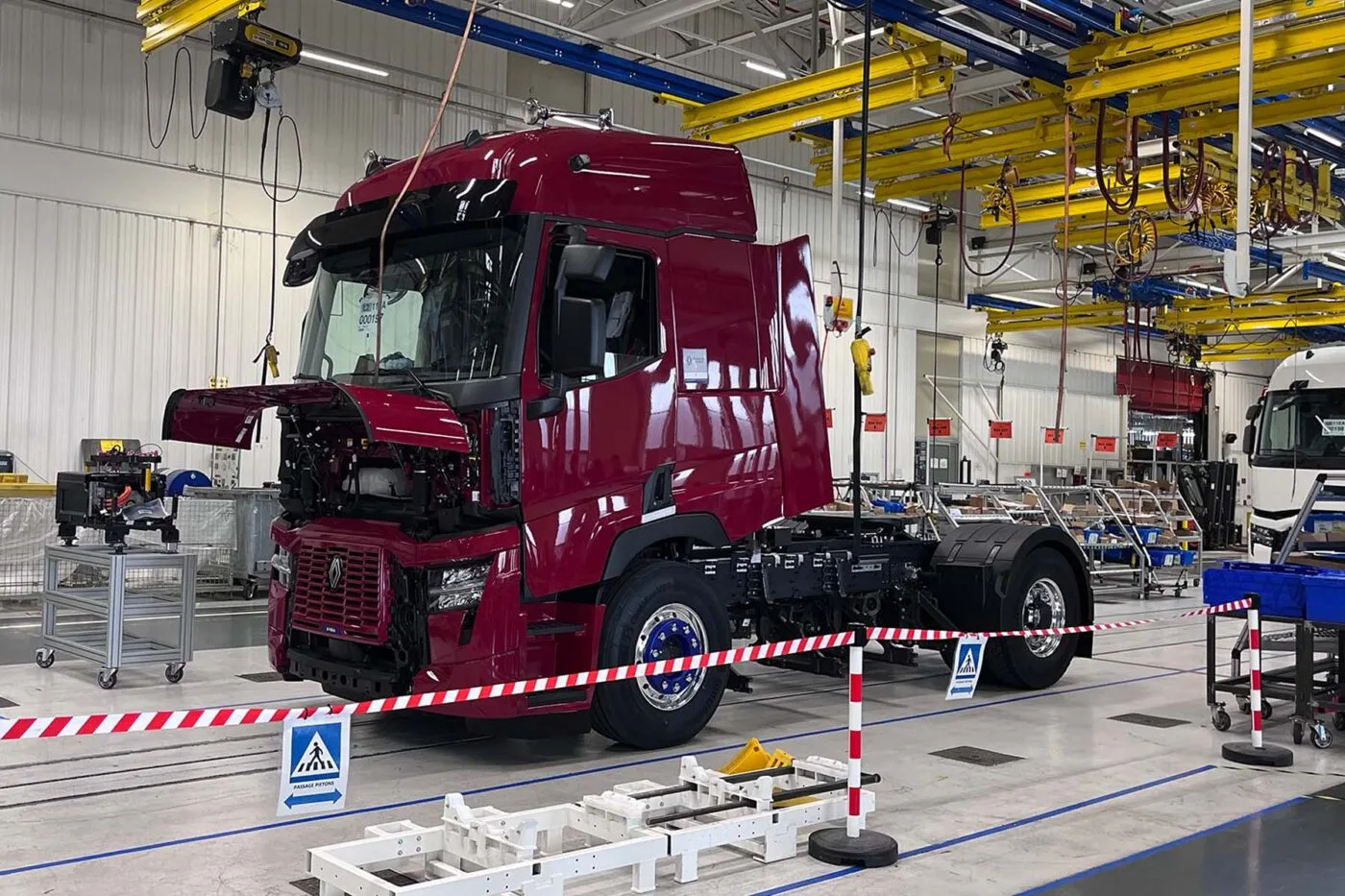
DB Schenker France has placed an order for 66 electric Renault trucks, including 60 Renault Trucks E-Tech D and six Renault Trucks E-Tech T electric tractors. The latter marks the first deployment of electric tractors for the French branch of the global logistics provider.
Eight of the 60 E-Tech D units have already been delivered and are operating in cities including Blois, Angers, Châteaulin, Rouen, and Rennes.
The remaining vehicles will be distributed to 28 metropolitan agencies through the first quarter of 2025, the company said. The trucks will be used for urban, peri-urban, and regional transport.
See also: Renault Trucks Announces Long-Haul Electric Truck with 600 km Range for 2026
The Renault Trucks E-Tech D is a 16-tonne electric vehicle with a payload capacity of up to 8.75 tonnes. It offers battery configurations ranging from 200 to 565 kWh, with the highest capacity providing a range of up to 560 kilometers.
The heavier E-Tech T, a 44-tonne electric tractor, has been produced at Renault’s Bourg-en-Bresse facility since late 2023. It is available with battery packs from 390 to 540 kWh, offering a range of up to 300 kilometers in its highest configuration. DB Schenker has not disclosed the specific configurations it has ordered.
With this latest purchase, DB Schenker France has doubled its fleet of electric trucks to 135 units. The company also operates 134 charging points for electric trucks, in addition to 142 charging stations for electric passenger vehicles. It aims to achieve carbon neutrality by 2040, supported by funding from the French Environment and Energy Management Agency (Ademe).
“Our ambition is to play a primary role in low-carbon logistics, and to achieve this we are investing heavily in the right energy mix,” said Frédéric Vallet, Head of Schenker France. “Electric trucks are an integral part of the solution, and I’m very proud of this further step towards achieving our ambitious goals for environmental sustainability.” The company also plans to expand its use of hydrogenated vegetable oil (HVO) vehicles and already operates 65 biogas-powered trucks.