
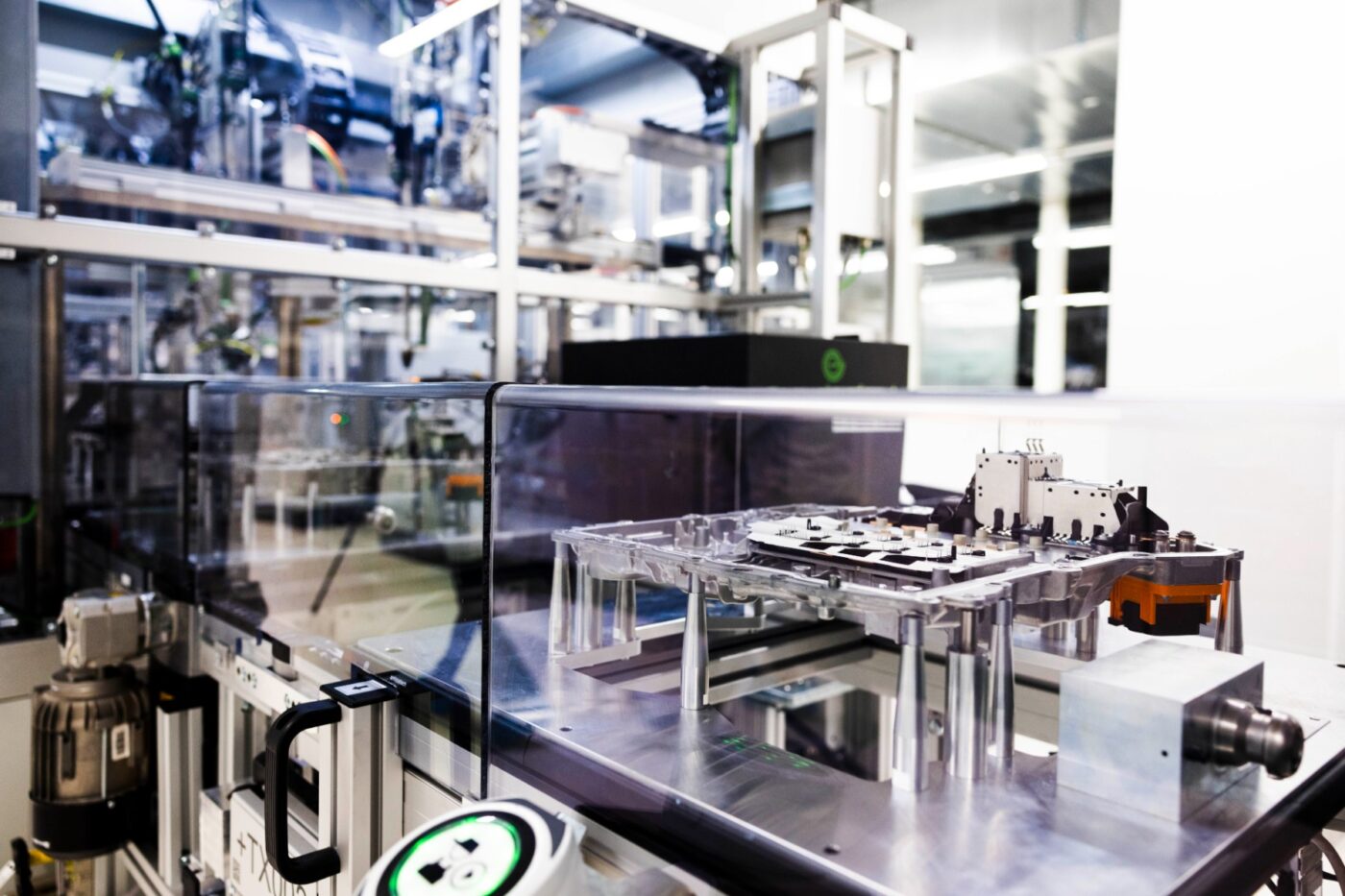
BMW plans to invest more than €100 million in a new manufacturing facility for inverter power module components at its Steyr plant in Austria, with production scheduled to begin in summer 2029. The investment will expand the site’s role in electric drivetrain manufacturing and bring additional production processes in-house.
Announced on Tuesday, the project will add manufacturing capabilities for components used in BMW’s sixth-generation electric motors, introduced in February 2025 for the Neue Klasse electric vehicle lineup. BMW is already producing Gen6 electric motors on two lines at the Steyr facility.
The new production operation is intended to increase in-house value creation, strengthen electrical engineering expertise and give BMW greater flexibility in sourcing critical components.
Power Modules Become Part of In-House Production
The investment will focus on the power module, a key component of the inverter, which is also known as a converter. The inverter converts direct current from the high-voltage battery into alternating current for the electric motor and controls the flow of electrical energy between the battery and motor.
The power module contains semiconductors that switch high electrical currents and voltages. Its design and efficiency influence energy conversion losses and the performance of the electric drivetrain.
Under the new plan, BMW’s Steyr plant will take responsibility for both the upstream supply chain and assembly of the power module. The company said this will allow it to develop additional expertise in electrical engineering while increasing flexibility in procuring components, including semiconductors, from global markets.
Harald Gottsche, Managing Director of BMW Motoren GmbH, said the investment builds on the plant’s transition into electric drivetrain production.
With our entry into electric drivetrain production, we have demonstrated that we master transformation in Steyr. By manufacturing the power module in-house, we are now delving even deeper into electrical engineering and can flexibly source components such as semiconductors on global markets. This improves our competitive position and reduces dependencies in a geopolitically sensitive technology field.
Helmut Hochsteiner, Head of Electric Drive Production at the Steyr plant, said the facility would build on the expertise developed during its transition to electric mobility. Employee training will also form part of the preparations for the new production scope.
The development of new expertise during the transformation to e-mobility at the site, for example in inverter production, has been successful, and our contribution to the success of the New Class is undisputed. We are now pleased to apply this experience to the next step. In addition to setting up and integrating new facilities, we are preparing the training of our employees for the new scope of work.
New Cleanroom and Assembly Processes
BMW plans to establish a cleanroom assembly line and the infrastructure required for the new manufacturing operation. The power module consists of 10 individual parts, which will be assembled using processes that include large-area soldering and ultrasonic welding.
According to BMW, these techniques will be used for the first time within the BMW Group for this type of assembly. The project is intended to build new manufacturing competencies and integrate the production of a complex electric drivetrain component more closely into the company’s own operations.
The company has not disclosed how many additional jobs the investment will create.
Steyr Expands Its Role in Electric Mobility
BMW has been developing its Steyr facility into a major electric mobility production site since 2022. The plant is currently increasing output of Gen6 electric motors for the Neue Klasse models while continuing to manufacture internal combustion engines.
Steyr remains an important part of BMW’s conventional powertrain supply chain, delivering more than one million petrol and diesel engines annually to the group’s vehicle production plants.
The new power module operation will add another stage of electric drivetrain production to the site, consolidating more manufacturing activities within BMW’s existing industrial network.
The plant currently employs approximately 4,700 people, according to the company.
BMW’s Longstanding Presence in Steyr
BMW established the Steyr plant in 1979 as a joint project with Austrian company Steyr-Daimler-Puch AG. BMW took full control of the facility in 1982.
The site has since developed into a major engine manufacturing location for the BMW Group. Its planned expansion into inverter power module production represents another stage in the transition toward electrified powertrains, while conventional engine production continues alongside the new activities.
The investment is expected to strengthen BMW’s in-house capabilities for electric drivetrain components ahead of the planned start of power module production in 2029.