
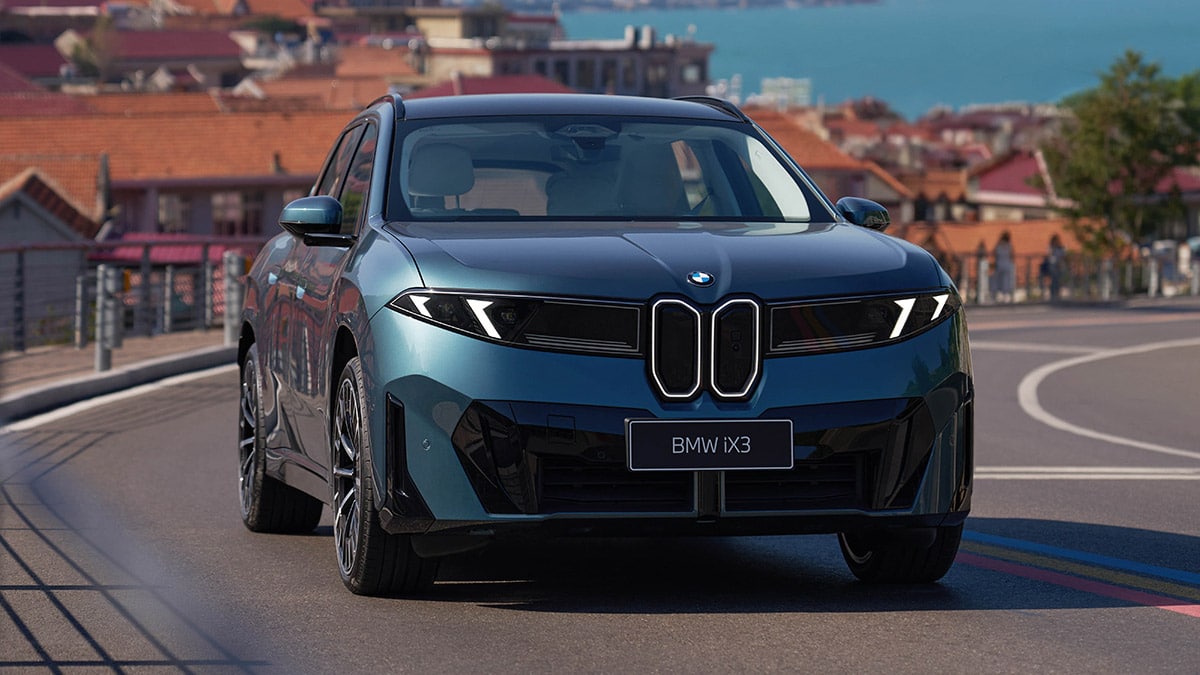
The BMW Group delivered 110,257 battery-electric vehicles (BEVs) worldwide in the third quarter of 2026, an increase of 7.2% year-on-year, as demand in Europe and Germany supported a recovery from declines recorded during the first half of the year.
Despite the quarterly increase, the group’s cumulative BEV deliveries remained lower than in 2025. From January through September, BMW, Mini and Rolls-Royce delivered 314,552 fully electric vehicles, down 2.7% from the same period last year. The group also delivered 131,650 plug-in hybrids during the first nine months.
BEVs accounted for 20% of the group’s total vehicle deliveries in the third quarter, equivalent to one in five vehicles. For the first nine months of 2026, the BEV share stood at 18.4%.
Europe Drives Quarterly BEV Growth
Europe was the strongest region for the group’s electric vehicle deliveries in the third quarter. The BMW Group delivered 81,941 BEVs across the region, an increase of 37.5% year-on-year. In Germany, fully electric deliveries rose by 38.5%.
BEVs accounted for 34.7% of the group’s total deliveries in Europe during the quarter. These figures cover the BMW, Mini and Rolls-Royce brands.
The Mini brand also contributed to the group’s electric vehicle business. Its total deliveries increased by 6.8% in the first nine months to 220,247 vehicles, with fully electric models accounting for 37.2% of the total. This represents approximately 82,000 electric Mini vehicles over the period.
Total Deliveries Decline Amid Weakness in China
While BEV deliveries increased in the third quarter, the BMW Group’s overall vehicle deliveries declined across all powertrains.
The group delivered 551,072 vehicles worldwide between July and September, down 6.3% year-on-year. Deliveries for the first nine months reached 1,707,799, a decrease of 4.9%.
China remained a key source of weakness. Deliveries in the market fell by 24.8% in the third quarter and 21.8% over the first nine months. The group reported higher overall deliveries in Europe and the United States.
The contrasting regional results indicate that growth in European BEV deliveries has not yet offset the wider decline in the group’s cumulative global electric vehicle volume.
Neue Klasse Models Support Electric Vehicle Strategy
BMW expects its Neue Klasse platform and related technologies to support further growth in BEV deliveries. The new BMW iX3, introduced as the first production model based on the platform, has received more than 100,000 orders in Europe within a year, according to the company.
The automaker has also unveiled the fully electric iX4 SUV coupé and launched the electric i3 sedan. A version of the new iX3 developed for China is scheduled to be introduced in November 2026.
Jochen Goller, BMW Group board member for sales, said customer interest in electric models remained strong despite challenging market conditions.
In difficult market conditions, we were able to hold our own in Europe and the US. The continued strength in new orders for our fully electric vehicles, in particular, confirms our course. The BMW iX3 is providing positive impetus for growth in the market, and we are also seeing strong customer interest in the new BMW 3 Series and BMW X5.
Goller added:
The product momentum generated by our Neue Klasse models and Neue Klasse technologies strengthens our position for the challenges ahead.
BMW’s BEV Share Compared With German Rivals
BMW’s 20% global BEV share in the third quarter was higher than the figures reported for Volkswagen Group and Mercedes-Benz in the same period, although their sales volumes and regional performance differed.
At Volkswagen Group, BEVs represented approximately one in eight vehicles delivered in the third quarter. Global BEV deliveries fell by 4.7% year-on-year, while deliveries in Europe increased by 19.6%.
Mercedes-Benz reported 68,400 fully electric passenger car deliveries worldwide, up 61% year-on-year. BEVs accounted for 16.8% of its passenger car deliveries in the quarter.
For BMW, the latest figures show a quarterly improvement in electric vehicle deliveries, particularly in Europe, but the 2.7% decline over the first nine months indicates that the recovery has not yet translated into year-to-date growth.