
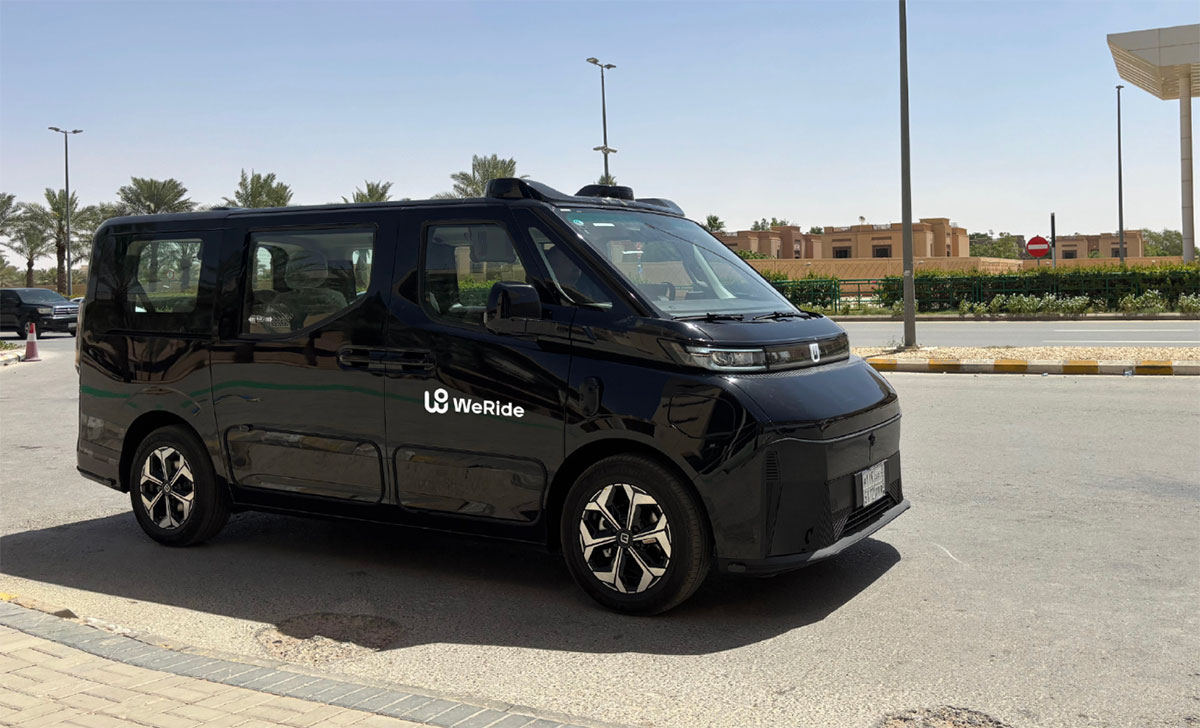
Chinese autonomous driving technology company WeRide and ride-hailing platform Uber have announced plans to launch a commercial robotaxi pilot service in Madrid, marking the partners’ first joint autonomous vehicle deployment in Europe.
The service is expected to begin operations later this year and will allow passengers in Madrid to book autonomous rides directly through the Uber application.
The launch will make Madrid the 12th city globally where WeRide operates robotaxi services and represents another milestone in the company’s international expansion strategy.
Commercial Service Planned for Madrid
According to the companies, the initial phase of operations will use autonomous vehicles equipped with trained safety operators who will remain onboard during rides.
The approach is intended to support safe deployment while the companies gather operational data and monitor system performance.
As key operational milestones are achieved, WeRide, Uber and local fleet partner Avomo plan to gradually expand the size of the robotaxi fleet.
The long-term objective is to deploy hundreds of autonomous vehicles and eventually introduce fully driverless commercial operations across major areas of Madrid.
First Joint European Deployment
The Madrid project represents the first European market jointly served by WeRide and Uber.
Spain also becomes the fifth European country entered by WeRide as the company continues to expand beyond Asia and the Middle East.
The launch follows earlier deployments in the United Arab Emirates, where WeRide and Uber have already introduced fully driverless commercial robotaxi services in Abu Dhabi and Dubai.
The companies have also announced plans to introduce robotaxi operations in Riyadh, Saudi Arabia.
Asset-Light Expansion Strategy
The Madrid deployment reflects WeRide’s strategy of partnering with established local operators rather than building large operational networks independently.
Under the arrangement, WeRide will provide autonomous driving technology while local partner Avomo will manage day-to-day fleet operations.
Avomo, a subsidiary of Moove Cars Group, already supports Uber’s fleet operations in several markets, including Atlanta and Austin in the United States.
The partnership model allows WeRide to leverage existing transportation infrastructure and local expertise while accelerating commercial deployment.
Strategic Partnership Continues to Grow
WeRide and Uber first established a strategic partnership in September 2024.
The companies began offering robotaxi services through the Uber platform in the United Arab Emirates later that year.
In May 2025, the partners expanded their collaboration, announcing plans to deploy autonomous ride-hailing services in 15 additional cities over the next five years across Europe and the Middle East.
With Madrid joining the network, deployments have now been announced or launched in four cities under the partnership.
The remaining locations are expected to be introduced gradually through 2030.
Expanding Global Presence
WeRide continues to increase its international footprint as competition intensifies in the autonomous mobility sector.
The company entered Slovakia earlier this year through what it described as the country’s first national-level commercial autonomous driving project.
In April, WeRide partnered with Grab to launch a public robotaxi service in Singapore.
According to the company, its operations now span 12 countries, while its global autonomous taxi fleet exceeds 1,000 vehicles.
Europe Seen as Growth Opportunity
Madrid is viewed as one of Europe’s more promising robotaxi markets due to its large population, strong mobility demand and dense urban environment.
Tony Han, founder and chief executive officer of WeRide, said the project demonstrates the company’s ability to deploy autonomous driving technology in complex real-world conditions.
Uber’s Global Head of Autonomous Mobility and Delivery, Sarfraz Maredia, said Madrid has the potential to become an important autonomous vehicle market in Europe.
The latest initiative underscores growing efforts by technology companies, automakers and mobility platforms to commercialize autonomous ride-hailing services across international markets as the industry moves toward larger-scale deployment.