
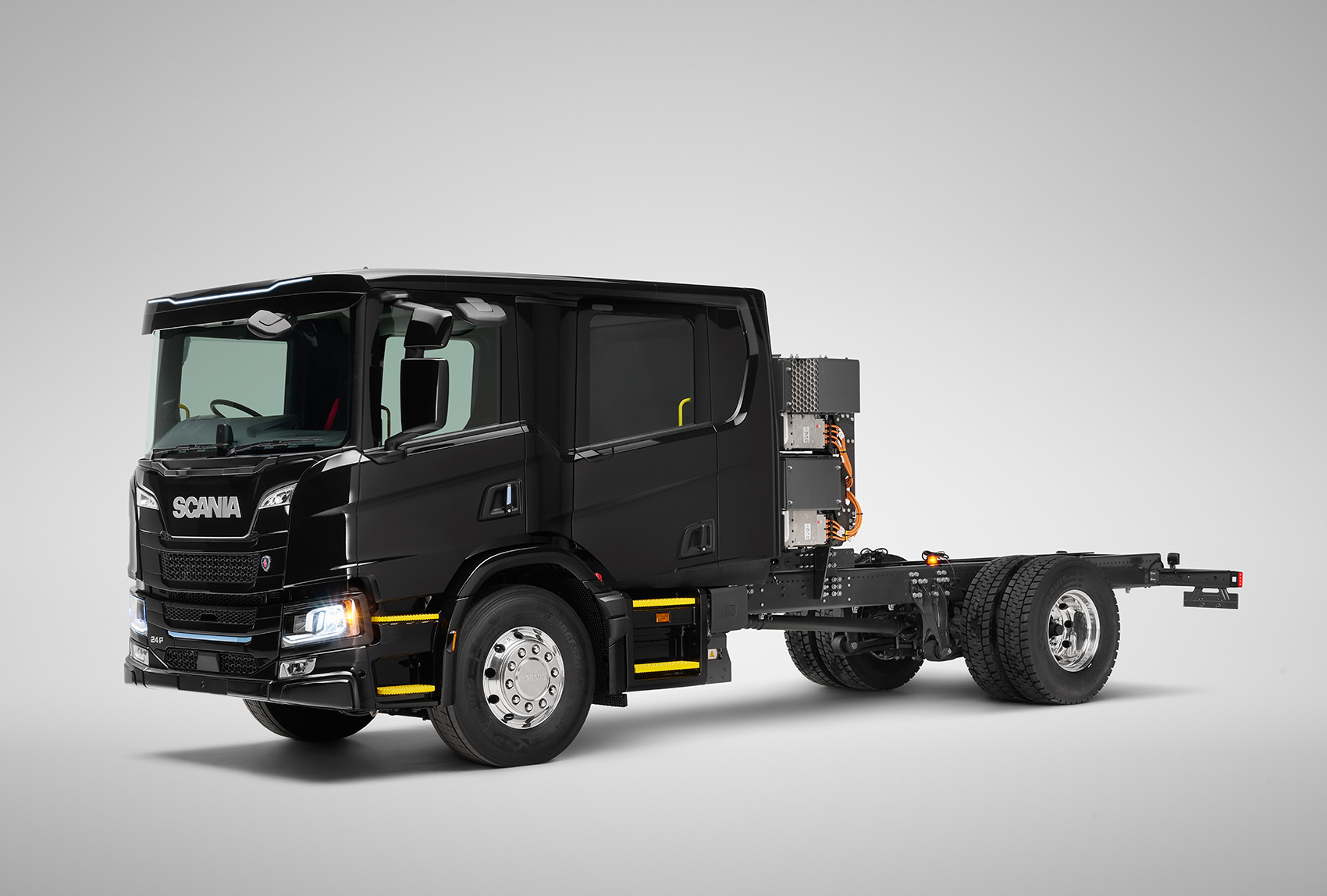
Scania has unveiled its first battery-electric CrewCab, designed specifically for fire, airport and civil rescue operations, marking a further expansion of the Swedish truck manufacturer’s zero-emission vehicle lineup.
The new battery-electric CP31L 4×2 is intended to support emergency response applications while eliminating tailpipe emissions. The vehicle is equipped with 356 kWh of installed battery capacity and operates with a 90% state-of-charge window, providing the energy needed for demanding operational environments.
Scania said the CrewCab has been designed with free frame sides, allowing bodybuilders greater flexibility to customize the vehicle for a variety of rescue and emergency service applications.
Designed for Emergency Response Operations
The battery-electric CrewCab was developed to address growing demand from emergency service operators seeking lower-emission transport solutions without sacrificing operational capability.
According to the company, the vehicle is engineered to maintain high standards of safety, reliability and crew comfort while operating in mission-critical environments.
“We are delighted to be launching our new Scania BEV CrewCab,” said Louise Johansson, Solutions Manager at Scania Commercial responsible for the Fire & Rescue, Airport and Recovery segment.
“The addition of this new cab for battery-electric power underlines our commitment to supporting the electrification of our customers’ fleets – combining sustainability, operational reliability and long-term profitability.”
Scania said the vehicle offers the space, accessibility and dependability required by rescue teams operating in challenging conditions.
Expansion of Electric Vehicle Strategy
The CrewCab launch follows several recent developments in Scania’s battery-electric vehicle portfolio.
In May, the company introduced a new battery configuration for its electric trucks that adds a seventh battery pack beneath the driver’s cab. The additional battery increases energy storage capacity and enables driving ranges of more than 800 kilometers in certain applications.
The enhancement is aimed at supporting longer-distance transport operations and expanding the potential use cases for battery-electric heavy-duty trucks.
Vehicle-to-Grid Technology Demonstrated
Scania has also been exploring the role of electric commercial vehicles in supporting energy infrastructure.
Last month, the company demonstrated what it described as one of the world’s first vehicle-to-grid (V2G) implementations for heavy commercial vehicles using Megawatt Charging System (MCS) technology.
The demonstration highlighted how electric trucks could provide electricity back to the grid through bi-directional charging, potentially creating new revenue opportunities for fleet operators while helping stabilize power networks.
The launch of the battery-electric CrewCab reflects Scania’s broader strategy to expand electrification across specialized commercial vehicle segments as governments and fleet operators increasingly seek lower-emission transport solutions.