
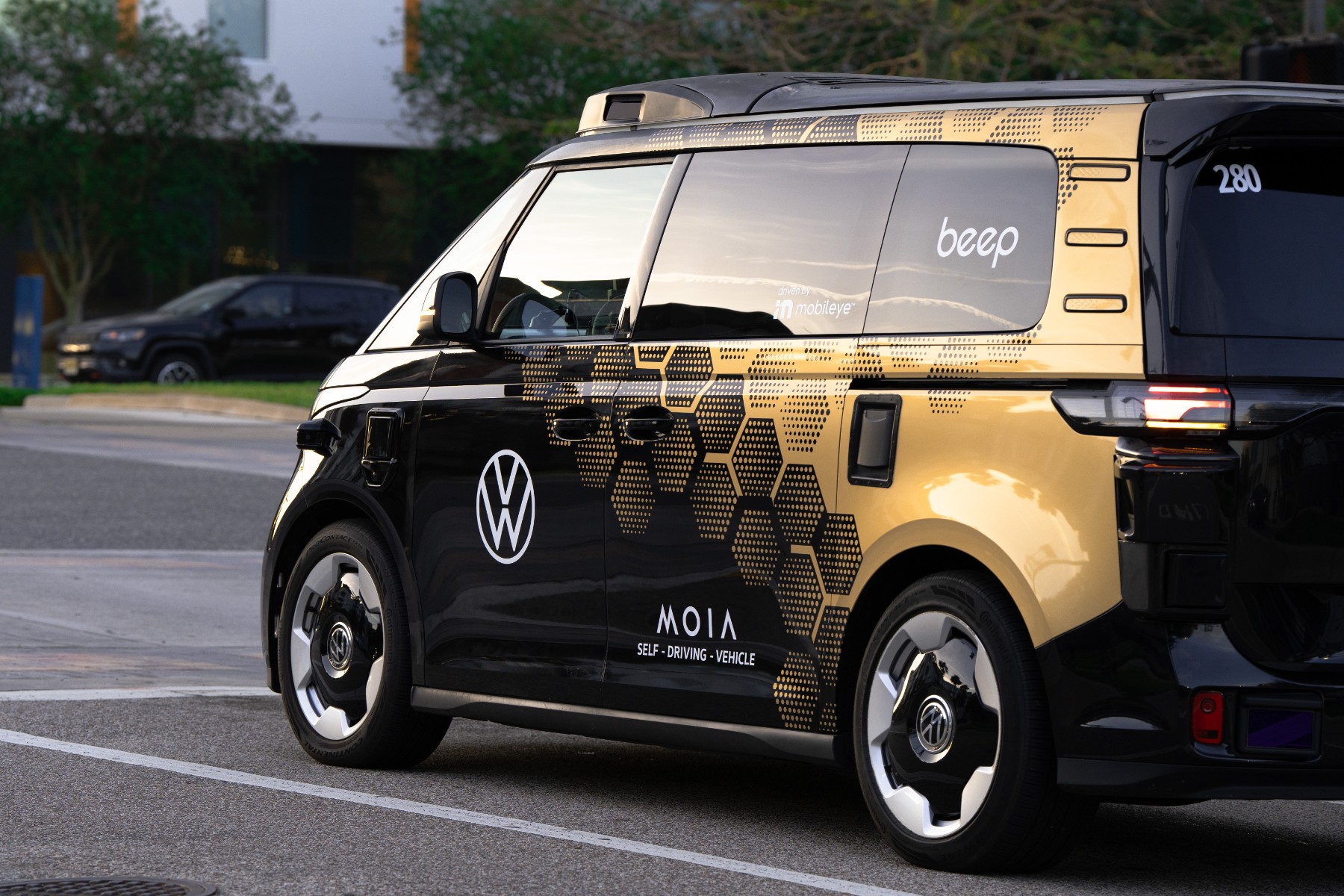
Volkswagen Group’s mobility brand Moia is partnering with Beep, an Orlando-based operator of autonomous transport systems, to deploy large-scale shared autonomous shuttle services across the United States. The companies say their long-term ambition is to build a fleet of up to 5,000 vehicles, aimed primarily at public transportation use cases rather than private robotaxi rides.
If realized, the deployment would rival the scale of Moia’s separate collaboration with Uber, which is targeting “thousands of vehicles” for robotaxi services. However, the Beep partnership diverges in its approach: instead of focusing on individual ride-hailing, the companies are prioritizing multi-passenger autonomous shuttles designed to complement existing public transit networks.
Beep positions itself as a provider of shared, community-oriented mobility services, working alongside municipalities, transit agencies, and private campuses. The model emphasizes integrating smaller autonomous vehicles into traditional transport systems to improve efficiency and accessibility, particularly in areas underserved by conventional bus or rail infrastructure.
“MOIA America’s expansion into the Orlando region reflects the growing momentum of its autonomous mobility strategy in the USA,” said Moia CEO Sascha Meyer. “Through the MOIA brand, we are enabling autonomous mobility for a growing number of partners worldwide with a turnkey solution that combines the vehicle, MaaS technology, and operational expertise. MOIA America’s strategic partnership with Beep in the U.S. marks an important step in supporting microtransit operators and advancing driverless mobility in public transit.”
The collaboration will begin in the Orlando region, where Beep already operates autonomous shuttle routes in Lake Nona. The area currently hosts a network of five routes and eight vehicles connecting key destinations, serving as an early testbed for scaling operations. Over time, the companies plan to expand into additional U.S. markets over the next decade.
The initiative builds on Moia’s broader autonomous vehicle efforts in North America. On early April, Volkswagen subsidiary MOIA America and Uber began testing autonomous microbuses in Los Angeles as part of preparations to launch a commercial robotaxi service by late 2026. The companies said initial trials would roll out in the following weeks with around 10 autonomous versions of the Volkswagen ID. Buzz, a production-ready vehicle designed to carry up to four passengers.
That program also uses vehicles equipped with sensors such as lidar and radar, along with autonomous driving systems developed by Mobileye. The same vehicle platform — the ID. Buzz AD — is being deployed in multiple pilot programs, including projects in Hamburg and Berlin, according to company statements.
For Beep, the partnership is about scaling a model it has already tested across several U.S. locations. The company currently operates autonomous shuttle services in seven sites across Florida and California and has signaled potential future deployments of vehicles developed by Benteler’s Holon unit, as previously reported by industry outlets.
“Beep’s strategic partnership with MOIA America unites the core capabilities needed to scale autonomous mobility — purpose-built production vehicles, proven software, and trusted operations,” said Kevin Reid, CEO and Chairman of Beep. “This collaboration will help redefine microtransit, one of the fastest growing transportation segments, through cost efficient connectivity that leverages AI and autonomous technology to unlock a future where opportunity and access can reach every corner of a community.
“By delivering flexible, meaningful mobility now, efficient microtransit becomes the launchpad for a transformative era of autonomous shared transportation that expands opportunity, drives public transportation ridership, and redefines how communities move,” added Reid.