
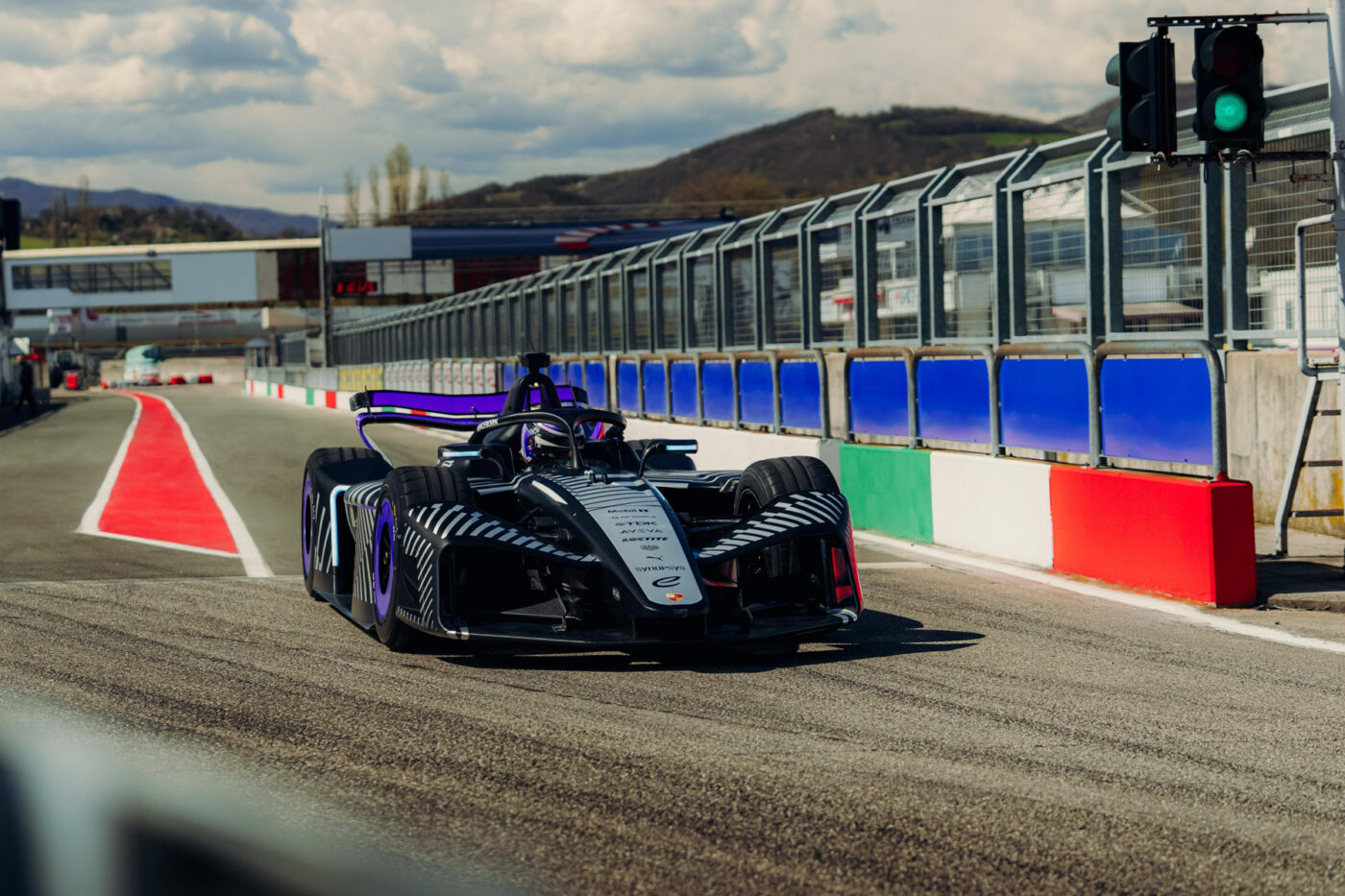
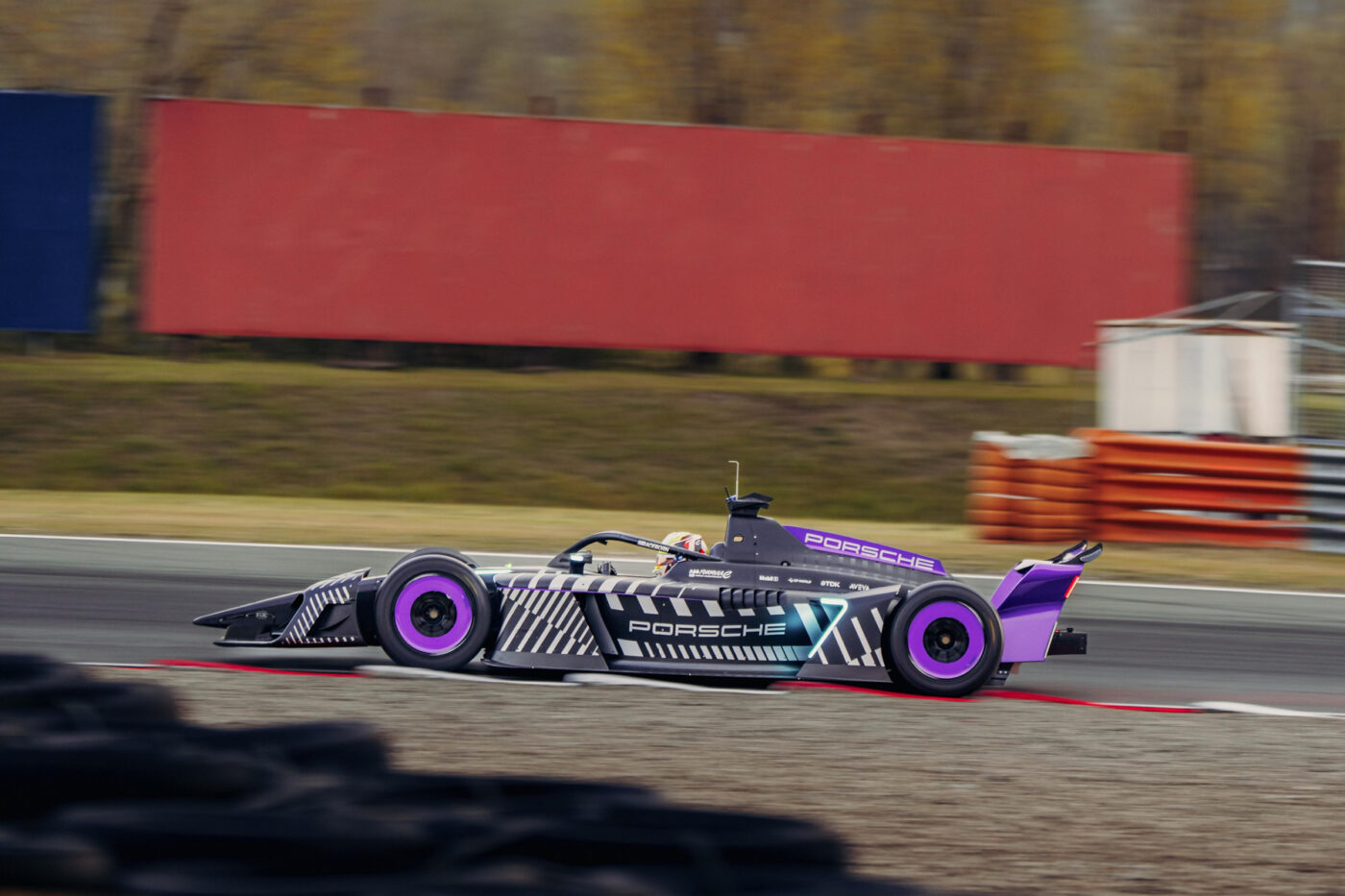
Porsche Motorsport has unveiled its interpretation of the upcoming Gen4 regulations for Formula E, presenting the 975 RSE prototype ahead of the 2026/27 season. The electric racing series’ next-generation cars, first introduced in November, are expected to deliver what organizers describe as the largest performance leap in the championship’s history.
Under the Gen4 framework, core components—including the chassis, battery, and most suspension elements—remain standardized across all teams. Manufacturers retain freedom to develop key areas such as software, rear powertrain, rear suspension, and electric motor systems. Porsche has already taken its 975 RSE to the track for initial testing and promotional runs.
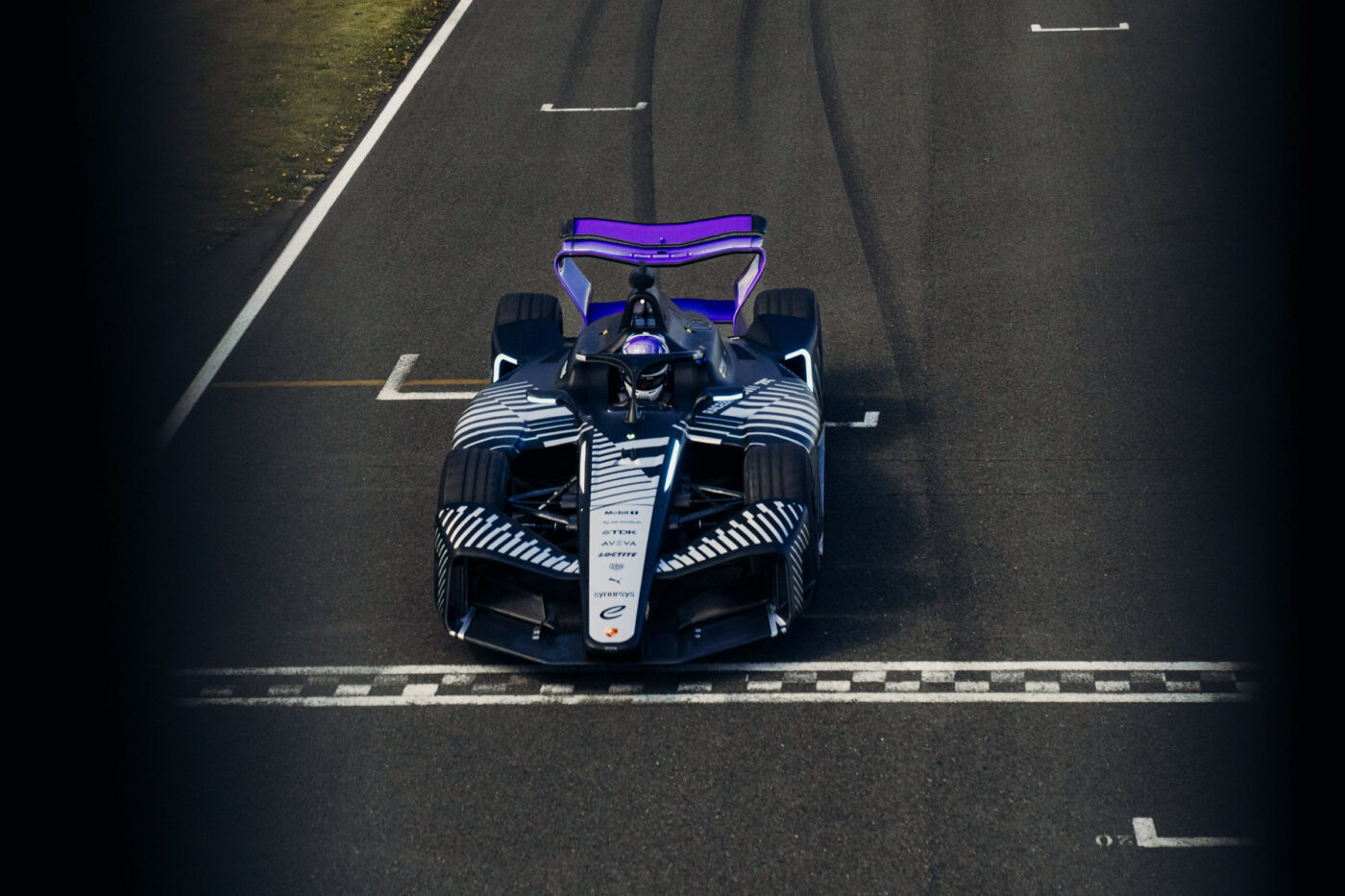
The new regulations introduce permanent all-wheel drive, replacing the limited-use system seen in Gen3 EVO cars during qualifying and “Attack Mode.” The front powertrain unit, supplied by Lucid Motors, delivers 250 kW, while the rear axle—developed by manufacturers—has been increased to 350 kW. Combined, the system produces 600 kW, equivalent to 816 horsepower.
Engineers have also focused on aerodynamic performance, with the new standardized chassis generating increased downforce. According to Porsche, Gen4 cars are expected to accelerate faster than Formula 1 vehicles and exceed speeds of 300 km/h.
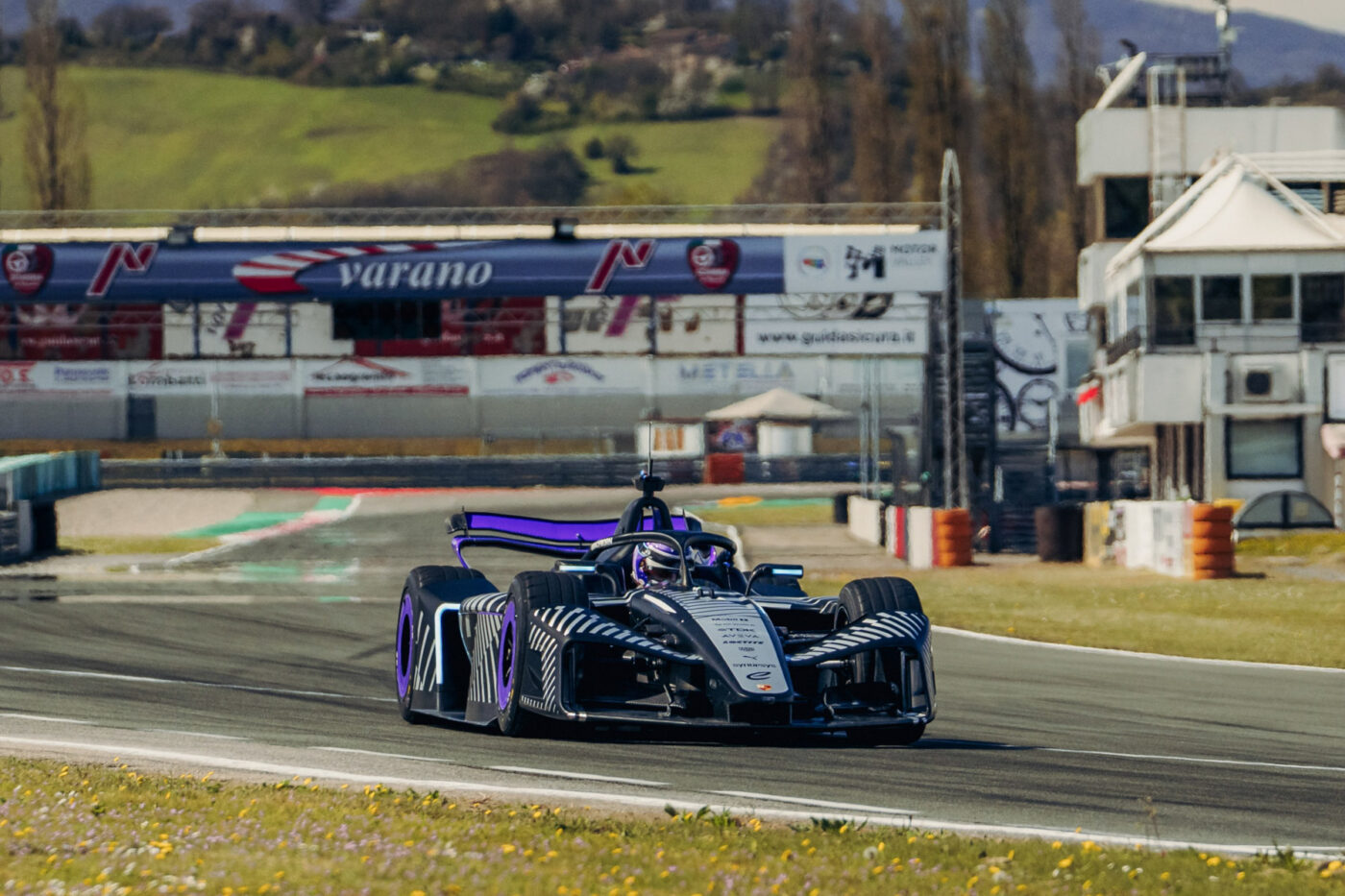
“Within roughly a decade, Formula E has become so fast that aerodynamic downforce is now a necessity. However, downforce always comes with drag and increases energy consumption,” said Olivier Champenois, Technical Project Leader for Formula E at Porsche Motorsport.
To balance performance and efficiency, the Gen4 cars will feature two aerodynamic configurations: a low-downforce setup for races aimed at maximizing energy efficiency, and a high-downforce package for qualifying sessions to unlock peak performance.
Porsche indicated that drivetrain efficiency, already exceeding 97% in its previous 99X Electric model, was not the primary focus during development. Instead, engineers prioritized weight reduction, durability, and cost optimization.
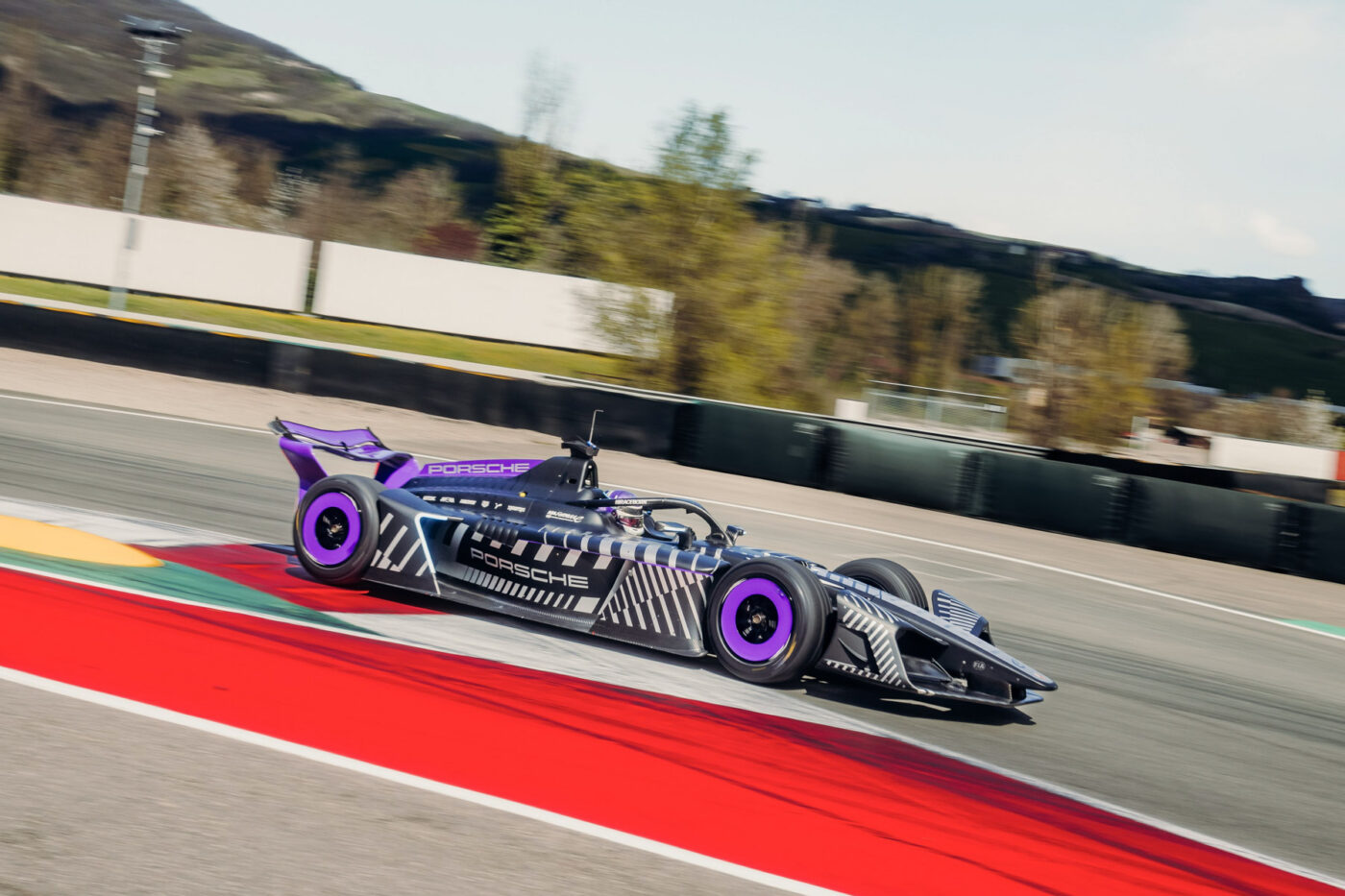
“As efficiencies approach perfection, other topics moved higher up the GEN4 development brief, including potential in terms of weight, durability and costs – similar to EVs for the road,” Champenois said. “The 975 RSE produces 71 percent more peak power than its predecessor. At the same time, we were able to reduce the weight of many parts.”
Reflecting on the evolution of the series, Porsche’s Head of Motorsport, Thomas Laudenbach, highlighted the rapid progress since Formula E’s launch in 2014.
“When the championship started in 2014, every driver needed two cars per race. One battery alone was not enough to cover the full race distance. Those days are long gone,” Laudenbach said. “Since 2024, we have been developing a race car that puts us on the level of Formula 2 cars. EVs are not only catching up with the standards we are used to; their strengths are becoming increasingly evident – on the track and on the road.”
Florian Modlinger, Overall Project Leader for Formula E at Porsche, said the regulatory framework continues to emphasize efficiency as a link to road-relevant technologies.
“The concept remains the same: the regulations force us to maximise the efficiency of our cars in every respect – because that makes us relevant for the road,” Modlinger said. “The races should become even more attractive, as the new cars are considerably faster. The acceleration is impressive, and we expect top speeds of up to 335 km/h. I’m very curious to see how the fans will react.”
Porsche factory driver Nico Müller said the new generation car represents a significant step forward in driving dynamics and performance.
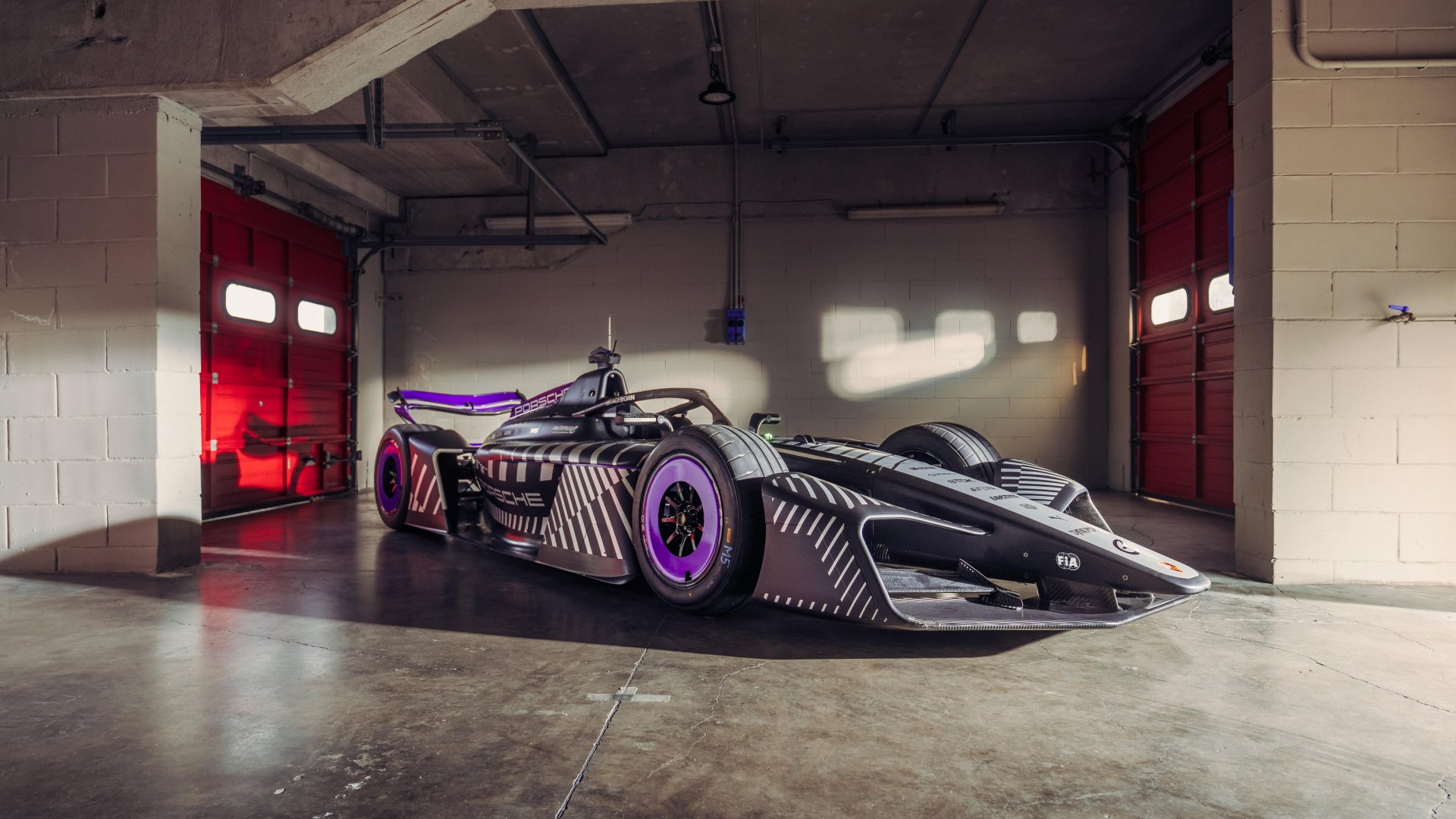
“The 975 RSE and its competitors are a massive step forward for the sport. I’m a big fan of how aggressively you can drive. Especially in qualifying, when everyone is pushing to the limit, it should be spectacular – particularly because of the strong acceleration out of the corners,” Müller said. “I’m glad I was involved in the simulator work from the beginning. Pascal and I share the testing duties. That’s good, because it allows us to tailor the 975 RSE precisely to our needs.”
His teammate, Pascal Wehrlein, highlighted both the performance and visual design of the new car.
“The new Porsche 975 RSE is a really cool race car. The GEN4 is extremely fast and great fun for us drivers. I believe it will be a real eye-opener for many fans and critics,” Wehrlein said. “I also like the look of the 975 RSE. The aerodynamics make the car look uncompromising, and our livery for the test runs looks pretty good.”