
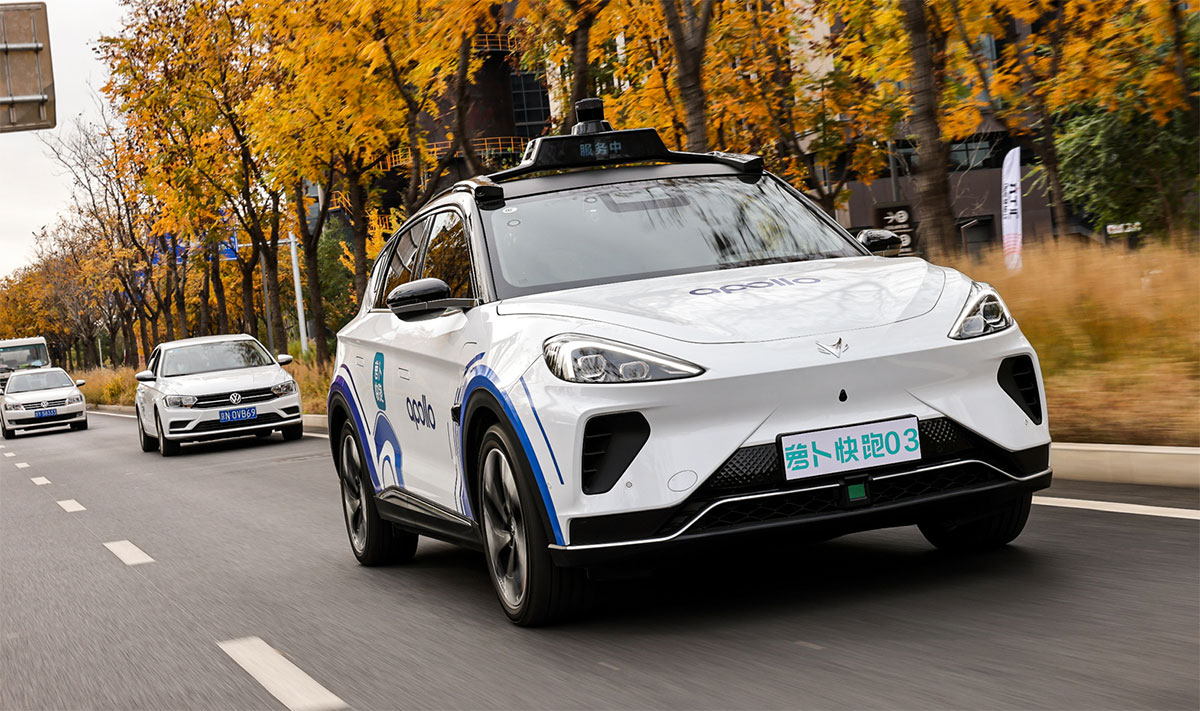
Chinese technology company Baidu experienced a rare disruption in its autonomous ride-hailing service, Apollo Go, after multiple robotaxis stalled simultaneously in the central Chinese city of Wuhan, according to local media and authorities.
The incident occurred on the night of March 31, when several Apollo Go vehicles stopped operating on city roads, including elevated highways, leaving some passengers temporarily stranded. Local traffic police said they began receiving emergency calls around 9 p.m. and responded to the scene, ensuring that all passengers disembarked safely with no injuries reported.
A preliminary investigation by Wuhan traffic authorities attributed the disruption to a system failure. Customer service representatives from Apollo Go told local media that the issue was linked to network abnormalities, although Baidu has not yet issued an official statement on the cause.
According to Chinese outlet The Paper, citing industry insiders, the stalling may have been triggered by a built-in safety response mechanism. “This is a proactive strategy by the system to ensure safety, and similar situations are not uncommon in the development of the global autonomous driving industry,” the report cited the sources as saying.
Comparable incidents have occurred in other markets. In December 2025, autonomous vehicles operated by Waymo temporarily stalled in San Francisco after a power outage disrupted traffic signals, prompting the system to activate a “minimal risk condition” protocol.
The Wuhan disruption has since been resolved and Apollo Go services have resumed normal operations, according to the report.
Baidu began developing autonomous driving technology in 2013 and has since expanded Apollo Go into 26 cities globally. As of February 2026, the platform had completed more than 20 million ride orders, based on the company’s latest earnings report.
In the fourth quarter of 2025, Apollo Go delivered 3.4 million fully driverless rides, representing growth of more than 200% year-on-year.
The incident comes shortly after Apollo Go launched fully driverless commercial operations in Dubai, marking its entry into the Middle East following a brief suspension of services in the United Arab Emirates linked to regional tensions.