
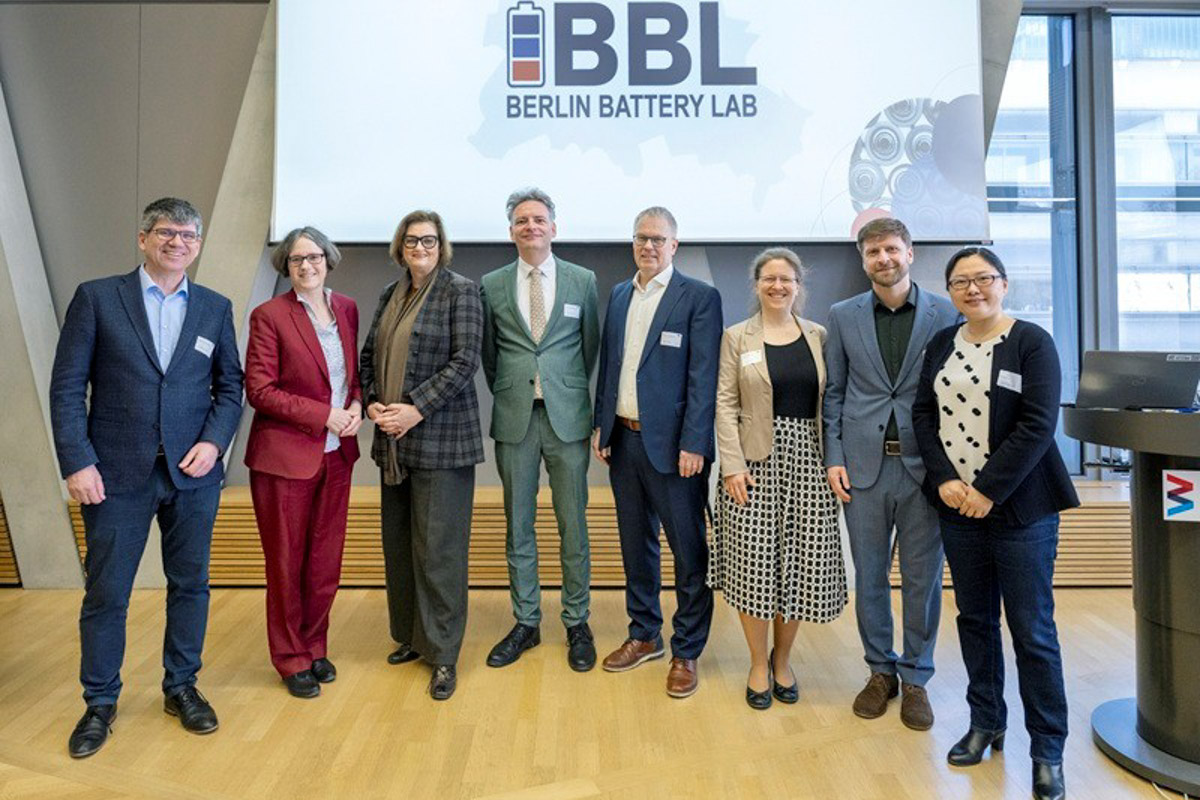
The Federal Institute for Materials Research and Testing (BAM), Helmholtz-Zentrum Berlin (HZB), and Humboldt-Universität zu Berlin (HU) have officially inaugurated the Berlin Battery Lab (BBL), a joint research platform focused on developing resource-efficient battery technologies, particularly sodium-based systems.
The partners said the facility will integrate expertise in materials research, cell chemistry and prototype manufacturing, while also enabling collaboration with external partners from academia and industry. The lab is intended to accelerate the transition from research to real-world applications.
“The research infrastructure of the Berlin Battery Lab is also open to external partners from science and industry and is designed to accelerate the transfer from research to application,” the institutions said in a joint statement.
The initiative builds on a memorandum of understanding signed in 2025, with the aim of strengthening Berlin’s position as a hub for next-generation battery technologies, including sodium-ion and lithium-sulphur chemistries.
Each partner contributes specialised capabilities: Humboldt-Universität is recognised for its work on sodium-ion batteries, HZB brings expertise in lithium-sulphur research and operates advanced X-ray facilities such as BESSY II, while BAM focuses on battery safety and materials development.
Ina Czyborra said the project reflects the city’s strategic focus on innovation. “The Berlin Battery Lab illustrates Berlin’s strength in strategically bringing together top-level research and technological needs – through close cooperation between three outstanding partners and a short path from research to application,” she said. “Battery research is a key technology on the High-Tech Agenda.”
She added that the initiative could help strengthen Germany’s industrial resilience. “The Berlin Battery Lab strengthens Germany’s technological sovereignty by reducing dependence on critical raw materials and increasing the resilience of key value chains,” Czyborra said.
Ulrich Panne said the platform is designed to address delays in commercialising new battery technologies. “Many new battery technologies are being developed in Germany, but they are not reaching application quickly enough,” he said. “This is exactly where the Berlin Battery Lab makes a difference: here in Berlin, we bring together research, development and cell manufacturing while integrating safety considerations and regulatory requirements to help transfer sustainable innovations into practice.”
The State of Berlin is supporting the project with approximately €2.4 million in funding from the European Regional Development Fund (ERDF) between 2026 and 2028.