
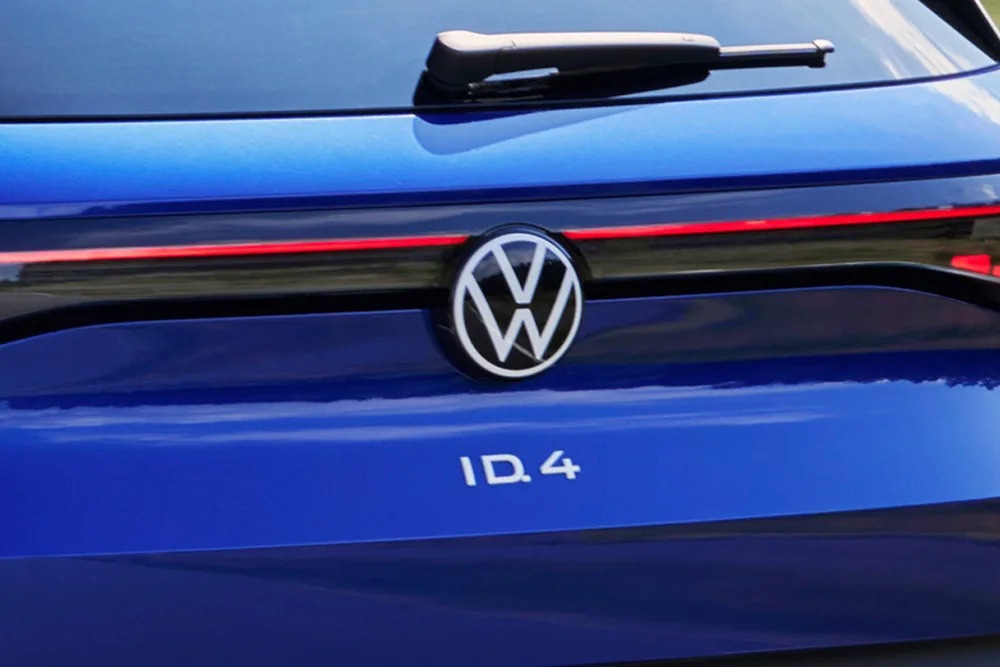
The Volkswagen Group has delivered more than four million battery-electric vehicles (BEVs) worldwide, marking a new milestone in the German automaker’s electrification push as it expands its global lineup of electric models.
The company said the milestone comes shortly after the Volkswagen brand itself reached two million electric vehicle deliveries, with roughly half of the group’s total BEV sales attributed to the core brand.
See also: Volkswagen Considers €60 Billion Cost Cuts by 2028 Amid Mounting Financial Pressure
Volkswagen began tracking BEV deliveries in 2013 when the e-up! became its first mass-produced fully electric vehicle. The e-Golf followed in 2014, while sales volumes increased significantly after 2019 with the launch of the company’s cross-brand electric vehicle program based on the Modular Electric Drive Matrix (MEB) platform.
According to the company, around three million of the four million vehicles delivered so far are based on the MEB platform.
Volkswagen Group CEO Oliver Blume said the milestone reflects the company’s growing presence in the global electric vehicle market. “Our product offensive is paying off: we are one of the top five manufacturers worldwide and have one of the broadest all-electric model portfolios in our industry,” Blume said. “We are continuing to expand it this year with our Electric Urban Car Family in the attractive entry segment.”
See also: Volkswagen Group Reaches Five Million Electric Drive Units as EV Deliveries Rebound
The Electric Urban Car Family will include several upcoming compact electric models such as the Cupra Raval, the Volkswagen ID. Polo, the Volkswagen ID. Cross and the Škoda Epiq. The Cupra Raval is expected to be the first model to launch, with order books scheduled to open in the first half of 2026.
Blume also noted the accelerating pace of electric vehicle deliveries. “The fourth million took just one year. We will further accelerate this momentum with our exciting products and innovative technologies,” he said.
Across its brands, Volkswagen Group currently offers around 30 fully electric passenger car models covering multiple segments. In addition, electric commercial vehicles are produced by Traton brands including Scania, MAN, International and Volkswagen Truck & Bus.
See also: Volkswagen Seen as Major Beneficiary of Relaxed EU CO₂ Rules, Analysts Say
Electric vehicles from the group are now manufactured at roughly 20 production sites globally, spanning Europe, China, the United States and Brazil. Since 2013, about 77% of the company’s BEVs have been produced in Europe, where Volkswagen operates 11 electric vehicle production facilities.
The group also maintains a strong manufacturing presence in China, where about one-fifth of its BEVs have been produced at plants in Anting, Foshan, Hefei and Changchun. In the United States, BEV production takes place in Chattanooga and Tulsa, while Brazil recently began producing electric commercial vehicles at a plant in São Paulo.
In terms of delivery markets, Europe accounted for around 68% of Volkswagen’s total BEV deliveries since 2013, followed by China with about 20% and the United States with roughly 8%.
See also: Volkswagen to Rename ID.4 as ID. Tiguan, Union Confirms
Within the group’s brand structure, the Core Brand Group — which includes Volkswagen Passenger Cars, Škoda, Seat/Cupra and Volkswagen Commercial Vehicles — represented around 72% of BEV deliveries. The Progressive Brand Group, led by Audi, accounted for roughly 22%, while Porsche contributed about 6%.
Compact-class vehicles made up around 70% of the group’s BEV sales, including models such as the Volkswagen ID.3, Volkswagen ID.4, Škoda Enyaq, Cupra Born and Audi Q4 e-tron. SUVs and crossover-style vehicles were the most popular body styles, representing more than half of the electric vehicles delivered.
Volkswagen said it delivered 983,100 electric vehicles worldwide in 2025, nearly one-third more than in 2024. Deliveries in Europe rose by 66%, while sales in China declined by 44% during the same period.