
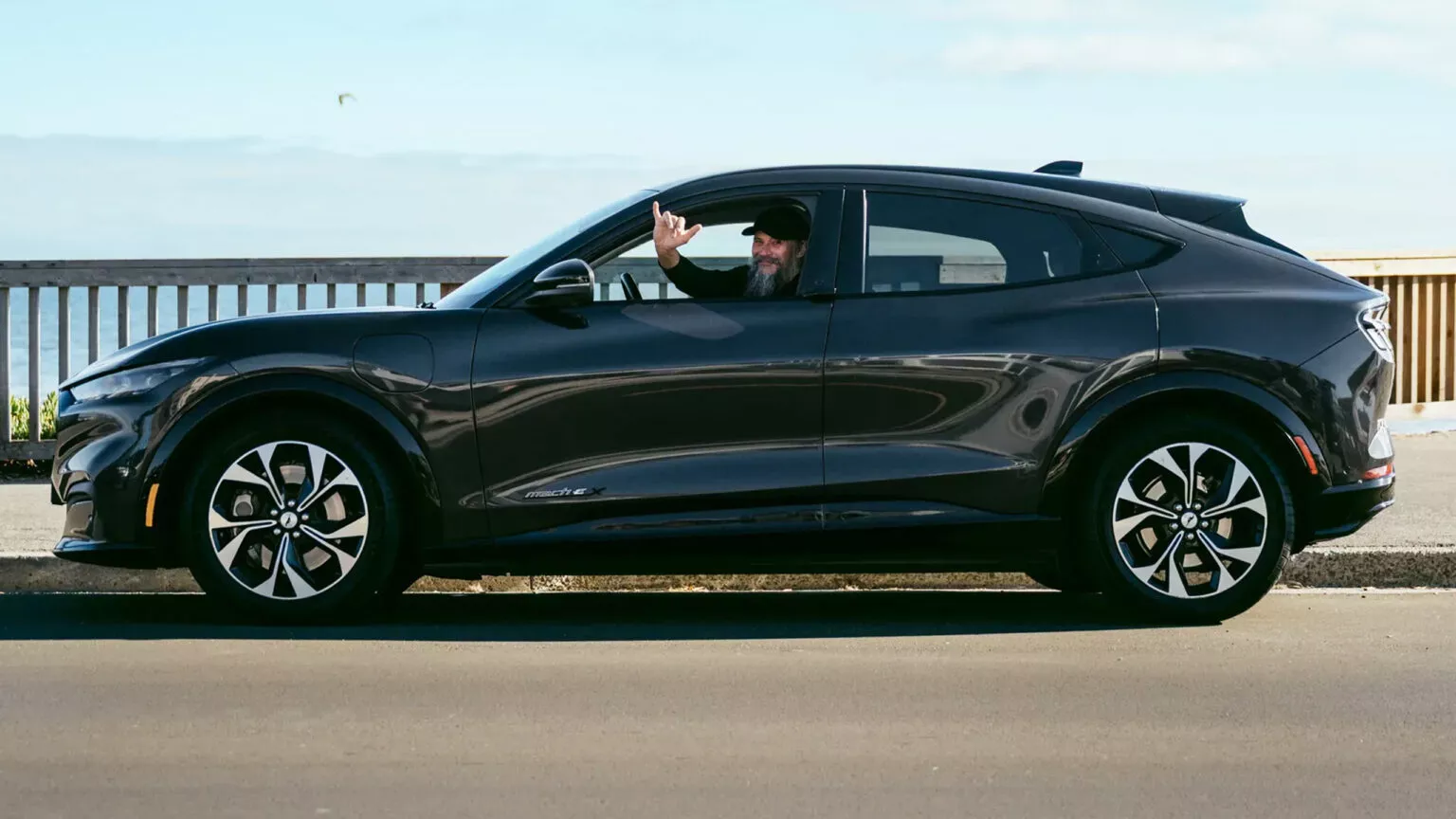
The Ford Mustang Mach-E, introduced by Ford Motor in 2020, has faced ongoing debate over its place in the automaker’s lineup. Despite early skepticism, the electric SUV has established itself as a steady option in the growing EV market, although it has yet to surpass the sales dominance of the Tesla Model Y.
One owner in Santa Cruz, California has pushed the vehicle far beyond typical usage levels. David Blenke has driven more than 316,000 miles (about 508,500 kilometers) in a Mach-E Premium equipped with the extended-range battery since purchasing it in June 2022.
See also: Ford Unveils 2026 Mustang Mach-E California Special with Distinctive EV Styling
Blenke operates a private car service in the Santa Cruz area and says the vehicle has carried more than 7,000 passengers during that time. He acquired the car during the global semiconductor shortage, after initially facing a wait of about nine months before locating an available vehicle in nearby Monterey.
The vehicle attracted attention from Ford when it passed the 250,000-mile mark last year. Speaking recently with Forbes, Blenke said the battery has degraded by about 8% despite the high mileage.
See also: Ford Mustang Mach-E Ranks High in Customer Loyalty, Data Shows
According to Blenke, the vehicle still delivers close to 300 miles (about 482 kilometers) of range on a full charge.
Battery degradation is often cited as a concern among potential electric vehicle buyers. However, Blenke’s experience appears to compare favorably with broader industry data.
EV analytics firm Recurrent has reported that most electric vehicles with more than 250,000 miles retain about 80% of their original battery capacity. If Blenke’s estimate is accurate, his Mach-E’s remaining battery capacity of roughly 92% would be above the typical average.
See also: Ford Mustang Mach-E Redesign Pushed Back To End Of Decade
During the vehicle’s use, Blenke said the Mach-E has required routine maintenance such as six sets of tires, seven cabin air filters and more than twenty scheduled 10,000-mile inspections. He said the vehicle has not required any repairs and still uses its original brake components.
Blenke attributes part of the battery’s longevity to his charging habits. He typically charges the vehicle to 90% overnight and avoids letting the battery drop below 20%. Most charging is done using a Level 2 home charger and public stations from Electrify America, while an adapter allows access to the Tesla Supercharger network when needed.