
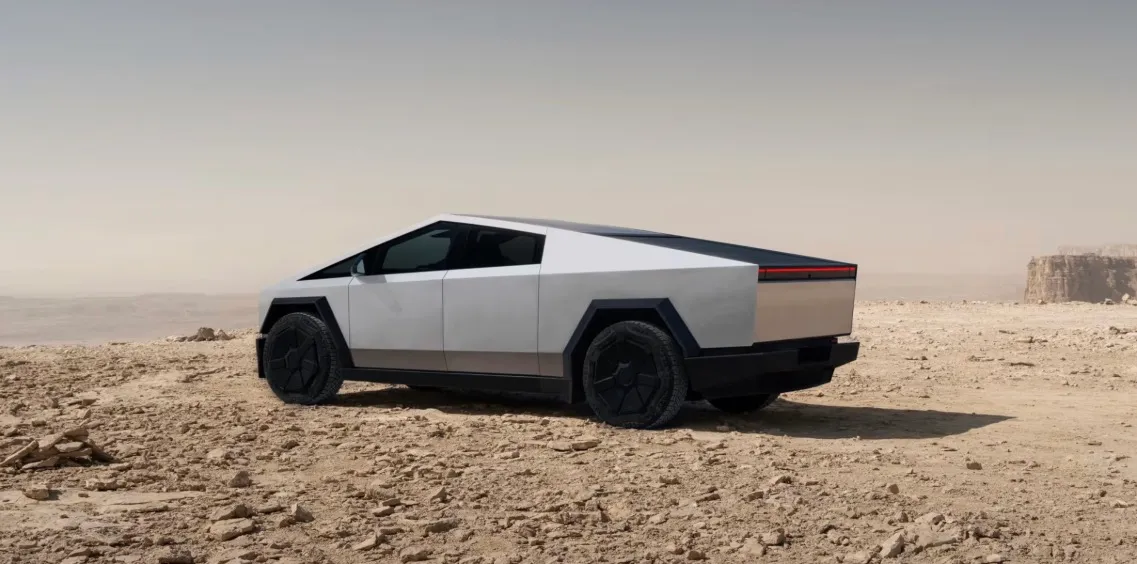
Tesla has introduced a lower-priced all-wheel-drive version of its Cybertruck, reducing the entry price of the electric pickup to $59,990 as the company seeks to boost demand following slower-than-expected sales.
The new model undercuts the previous base offering—now renamed “Premium All-Wheel Drive”—which remains priced at $79,990. Tesla also reduced the price of the high-performance Cyberbeast variant by $15,000 to $99,990, reversing an increase implemented last year.
The pricing shift comes as the unconventional pickup has struggled to reach the ambitious sales targets outlined when it was unveiled. Industry reports indicate deliveries have remained modest relative to expectations, while inventories have accumulated.
Tesla had previously offered a rear-wheel-drive Cybertruck starting at about $70,000 but discontinued that version in September after weak demand. Despite the latest price cuts, the vehicle still costs significantly more than the roughly $40,000 base price originally promised by Chief Executive Elon Musk.
The new entry-level variant retains all-wheel drive and delivers up to 325 kW of power with an estimated range of about 523 kilometers (325 miles), similar to earlier configurations. However, its towing capacity is reduced to about 7,500 pounds compared with roughly 11,000 pounds for the Premium All-Wheel Drive model.
Unlike the discontinued rear-wheel-drive version, the new base model includes several features previously omitted, such as bed power outlets and a retractable tonneau cover. It replaces adaptive air suspension with adaptive damping, resulting in a simplified but still well-equipped configuration.
Tesla’s move suggests a strategy to expand the potential customer base for the Cybertruck while clearing existing inventory. Electric pickup trucks remain a competitive segment in the United States, where buyers often prioritize towing capability, range and price.
The Cyberbeast, positioned as the performance flagship of the lineup, continues to offer substantially higher output and acceleration than other variants despite its reduced price.
Analysts say the adjustments reflect broader challenges in scaling production and demand for new electric vehicle models, particularly those with unconventional designs.