
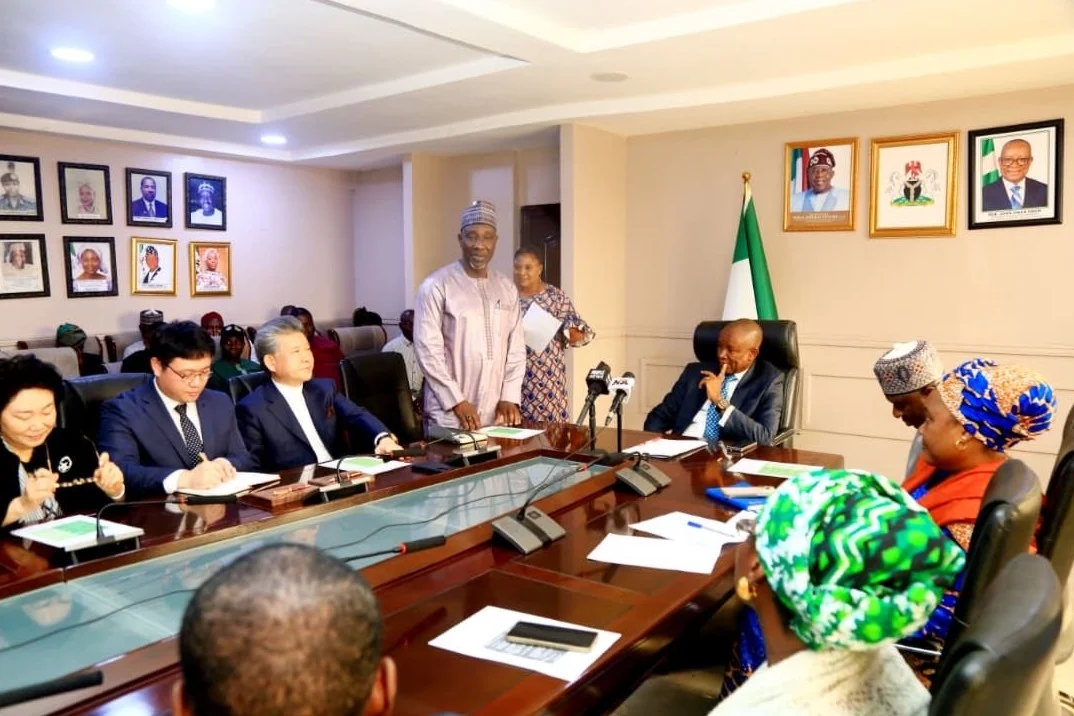
Nigeria has signed a memorandum of understanding with South Korea’s Asia Economic Development Committee to establish an electric vehicle manufacturing plant and roll out nationwide charging infrastructure, as the country steps up efforts to build a domestic electric mobility industry.
The project, announced by the National Automotive Design and Development Council (NADDC), is expected to support local production of electric vehicles with a planned annual capacity of up to 300,000 units. It is also intended to promote technology transfer, attract investment and support skills development in Nigeria’s automotive sector.
See also: South Africa Weighs Up to 50% Tariffs on Vehicle Imports From China, India
The initiative will be implemented in phases, beginning with vehicle assembly and later transitioning to full-scale local manufacturing. The council said the project could create around 10,000 jobs once fully operational, although no timeline has been disclosed.
“This partnership will accelerate technology transfer, investment promotion, human capital development, as well as research, design and innovation,” the NADDC said in a statement, describing the project as a key step toward establishing a sustainable automotive ecosystem and expanding electric mobility adoption in the country.
See also: Tesla Enters African Market With First Official Launch in Morocco
The planned facility aligns with Nigeria’s broader strategy to reduce reliance on imported vehicles. Local media estimate that the country imports several hundred thousand vehicles each year, the majority of them used petrol- and diesel-powered models.
Nigeria has already begun laying the regulatory groundwork for electric vehicle production. Late last year, the country’s Senate passed the Electric Vehicle Transition and Green Mobility Bill, 2025, which promotes local EV manufacturing, mandates the development of a nationwide charging network and introduces incentives aimed at job creation and industrial development. The legislation also sets stricter requirements for foreign automakers and establishes a coordinated legal framework involving multiple government ministries.
See also: Xpeng Expands Middle East and Africa Presence With New Market Entries and Partnerships
Additional policy measures have been introduced to stimulate demand. In December 2024, the government launched a consumer credit programme to support the purchase of locally assembled electric cars, motorcycles and three-wheelers, part of a broader push to accelerate electrification of transport.
The agreement with the Asia Economic Development Committee marks Nigeria’s latest move to position itself as a regional hub for electric vehicle manufacturing and charging infrastructure in Africa.