
Chinese electric vehicle maker Xpeng has begun overseas deliveries of its new P7+ electric sedan, with the model now available in several international markets, including Germany, where prices start at €46,600.
Xpeng said in a post on its Weibo account that large-scale overseas deliveries of the 2026 model year P7+ are underway, with plans to offer the vehicle in 36 countries and regions, including across Europe. The company did not specify which markets are receiving the first shipments.
The P7+ has been on sale in China since November 2024, initially as a battery-electric vehicle. For its next-generation lineup, Xpeng split the long-running P7 nameplate into two distinct models: the new P7, positioned as a sportier sedan, and the P7+, which is aimed at customers seeking more practicality and family-oriented use.
See also: Xpeng P7+ to Gain EREV Variant with 325 km Electric Range
In Europe, the P7+ made its regional debut in early January at the Brussels Motor Show and has been available to order in Germany since mid-January. European-bound P7+ units, along with Xpeng’s G6 and G9 electric SUVs, are set to be manufactured by Magna in Graz, Austria. Xpeng has confirmed that test production has begun there, but has not yet announced the start of series production.
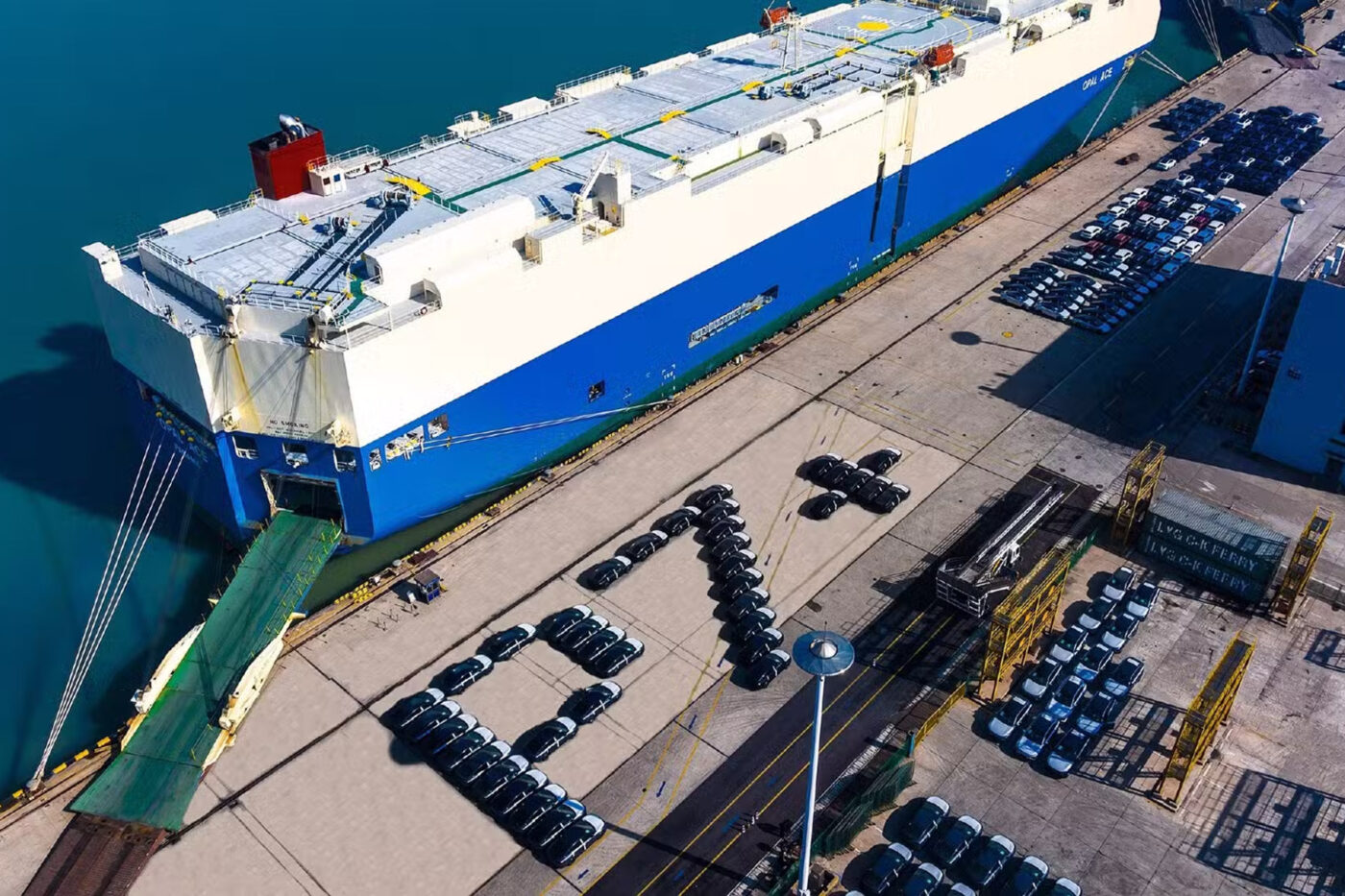
The first overseas deliveries now underway are likely vehicles produced in China for markets outside Europe. Promotional images released by Xpeng showed multiple P7+ vehicles positioned at a port alongside a transport ship, though the company did not disclose their specific destinations.
See also: Next-Generation Xpeng P7 Electric Sedan: Specifications, Range and Price
In Europe, the P7+ is offered exclusively with battery-electric drivetrains, while the Chinese market also includes a range-extender variant. The electric version features an LFP battery with 5C fast-charging capability, allowing the vehicle to charge to 80% in about 12 minutes. With a maximum battery capacity of 74.9 kWh, Xpeng says the P7+ can achieve a standard driving range of up to 530 kilometres, reflecting the company’s focus on efficiency rather than larger battery packs.