

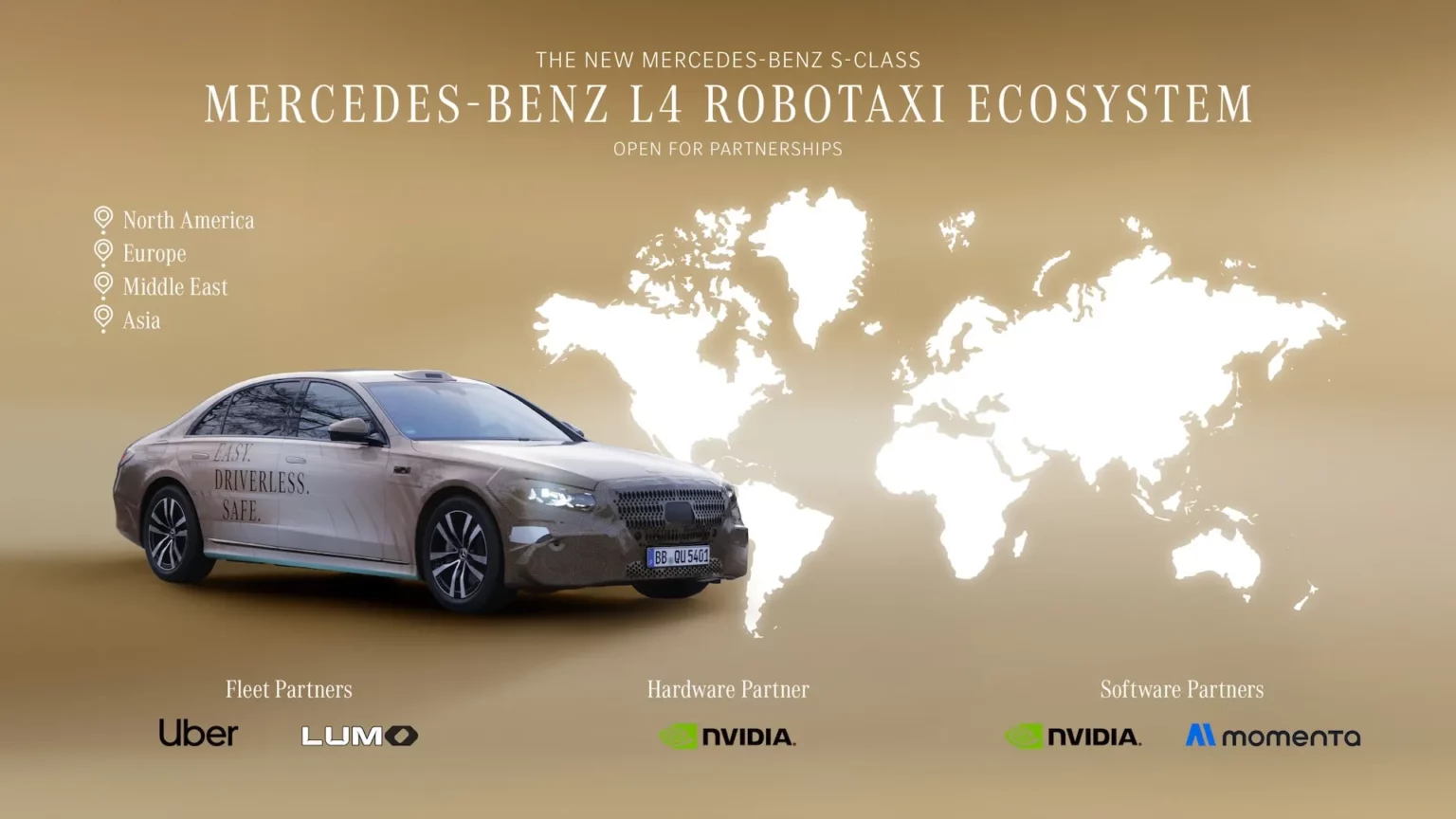
Mercedes-Benz is building a global robotaxi ecosystem around its S-Class sedan, partnering with Nvidia, Momenta, Uber and mobility operator Lumo, with initial SAE Level 4 deployments planned for Abu Dhabi later this year.
The German premium carmaker said the new programme will see fully driverless S-Class vehicles rolled out across selected markets in the Americas, Asia, Europe and the Middle East, as automakers and technology firms race to commercialise autonomous ride-hailing services.
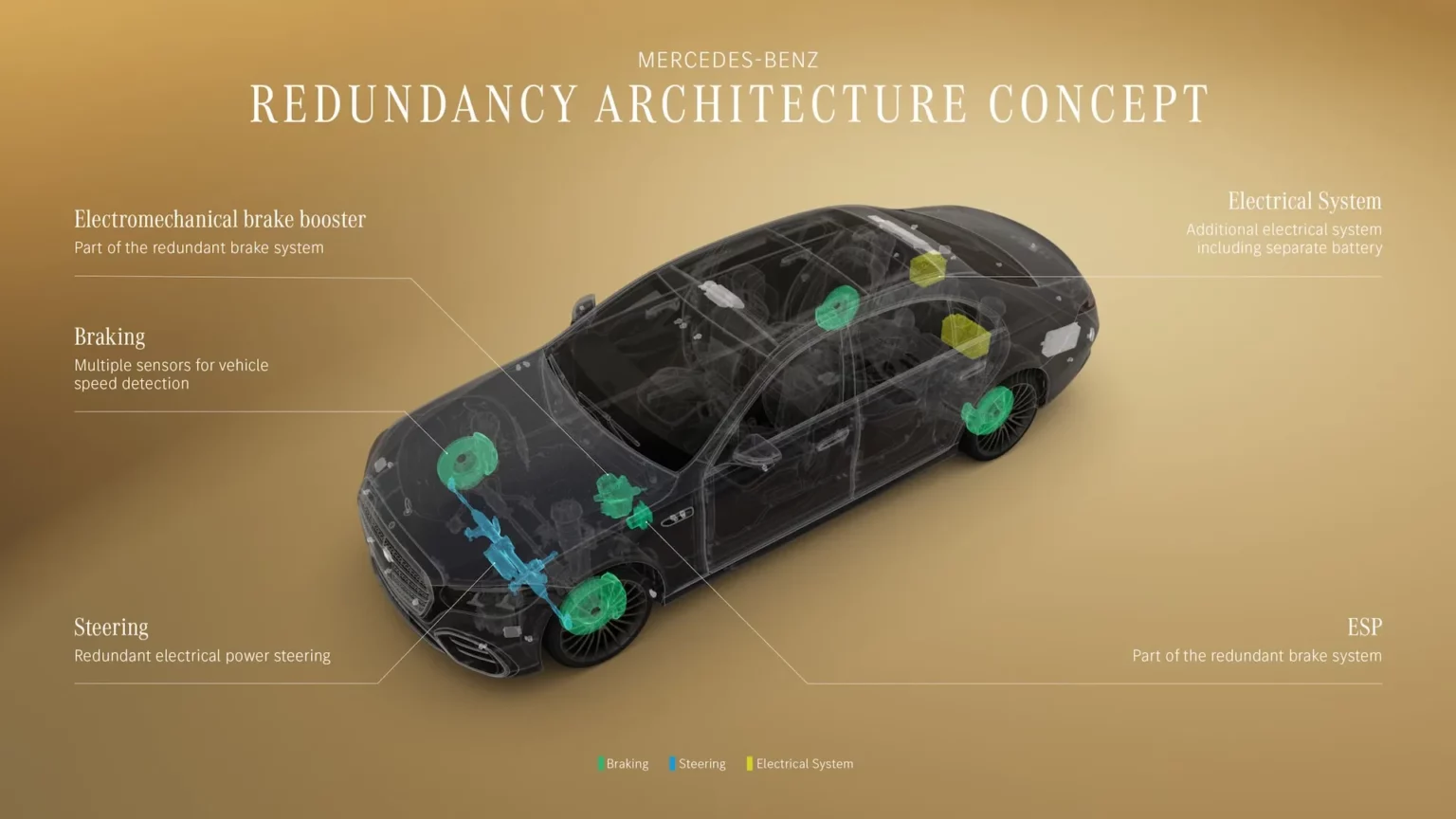
Mercedes-Benz has selected its next-generation S-Class as the foundation for the robotaxi effort, citing the model’s built-in fail-safe redundancies for steering, braking, power supply and computing — key requirements for Level 4 autonomous operation. The vehicles run on the company’s proprietary MB.OS operating system, combined with its MB.DRIVE autonomous driving software stack.
As part of the ecosystem, Mercedes-Benz is working with Nvidia and Uber on a full autonomous technology stack. The collaboration integrates Nvidia’s DRIVE Hyperion sensor and compute architecture, DRIVE AV Level 4 autonomous driving software and Alpamayo AI models, alongside simulation tools and datasets used to train and validate self-driving systems. Uber is expected to act as a mobility and deployment partner in selected markets.
In a separate partnership, Mercedes-Benz is working with Momenta to develop Level 4 robotaxis for K2 subsidiary Lumo. Initial operations are planned in Abu Dhabi, with test vehicles scheduled to begin operating on public roads later this year, the company said.
“Mercedes-Benz is the pioneer in safe autonomous driving,” said Jörg Burzer, a member of the board of management and chief technology officer of Mercedes-Benz Group AG. “For us, these partnerships mark the beginning of our entry into the robotaxi market with the S-Class and MB.OS as the ultimate platform.”
The move places Mercedes-Benz among a growing list of automakers seeking to move beyond advanced driver assistance into fully autonomous commercial services, a field currently led by specialist operators and technology companies. Analysts say success will depend not only on technology maturity, but also on regulatory approval, operational reliability and the ability to scale safely across regions.