
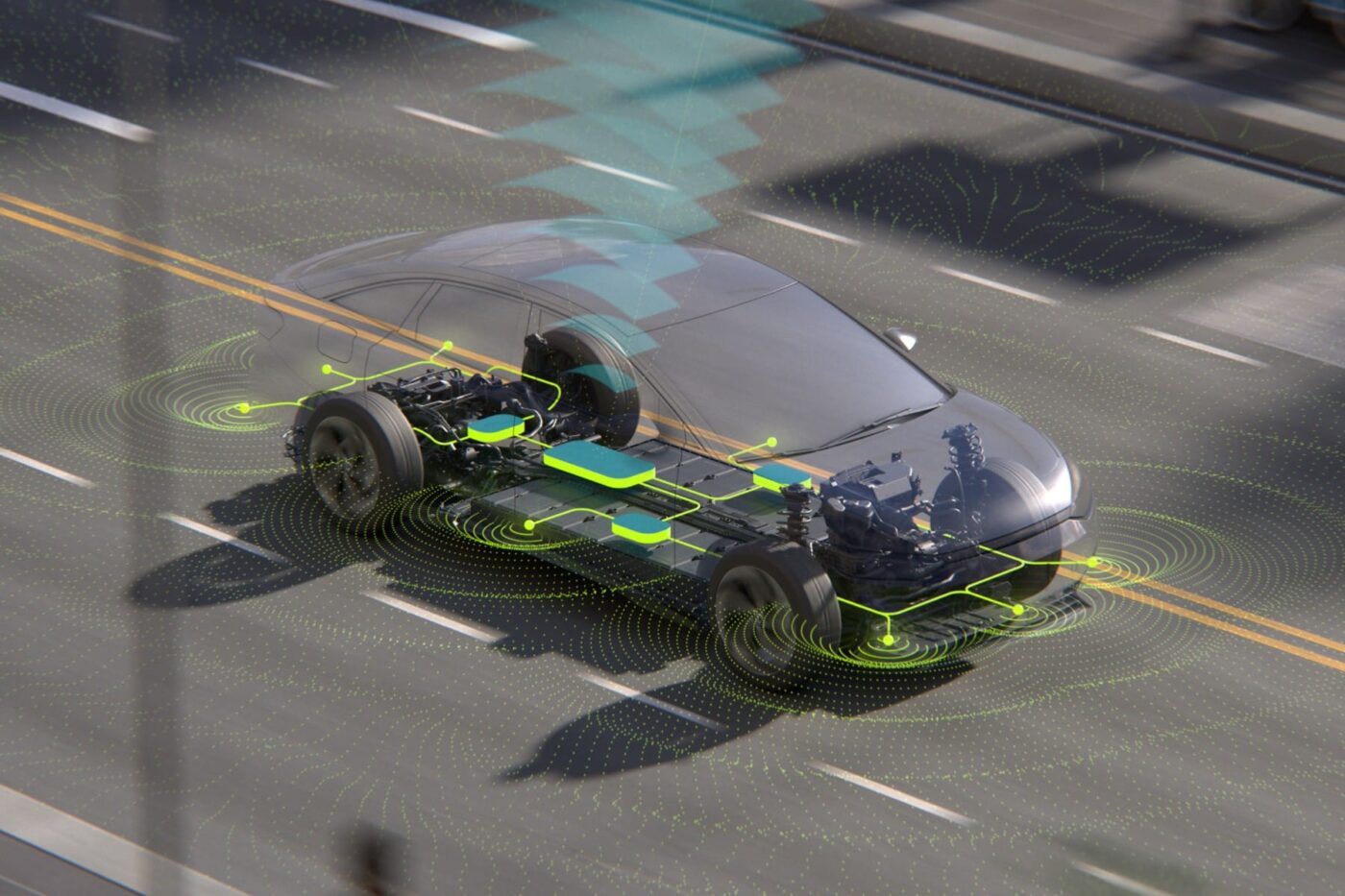
Volkswagen said it has brought its new China Electronic Architecture (CEA) to production readiness in just 18 months, enabling the market launch of the first CEA-based vehicle, the VW ID. UNYX 07, as the automaker accelerates efforts to revive its business in China.
The CEA was developed jointly by Volkswagen, its software unit Cariad, and Chinese electric vehicle maker Xpeng. Volkswagen said the architecture is now ready for series production, marking a key milestone in its “In China, for China” strategy.
See also: Volkswagen Recalls 44,551 ID.4 Vehicles in US Over Battery Fire Risk
Volkswagen has been under pressure in its largest single market after total sales in China fell 8% in 2025, while deliveries of electric vehicles dropped by as much as 44%. In response, the company has sought to localize development and sharply reduce time to market, adopting what it calls “China Speed.”
As part of that push, Volkswagen entered into a strategic partnership with Xpeng in 2023 and established the Volkswagen China Technology Center (VCTC) in Hefei. The center is designed to independently develop and validate vehicles and technologies for China, allowing faster decision-making without relying on headquarters in Wolfsburg.
See also: Volkswagen Seen as Major Beneficiary of Relaxed EU CO₂ Rules, Analysts Say
Those efforts have culminated in the CEA, a zonal electronic and electrical architecture built around high-performance central computers. Volkswagen describes it as the China-specific counterpart to the next-generation E/E architecture it is developing with Rivian for Western markets.
The CEA will debut in the ID. UNYX 07, a battery-electric saloon measuring about 4.85 meters in length, slightly shorter than the Europe-focused ID.7. The vehicle is powered by a 170-kilowatt electric motor. According to Germany’s Handelsblatt, production of the model began on Dec. 31, 2025, following a development cycle of just 13 months. An electric SUV, the ID. UNYX 08, derived from Xpeng’s G9, is expected to follow.
See also: Volkswagen to Rename ID.4 as ID. Tiguan, Union Confirms
Volkswagen said the CEA reduces the number of electronic control units by around 30%, significantly lowering system complexity. The architecture is designed to support advanced AI-based cockpit functions, driver-assistance systems, and full over-the-air updates, forming the backbone of software-defined vehicles in China.
The company said development cycles for new vehicles using the CEA could be shortened by up to 30%, while development costs may fall by as much as 50%. VCTC Chief Executive Thomas Ulbrich said production costs for electric vehicles in China are about 50% lower than in Germany, citing factors including labor costs and currency effects.
See also: Volkswagen Reclaims Europe’s EV Crown as Tesla Sales Slide in 2025
“The start of production of our first zonal electronic architecture marks another milestone in our ‘In China, for China’ strategy,” Volkswagen Chief Executive Oliver Blume said. “In just 18 months, we have for the first time built a completely new, scalable electronic architecture from development all the way to series production – while maintaining the high quality and safety standards our customers expect.”
Blume added that the CEA will enable software-driven innovation across multiple powertrain types and accelerate the rollout of intelligent connected vehicles in China. While the name China Electronic Architecture suggests a focus on electric vehicles, Volkswagen said the platform is designed to support battery-electric, hybrid and internal combustion engine models.