
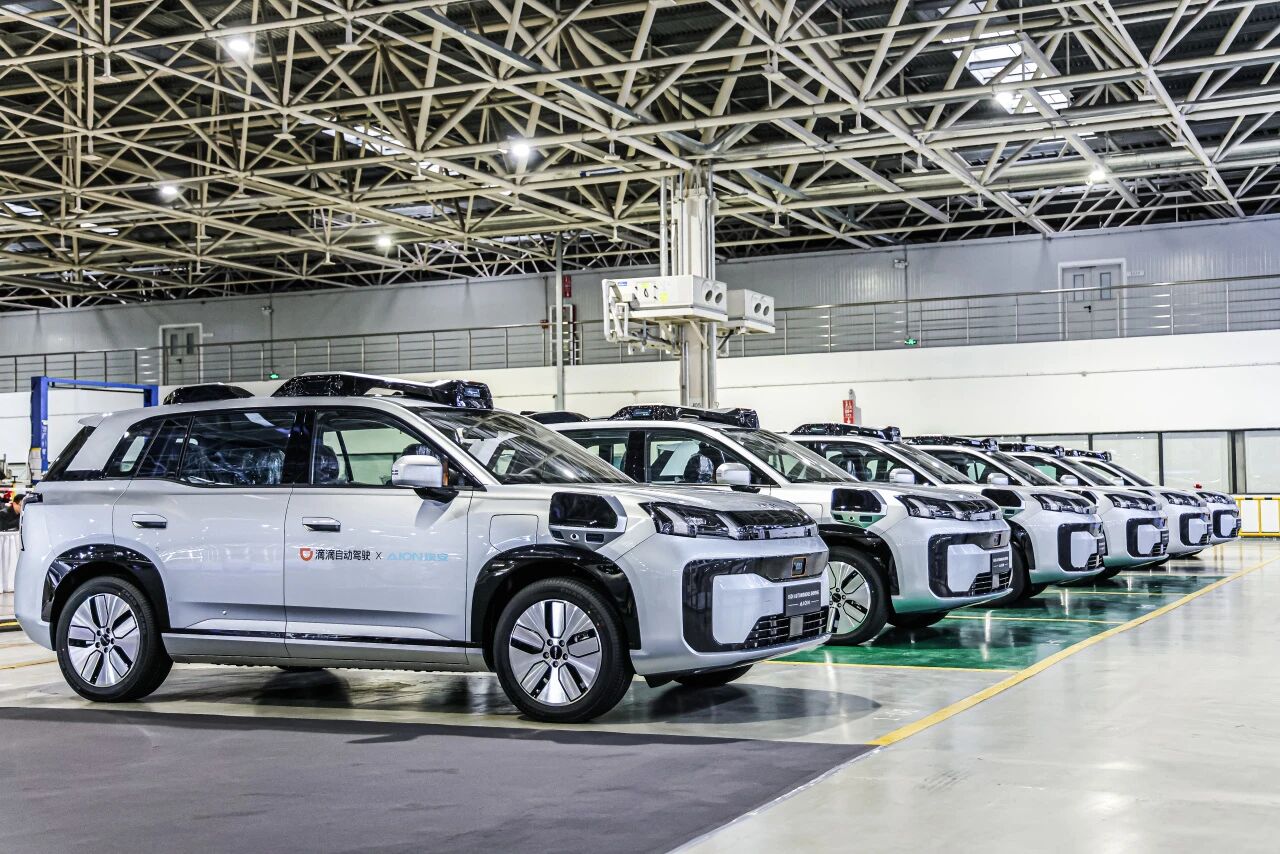
China’s GAC AION and DiDi Autonomous Driving have delivered the first batch of their next-generation R2 Robotaxi, marking a milestone in their joint push toward large-scale commercial deployment of autonomous vehicles.
The handover took place on Jan. 23 at GAC AION’s manufacturing facility, with the initial vehicles already receiving road testing permits for intelligent connected vehicles in Guangzhou, the companies said. The approval clears a key regulatory requirement for on-road trials in one of China’s major urban centers.
See also: DiDi Forms Strategic Partnership with ADIO to Support Autonomous Mobility Development in Abu Dhabi
The R2 is positioned as China’s first mass-produced, factory-installed autonomous vehicle designed specifically for commercial use. It combines vehicle engineering and manufacturing capabilities from GAC AION with full-stack autonomous driving technology developed by DiDi Autonomous Driving, an affiliate of ride-hailing firm DiDi.
According to the partners, the R2 was developed with commercial operations as its primary focus, emphasizing full autonomy, scalable mass production and real-world deployment. The vehicle is equipped with 33 high-precision sensors and uses a three-domain integrated computing architecture with more than 2,000 trillion operations per second (TOPS) of computing power. The companies said the design delivers a significant performance improvement while reducing system costs by 74% compared with earlier solutions.
On safety, the R2 meets both Chinese and European five-star safety standards, the companies said. The cabin has been configured for ride-hailing use, featuring an external interaction display, a 17.3-inch roof-mounted entertainment screen, voice-based controls and an ultraviolet disinfection system as standard equipment.
GAC AION and DiDi Autonomous Driving formed a joint venture in April 2024, and the R2 delivery represents one of the first outcomes of that partnership moving from development into industrial-scale production. The companies said the model is expected to enter phased pilot operations in cities including Guangzhou and Beijing in 2026.
See also: Didi Seeks Funding for Autonomous Driving Unit at $5 Billion Valuation
The partners said they plan to deepen cooperation across the vehicle lifecycle, expand application scenarios and accelerate iterative upgrades, aiming to move autonomous driving beyond testing into scalable commercial use within China’s urban mobility systems.