
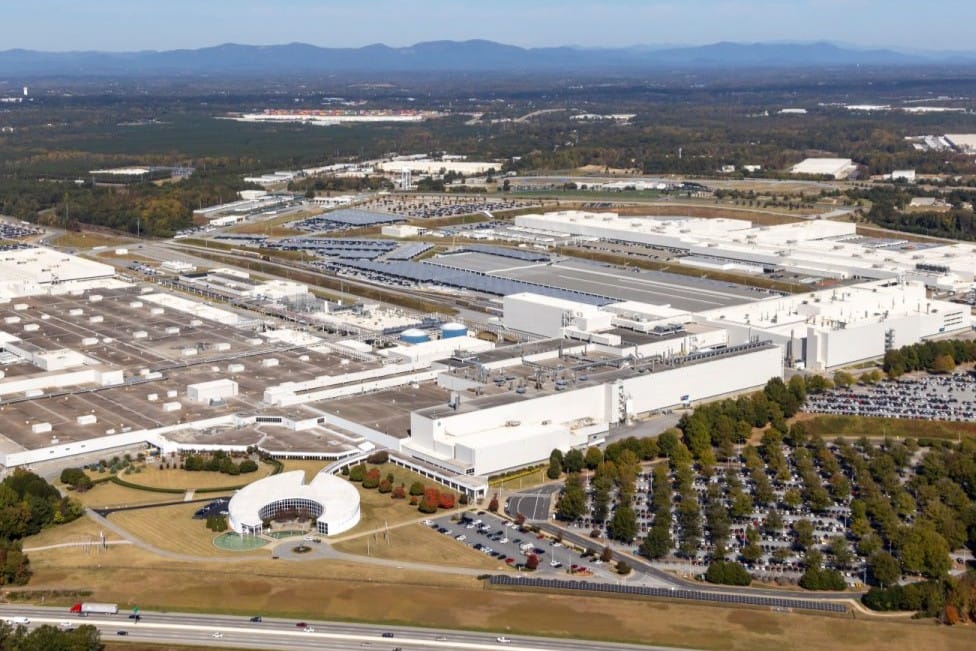
BMW said plans to start U.S. production of its next-generation electric vehicles under the Neue Klasse programme are back on track after earlier concerns triggered by a construction halt at a key battery supplier’s plant.
Japanese battery maker AESC, a core supplier for BMW’s Neue Klasse platform, paused construction last June of a battery cell factory in Florence, South Carolina, near BMW’s main U.S. plant. The move, attributed at the time to uncertainty over U.S. economic policy and market conditions, raised doubts about whether BMW could begin production as scheduled.
The Neue Klasse architecture, which features an 800-volt electrical system, debuted in Europe in September with the battery-electric iX3 showcased at the IAA mobility show. BMW has planned to start building Neue Klasse models at its Spartanburg plant in 2026, with the first model expected to be the electric iX5. The automaker has already upgraded the Spartanburg facility and built a battery assembly plant in nearby Woodruff as part of its “local for local” strategy.
BMW’s Chief Procurement Officer Nicolai Martin said the supply risks have now been addressed. “There is no risk of a battery cell shortage for our Spartanburg plant,” Martin told the German publication Automobilwoche. He added that the Woodruff facility would begin assembling high-voltage batteries as planned in 2026, with fully electric vehicle production in Spartanburg starting by the end of that year.
During a transitional phase, AESC will supply battery cells for U.S. production from its global manufacturing network, BMW said. The company reiterated its commitment to building a localised supply chain in the United States, although it has not disclosed whether AESC will remain the long-term cell supplier for the U.S. market or if additional manufacturers could be brought in.