
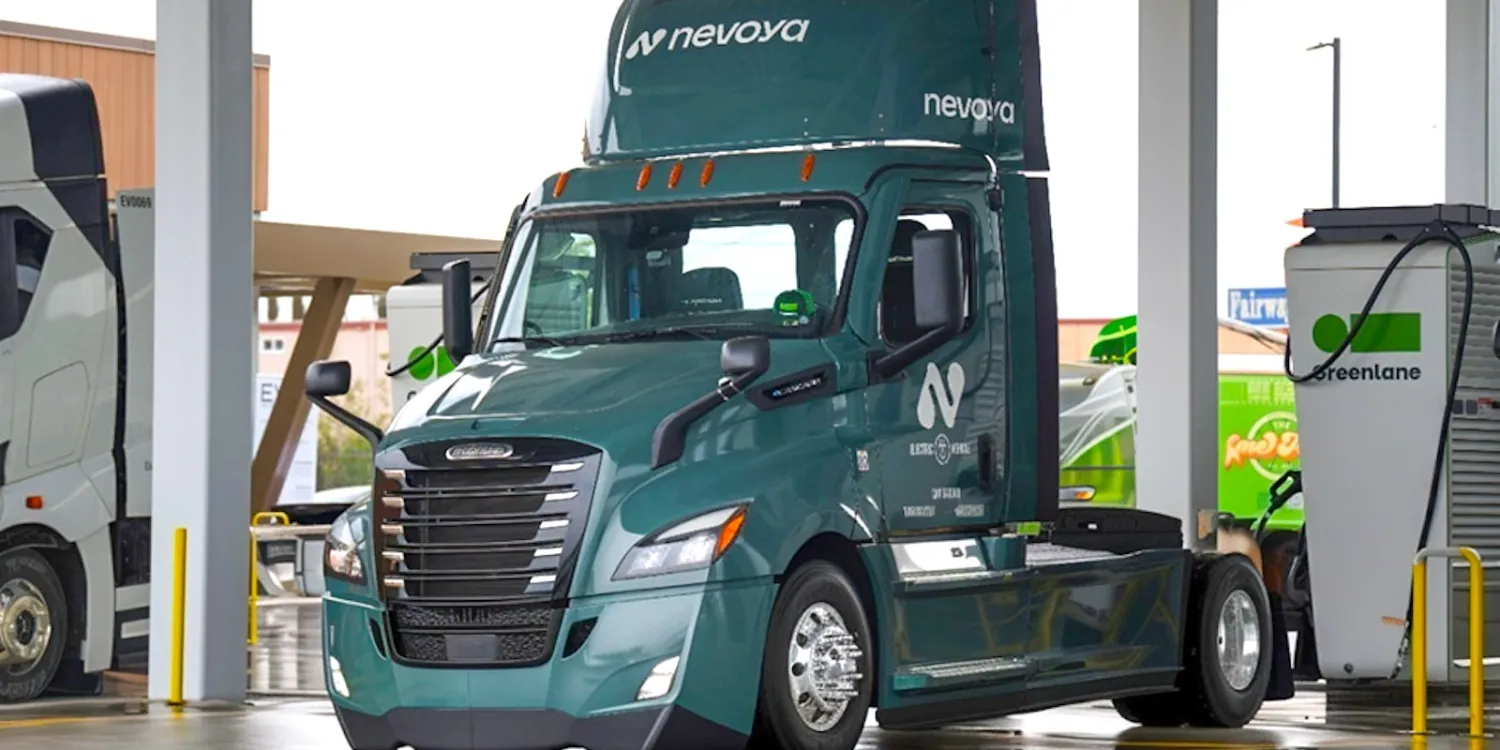
Los Angeles-based logistics company Nevoya has begun deploying 40 battery-electric semi trucks on a new commercial freight route between Houston and Dallas, expanding the use of zero-emission heavy-duty vehicles on one of Texas’ busiest highway corridors.
The rollout includes Class 8 Freightliner eCascadia day cab trucks, configured with optional battery packs of up to 438 kWh. According to the company, the vehicles are capable of a fully loaded range of around 220 miles, making them suitable for regional freight operations between the two cities.
See also: Nevoya Raises $9.3 Million to Expand AI-Driven Electric Freight Network
To support operations, charging infrastructure has been installed along the route by Greenlane, providing DC fast charging to reduce vehicle downtime. The deployment of both trucks and chargers is supported through a pilot procurement program led by the Center for Green Market Activation (GMA), based in Washington, D.C., in partnership with the Netherlands-based Smart Freight Centre.
“Through a competitive procurement process and advance purchase commitments from leading corporations, we’ve proven a replicable model to get urgently needed zero-emission trucks on the road,” said Kim Carnahan, chief executive officer of GMA. She added that the organization is already planning additional procurement rounds following the completion of the initial contracts.
Customers using the Houston–Dallas route will be eligible to receive verified zero-emission trucking service attribute certificates through multiyear carbon offtake agreements. GMA described the project as the first large-scale application of a “book and claim” system for zero-emission trucking, a structure intended to help companies participate in emissions reductions without directly owning electric vehicles.
Once fully operational, Nevoya said the electric fleet is expected to travel up to 7 million miles annually, reducing an estimated 60,000 metric tonnes of carbon dioxide emissions. The company said the Texas deployment forms part of its broader strategy to expand zero-emission freight services in regions where electric trucks can deliver both commercial and environmental benefits.