
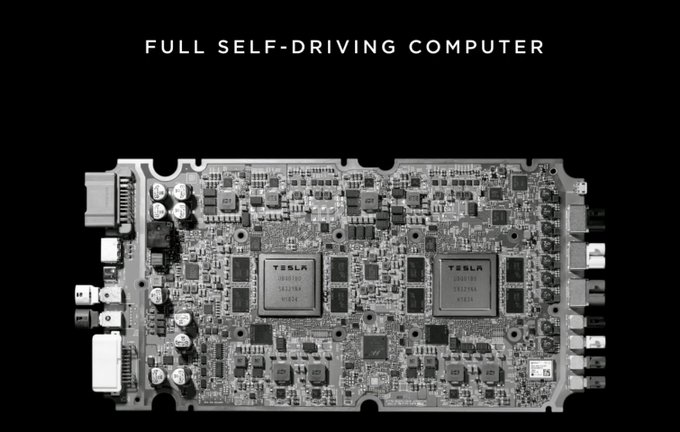
Tesla has published a patent that outlines a potential software-based method to extend the usefulness of its older Full Self-Driving computer hardware, addressing long-standing concerns among owners about hardware obsolescence.
The patent, published on Jan. 15, 2026, under the title Bit-Augmented Arithmetic Convolution (US20260017503A1), describes a technique that allows higher-precision artificial intelligence models to operate on lower-precision hardware. The filing was first highlighted by Tesla-focused commentator tslaming on the social media platform X.
See also: Tesla Rolls Out FSD v14.2.2 With Incremental Improvements to Driving Behavior
Tesla introduced its Hardware 3 (also known as AI3) computer in 2019, when most neural networks used 8-bit numerical precision. Newer autonomous driving models increasingly rely on 16-bit or 32-bit precision to improve accuracy and stability, typically requiring more advanced chips such as Tesla’s newer AI4 platform.
According to the patent, Tesla’s approach avoids replacing hardware by splitting higher-precision data into smaller components that existing AI3 hardware can process. For example, a 16-bit value can be divided into two 8-bit segments, processed separately by the neural network accelerator, and then recombined to approximate higher-precision results.
See also: Musk Says Tesla’s Latest FSD Update Allows Texting in Some Driving Situations
The filing suggests this method could allow more advanced Full Self-Driving software to scale across multiple generations of Tesla hardware — including AI3, AI4 and future systems — albeit with differences in efficiency, latency and power consumption.
Industry observers note that while the technique could reduce the need for physical hardware upgrades, trade-offs remain. Additional processing steps may increase energy use and response time, and limitations imposed by older sensors, such as cameras, would still apply.
See also: Tesla Plans “FSD 14 Lite” for Legacy Model Y Owners with Hardware 3.0 by 2026
Tesla has not said whether or when the patented method will be deployed in production vehicles. Patents do not necessarily indicate imminent product changes, but the filing highlights an avenue Tesla could pursue to support its existing fleet as its autonomous driving software continues to evolve.