
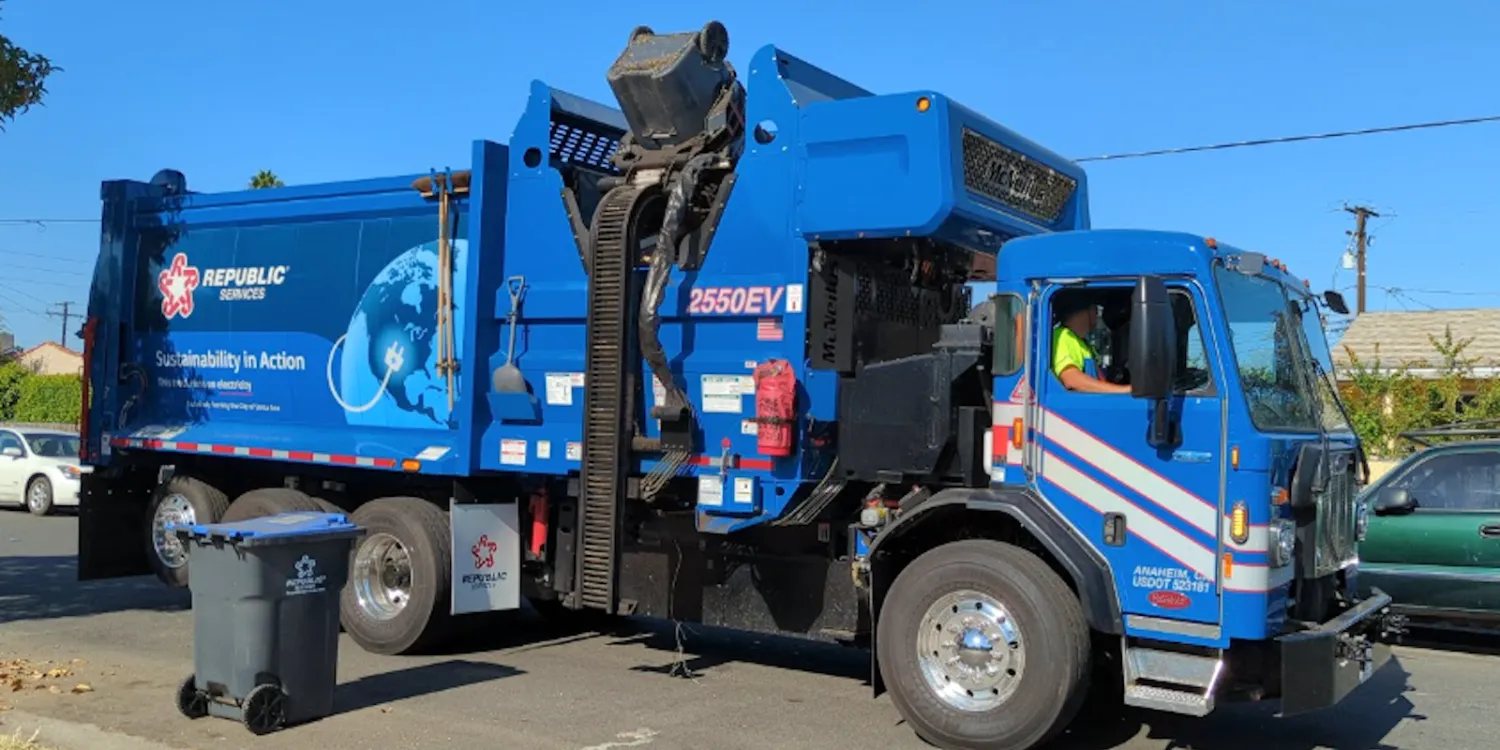
Commerce City, Colorado, has begun deploying an all-electric residential recycling and garbage collection fleet, marking a major step in reducing emissions from its municipal operations as cities across the United States turn to electric vehicles for heavy-duty urban services.
City officials said this week that the new fleet is already operating on local streets, replacing diesel-powered refuse trucks with battery-electric models better suited to stop-and-go routes, heavy payloads and predictable daily driving distances. Waste collection is widely seen as a strong early use case for electrification, as most routes cover well under 100 miles per day and operate primarily at low speeds.
See also: Karlsruhe Deploys 18 Mercedes eEconic Electric Garbage Trucks to Cut Emissions
Commerce City has also invested in supporting infrastructure, installing multiple DC fast-charging stations at Republic Services’ local facility to enable daily operation of the electric trucks. The rollout aligns with the city’s long-term Sustainability Action Plan, which targets lower greenhouse gas emissions across municipal services.
The move places Commerce City alongside other U.S. cities such as Chicago, Louisville and Madison that have begun adding electric refuse vehicles to their fleets. These efforts have typically involved collaboration between waste management companies, truck manufacturers, utilities and local governments.
See also: Republic Services Rolls Out First Electric Garbage Trucks in Chicago
“We are so proud that Louisville will be the first city in the nation with a fully electric collection fleet,” Louisville Mayor Craig Greenberg said at the launch of that city’s program last year, citing reduced noise, improved safety and lower emissions as key benefits of the transition.
The Commerce City fleet includes McNeilus Volterra ZSL electric refuse trucks, developed with input from Republic Services. The vehicles are equipped with safety and visibility features such as 360-degree cameras, enlarged windshields, lane-departure sensors and automated emergency braking. Because electric trucks operate more quietly than diesel vehicles, they also include audible warning systems to alert nearby drivers and pedestrians.
See also: Madison Adds Electric Garbage Trucks to Fleet in Move Toward Zero Emissions
City officials said the shift to electric refuse vehicles is expected to reduce local air pollution and noise while improving working conditions for drivers, as municipalities increasingly look to electrification to modernise essential public services.