
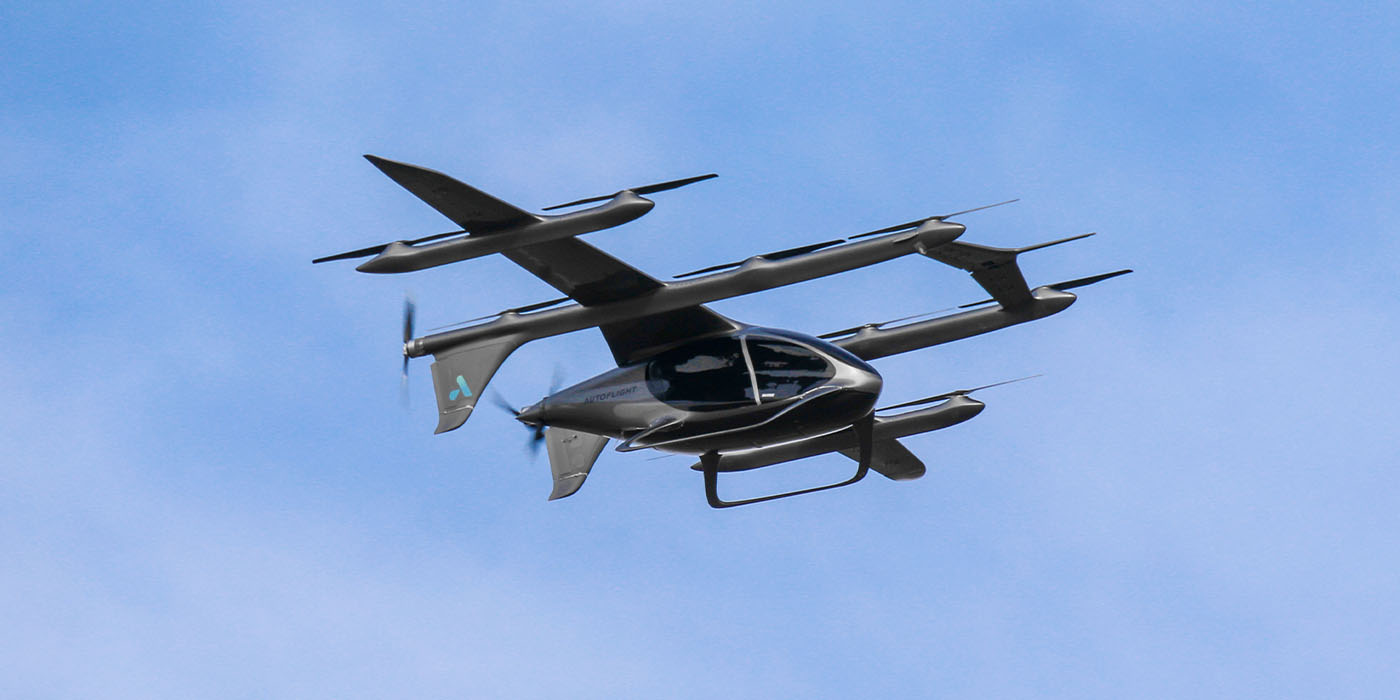
Shanghai has set out an ambition to become the world’s leading hub for electric vertical takeoff and landing aircraft, or eVTOLs, as China accelerates the development of its so-called low-altitude economy, according to a municipal policy document released on Thursday and reported by CnEVPost.
The eastern Chinese megacity aims to build a comprehensive industrial ecosystem for next-generation low-altitude aircraft and position itself as the “world’s eVTOL capital,” the document said, outlining plans to establish a national-level advanced manufacturing cluster focused on the emerging sector.
See also: BYD Denies Reports of Flying Car Project Following Online Speculation
Under the roadmap, Shanghai targets a core low-altitude economy industry value of around 80 billion yuan ($11.4 billion) by 2028. The city plans to attract or cultivate at least 10 leading manufacturers of eVTOL aircraft, industrial-grade drones, and new-energy general aviation aircraft, while achieving mass production capacity for more than 500 new-generation aircraft by that time. Officials said the effort is expected to generate over 20 billion yuan in new investment across the industrial chain.
The plan also calls for deeper integration with global markets, including accelerating overseas expansion of domestically produced low-altitude equipment. Shanghai’s push comes as China gradually loosens restrictions on low-altitude airspace, a move that has boosted expectations for eVTOLs as a future mode of urban transport.
See also: EHang Conducts First Public Flight of VT35 eVTOL Aircraft
Industry estimates point to rapid growth potential. A report released in November by the China Low Altitude Economic Alliance forecast that by 2030, as many as 100,000 eVTOL aircraft could be operating in China, either as household vehicles or in commercial air taxi services.
Several Chinese automakers and technology companies are already moving into the sector. Guangzhou-based Xpeng has established a mass-production facility for flying vehicles through its subsidiary, aiming for commercial deliveries by 2026. Traditional automakers including Chery, GAC Group, Changan Automobile and FAW Group have also disclosed flying car development programs. Last month, Anhui Jianghuai Automobile Group Corp said it had set up a dedicated laboratory to explore related technologies.