
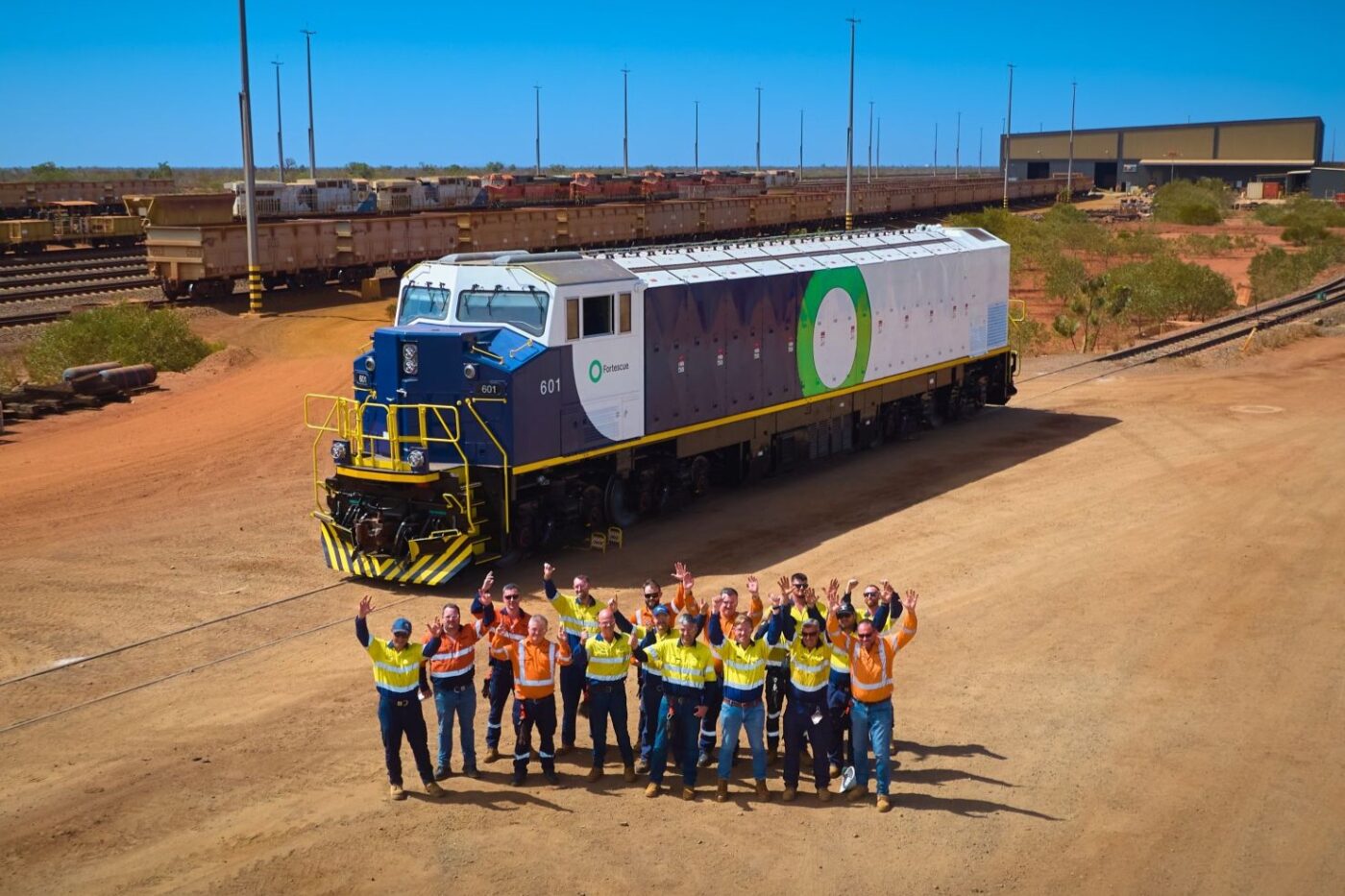
Mining company Fortescue has received its second battery electric locomotive with an onboard energy capacity of 14.5 megawatt-hours, as part of efforts to reduce diesel consumption and emissions across its iron ore operations in Western Australia.
The eight-axle locomotive was delivered to Port Hedland late last week before being transferred to the Pilbara region, following the arrival of the first unit in June. The locomotives were built by Progress Rail, a unit of Caterpillar, at its facility in Sete Lagoas, Brazil.
See also: Fortescue to Buy 300–400 Zero-Emission Mining Trucks from China’s XCMG
Fortescue said the two locomotives are powered by “two of the world’s largest land-mobile batteries.” In a separate post on LinkedIn, Dino Otranto, chief executive of Fortescue Metals, described them as “two of the world’s largest battery electric locomotives.”
The locomotives are designed for heavy-haul iron ore transport between mine sites and port infrastructure in Western Australia. When fully deployed, Fortescue estimates the two units will eliminate around one million litres of diesel consumption each year.
According to the company, the locomotives are capable of recovering between 40% and 60% of energy through regenerative braking. They also support high-power charging at up to 2.8 megawatts to reduce turnaround times. Electricity for charging will be supplied from renewable sources via Fortescue’s Pilbara Energy Connect transmission and generation project.
See also: Fortescue Sees $400 Million in Annual Fuel Savings From Zero-Emission Mining Shift
The deliveries form part of Fortescue’s strategy to achieve “real zero” emissions across its Pilbara iron ore operations by 2030. The battery locomotives were ordered from Progress Rail in early 2022.
The announcement follows recent developments elsewhere in Australia’s mining sector. Earlier this month, BHP took delivery of its first purpose-built battery-powered heavy-haul locomotives for use at its Western Australian operations, highlighting growing momentum behind electrification in mining rail transport.