
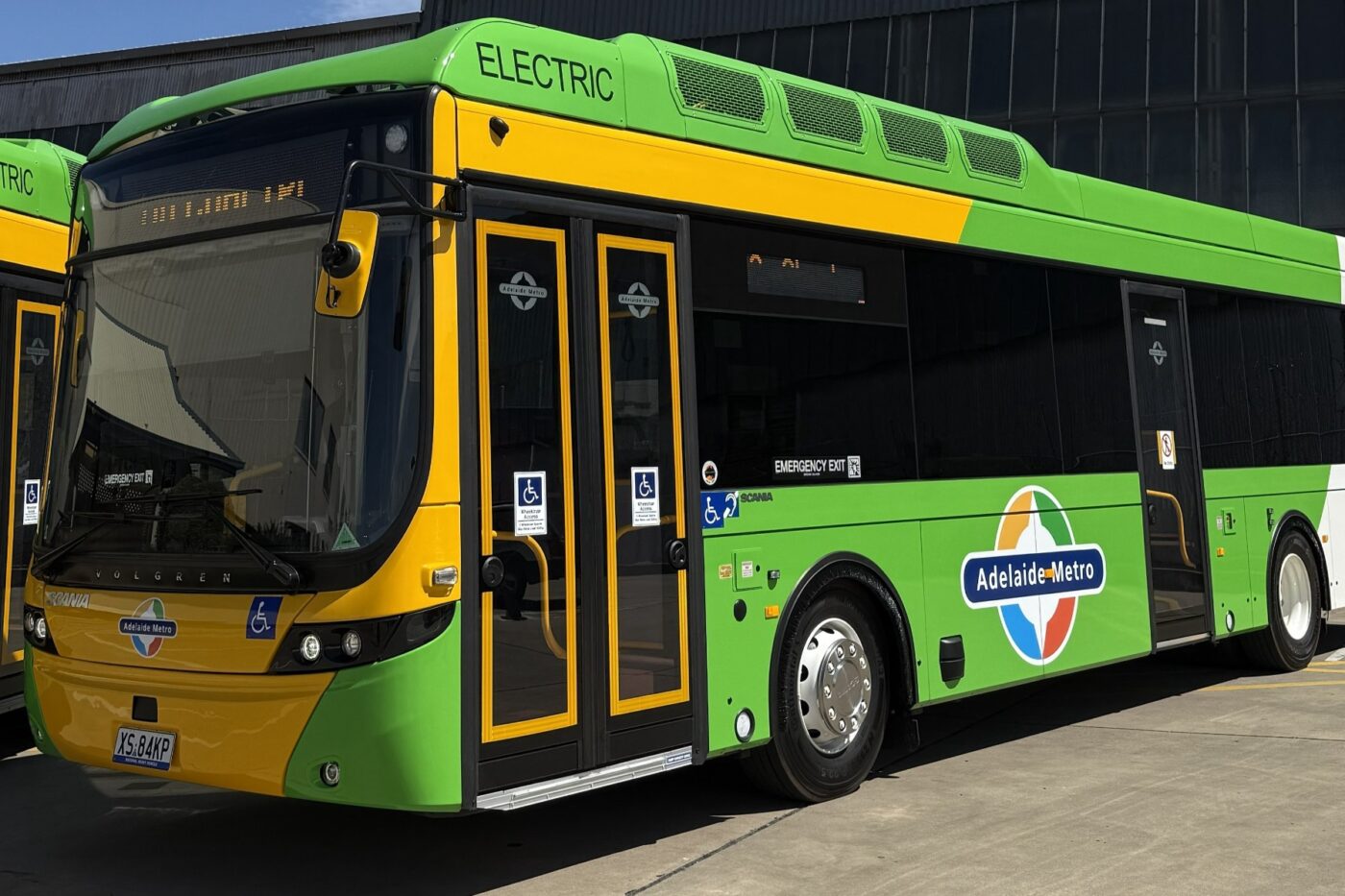
Adelaide’s public transport network has begun a new phase of bus electrification after operator Adelaide Metro took delivery of its first two battery-electric buses from Scania, marking the start of a rollout that will see 60 electric buses in service by mid-2026.
The buses are expected to enter service next week and will progressively replace older diesel vehicles across the network, Adelaide Metro said. The move supports South Australia’s broader strategy to cut emissions from public transport operations.
See also: South Australia Orders 60 Electric Buses from Scania to Advance Zero-Emission Transport
The full order for 60 electric buses was placed in March, with the vehicles built by Australian bus manufacturer Volgren. The battery-electric buses will operate on the same routes and terrain currently served by diesel models, offering seating for 43 passengers and a driving range of up to about 350 kilometres on a single charge, allowing for a full day of urban service.
To support the rollout, charging infrastructure is being expanded at the Morphettville depot, where new charging bays are being installed. Adelaide Metro said all charging will take place at the depot, integrating electric buses into existing fleet management operations.
See also:Yutong Bus Completes 555 km Battery Endurance Challenge in Australia
Once the full fleet is deployed, the electric buses are expected to cut carbon emissions by more than 4,500 tonnes a year, equivalent to the annual electricity use of around 1,500 homes. The reductions will contribute to the South Australian government’s target of achieving net-zero emissions by 2050.
Bus electrification is part of a wider transition strategy across public transport. Since September 2022, procurement of diesel-only buses has ceased, with all new purchases required to be diesel-electric hybrids or fully battery-electric vehicles. The state transport department has also engaged engineering firms Mott MacDonald and WSP to develop business cases supporting a shift to zero-emission operations across metropolitan bus and rail services.