
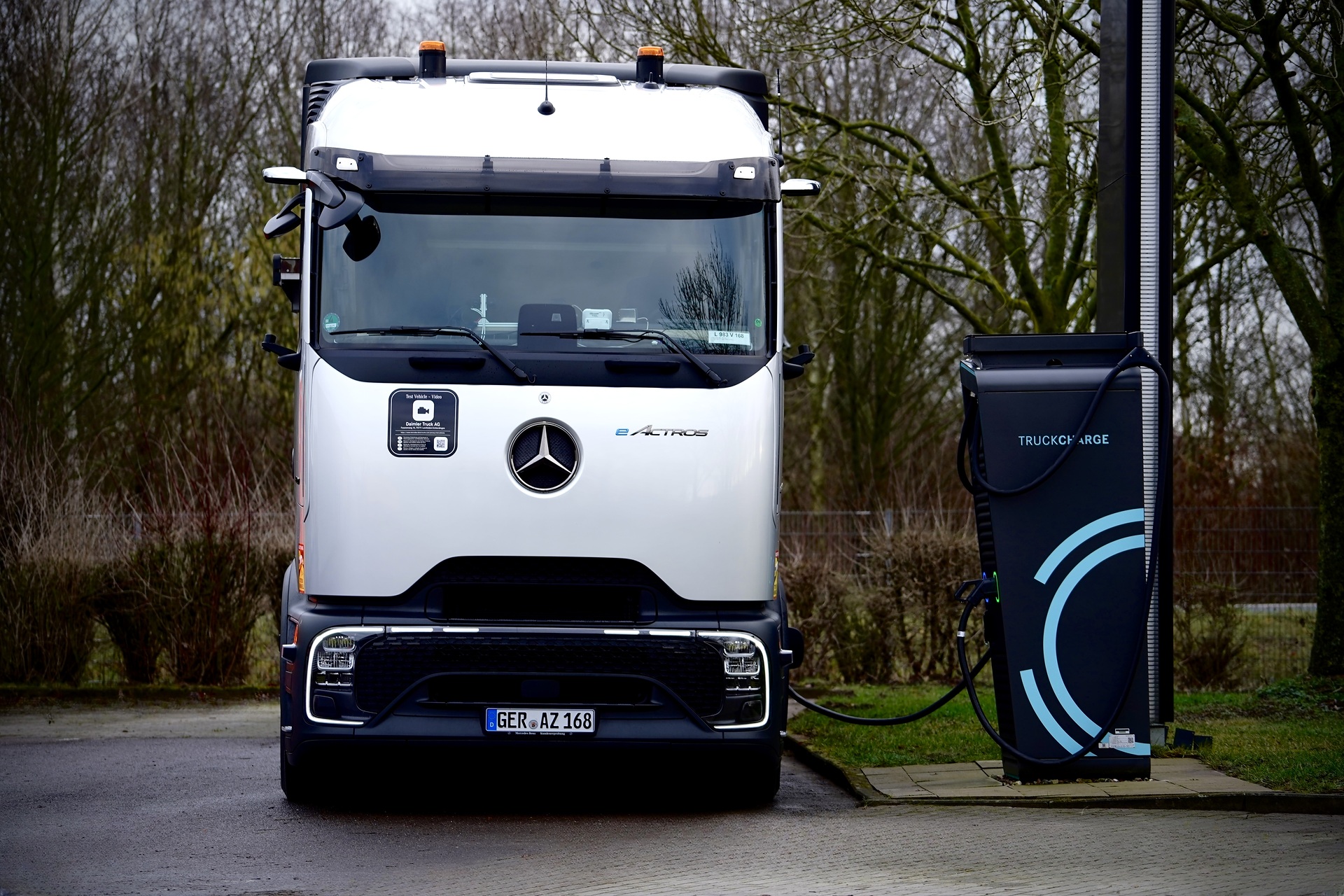
Daimler Truck has announced further details of its TruckCharge initiative, including its choice of technology partner, the first pilot customers and a roadmap toward establishing more than 3,000 semi-public heavy-goods vehicle (HGV) fast-charging points in Europe by 2030.
The company aims to make it standard practice for dealers and fleet operators to open their depot chargers to third parties, expanding access to infrastructure needed for the electrification of long-haul trucking.
The first pilot site went live in early October at Wessels Logistik in Rhede, North Rhine-Westphalia, followed in December by a second charging hub operated by Diez in Dettingen unter Teck, Baden-Württemberg. Daimler Truck plans an official rollout of TruckCharge in Germany and Austria in the first quarter of 2026, with additional European markets to be added later in the year.
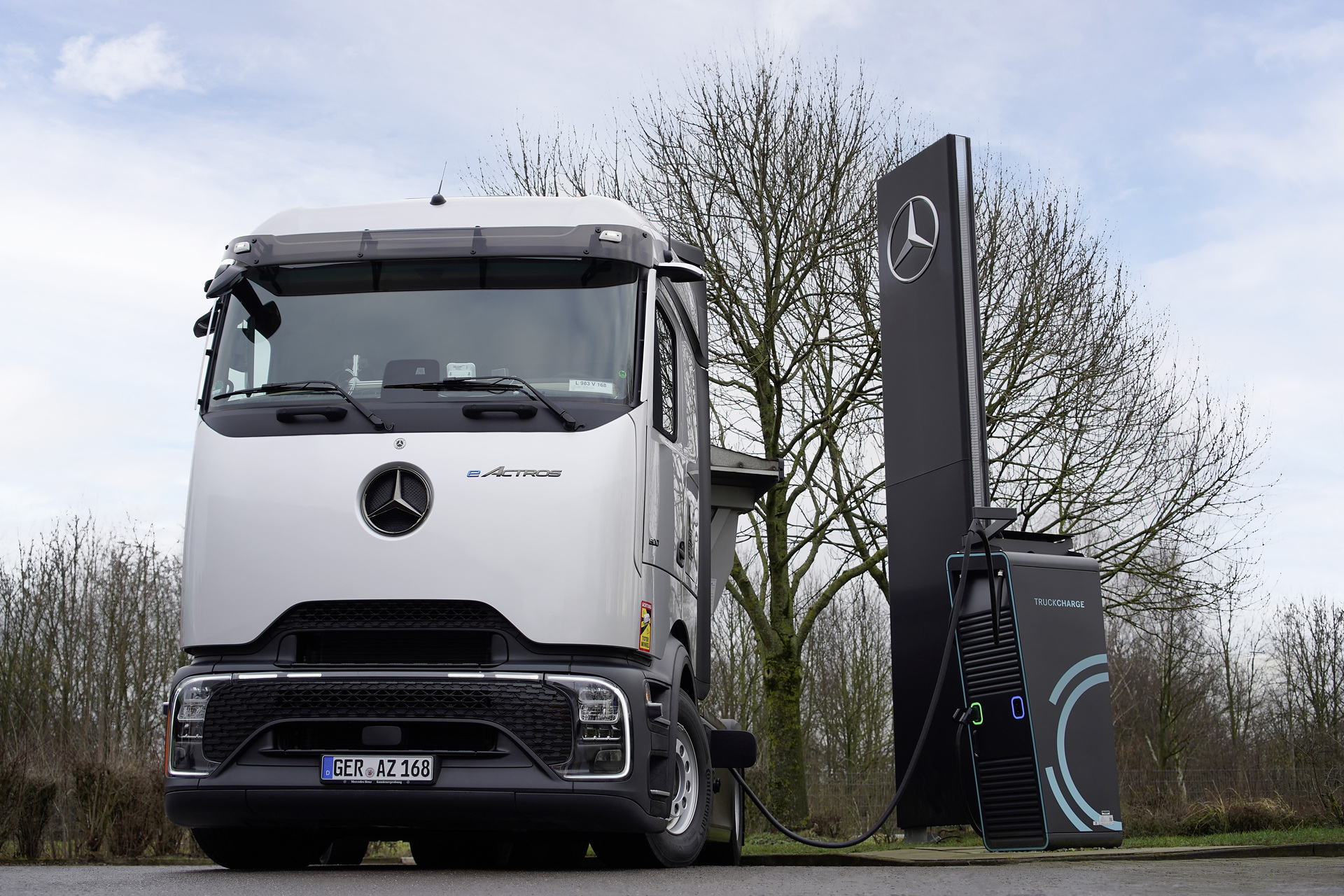
The company said the model is designed to complement wider public-charging efforts in the EU. “With semi-public charging, we are creating a solution that offers our customers and partners real added value,” said Alexander Müller, Head of Zero Emission Vehicle Business Solutions at Mercedes-Benz Trucks. “We combine the advantages of our own charging infrastructure with the opportunity to use it more efficiently while increasing availability for the entire industry.”
Daimler Truck has selected Copenhagen-based Spirii as its software and platform partner. Spirii will provide the charge-point management system for depot operators, an e-mobility service provider interface for fleets and a driver app enabling booking, navigation and transparent pricing. The platform allows operators to control access, set tariffs and release chargers to external users when not in use for their own fleets.
“The critical shortage of reliable charging options for heavy-duty trucks is one of the biggest barriers to electrification,” said Spirii CEO and co-founder Tore Harritshøj. “Daimler Truck’s initiative to enable depot owners to open their charging infrastructure for shared use is a major step forward.”
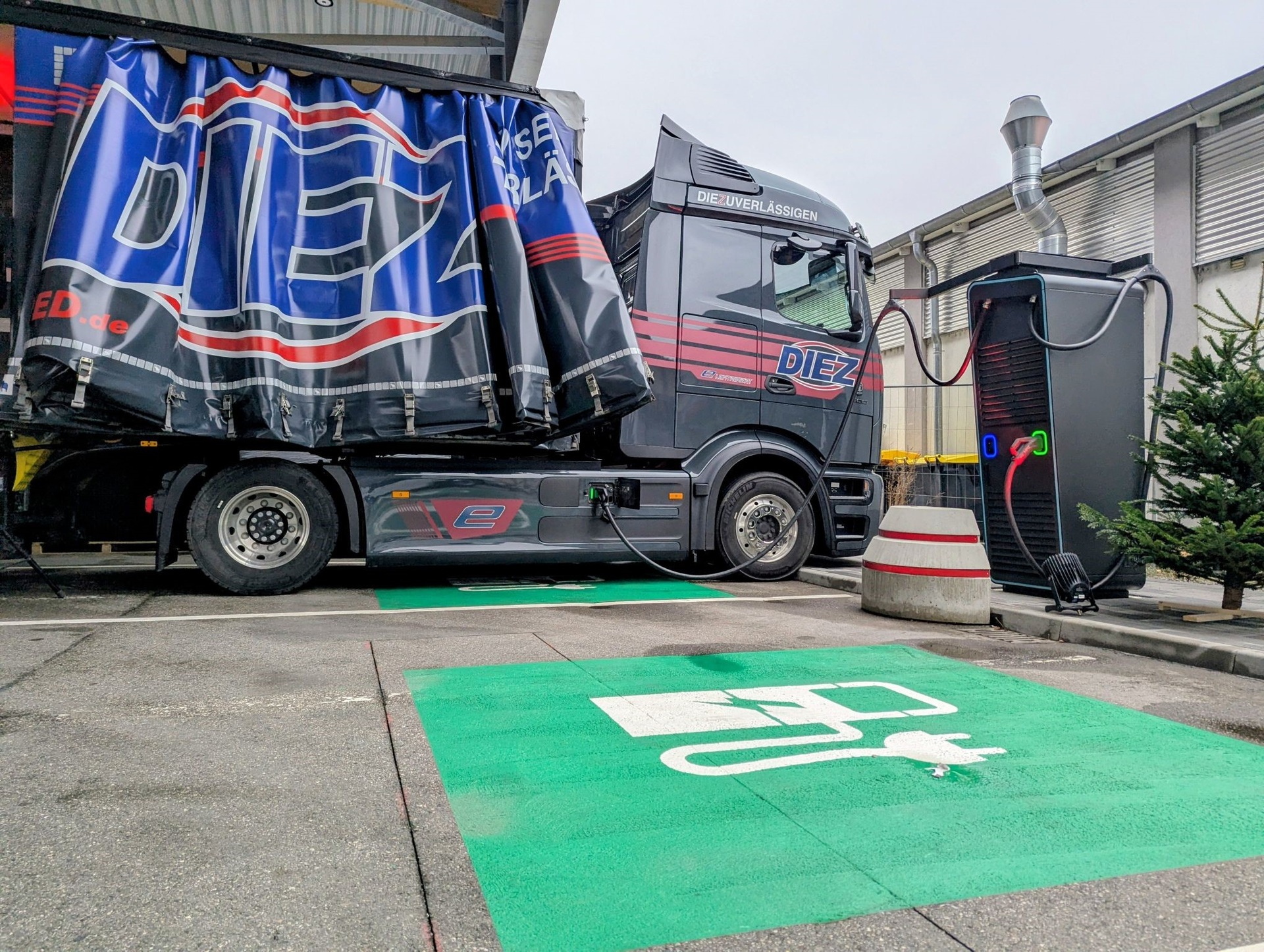
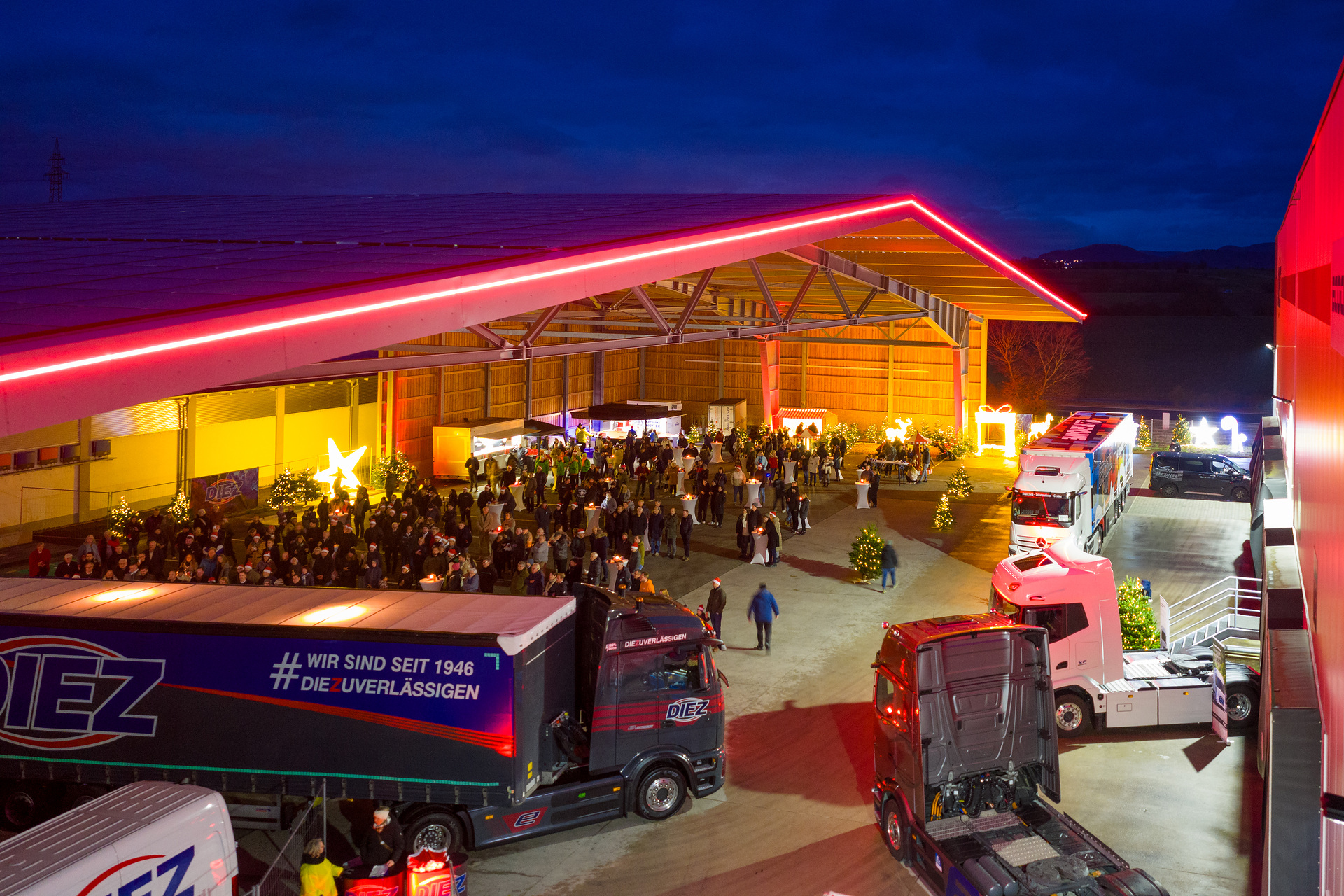
The pilot deployments reflect the intended structure of the network. Wessels Logistik, a waste and bulk-material transport company, has opened a charging hub as it expands its electric HGV fleet, including the eActros 600. Diez, which focuses on volume and special transports, has installed chargers located near major routes between Stuttgart and Munich, featuring a large solar canopy above the charging bays. These early sites demonstrate how depot-based charging can contribute to a wider semi-public network operated by multiple fleet owners and Daimler dealerships.
TruckCharge is positioned as an intermediary linking infrastructure providers and transport operators. Depot owners can generate revenue by opening chargers to external users, shortening payback periods for infrastructure investment. Customers gain access to a larger, reservable charging network at lower prices than typical public stations. Daimler Truck emphasises that the system is brand-agnostic and intended to support mixed fleets.
The initiative sits alongside other European HGV-charging programmes, such as Milence—a joint venture between Daimler Truck, Traton and the Volvo Group—which aims to build 1,700 dedicated truck-charging points by 2027. Unlike Milence’s focus on motorway corridors, the TruckCharge strategy concentrates on industrial zones and depots. Similar concepts are emerging from other industry players, including MAN and E.ON’s joint depot-charging project, insurer KRAVAG’s charging-sharing platform and Shell’s heavy-duty charging network plans.
Daimler Truck aims to formalise depot networking as a scalable framework for accelerating the shift to electric long-haul transport. “By making better use of existing resources, we are reducing costs for operators and creating additional sources of revenue,” Müller said. “At the same time, we are helping to expand the urgently needed charging infrastructure for heavy commercial vehicles more quickly.”