
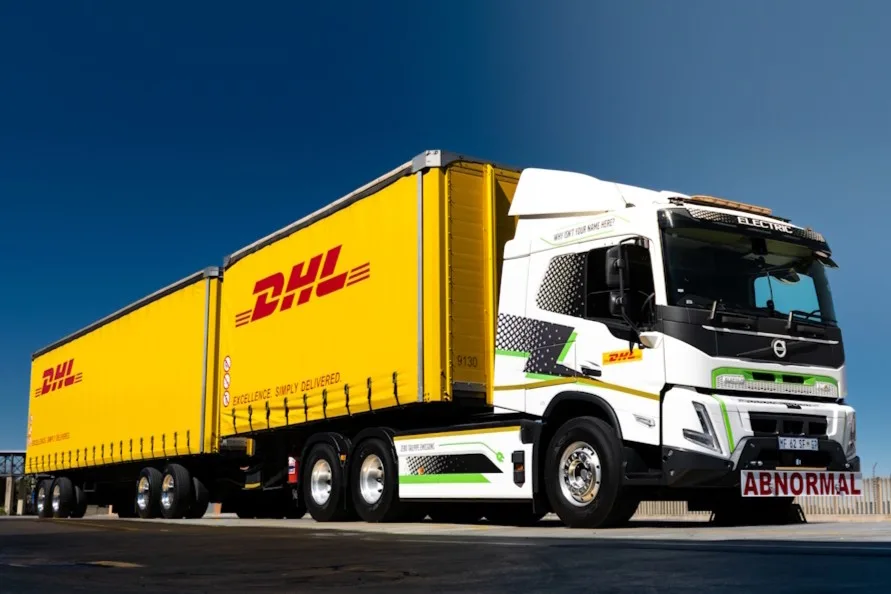
DHL Supply Chain is expanding its electric transport trials across Africa as part of its long-term decarbonisation strategy, with Managing Director Bremer Pauw saying the company is deliberately taking a phased approach to demonstrate feasibility in markets with significant infrastructure constraints. “We’ve not flipped a switch overnight,” Pauw said. “Our approach has been to run pilots first – to show others that it’s possible.”
The company began its electrification journey four years ago and now relies on partnerships with vehicle manufacturers, charging specialists and energy providers to scale pilot operations. Several ongoing trials are underway in South Africa, including a collaboration with Volvo Trucks and infrastructure partner Aeversa, featuring a fully electric Volvo FMX 6X4 tractor and an 18-metre double trailer running fixed closed-loop routes.
See also: DHL Switches On First High-Power Electric Truck Charging Hub in Germany
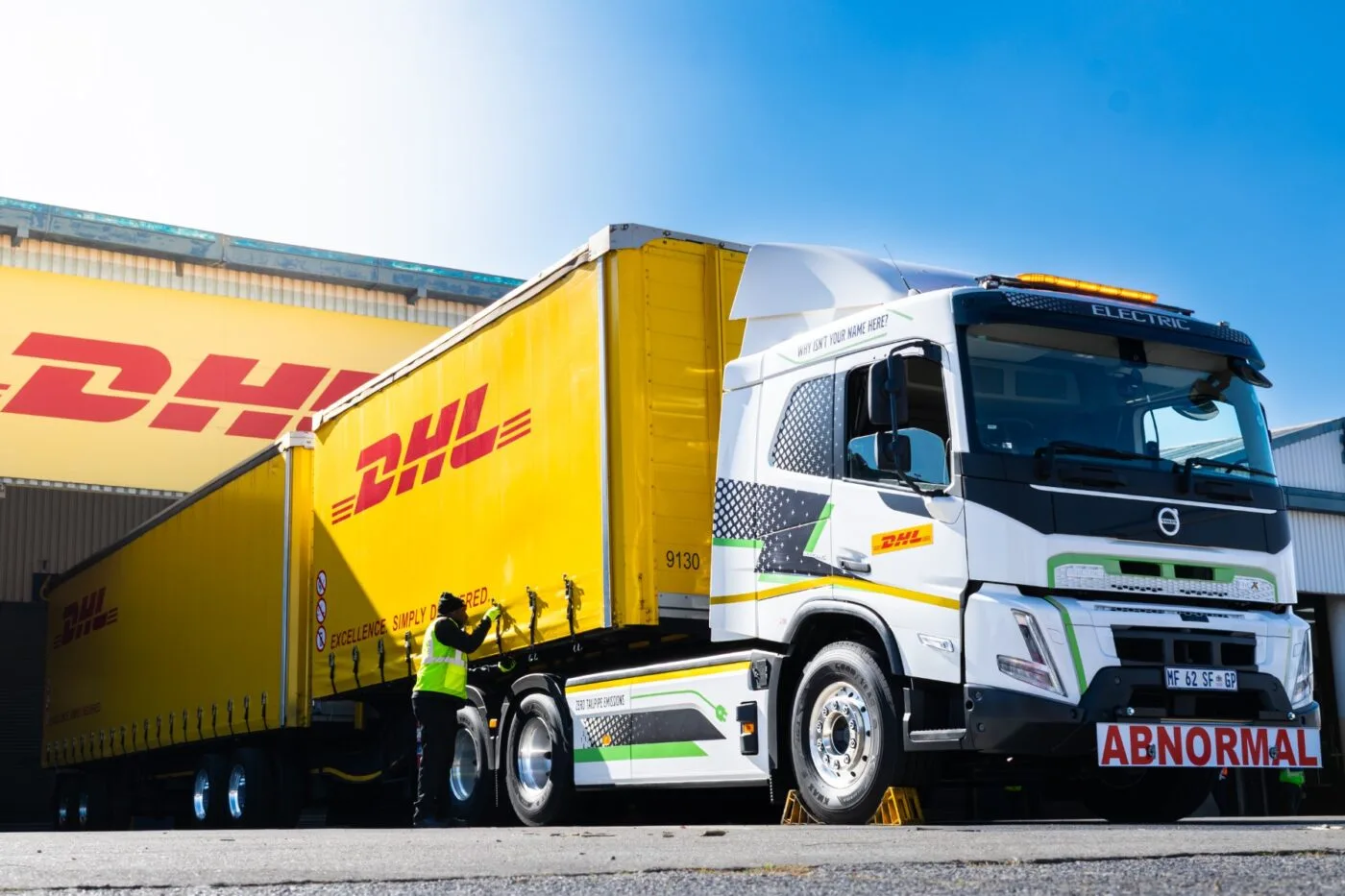
According to Pauw, regenerative braking has delivered notable efficiency gains, with recent testing showing the truck recovered about 30 percent of its energy output. “It feels as if we’re officially moving into the future, where the vehicle creates part of its own energy,” he said.
DHL has also tested smaller electric trucks with Chinese manufacturer JAC for urban deliveries in Gauteng, supported by depot charging powered by rooftop solar. Additional pilots are planned in Uganda, where hydroelectric power provides a predominantly green grid. Closed-loop routes remain essential to commercial viability, allowing operators to charge vehicles within DHL facilities rather than relying on public infrastructure.
Collaboration and training underpin DHL’s strategy. The company works closely with Aeversa, which provides charging-as-a-service, and partners with Volvo to deliver detailed driver training and real-time efficiency monitoring. Pauw said the rollout remains limited by inadequate road and grid infrastructure, with South Africa currently the only market able to support larger-scale EV operations.
See also: DHL Summit Solutions Deploys Major Electric Fleet in Philippines
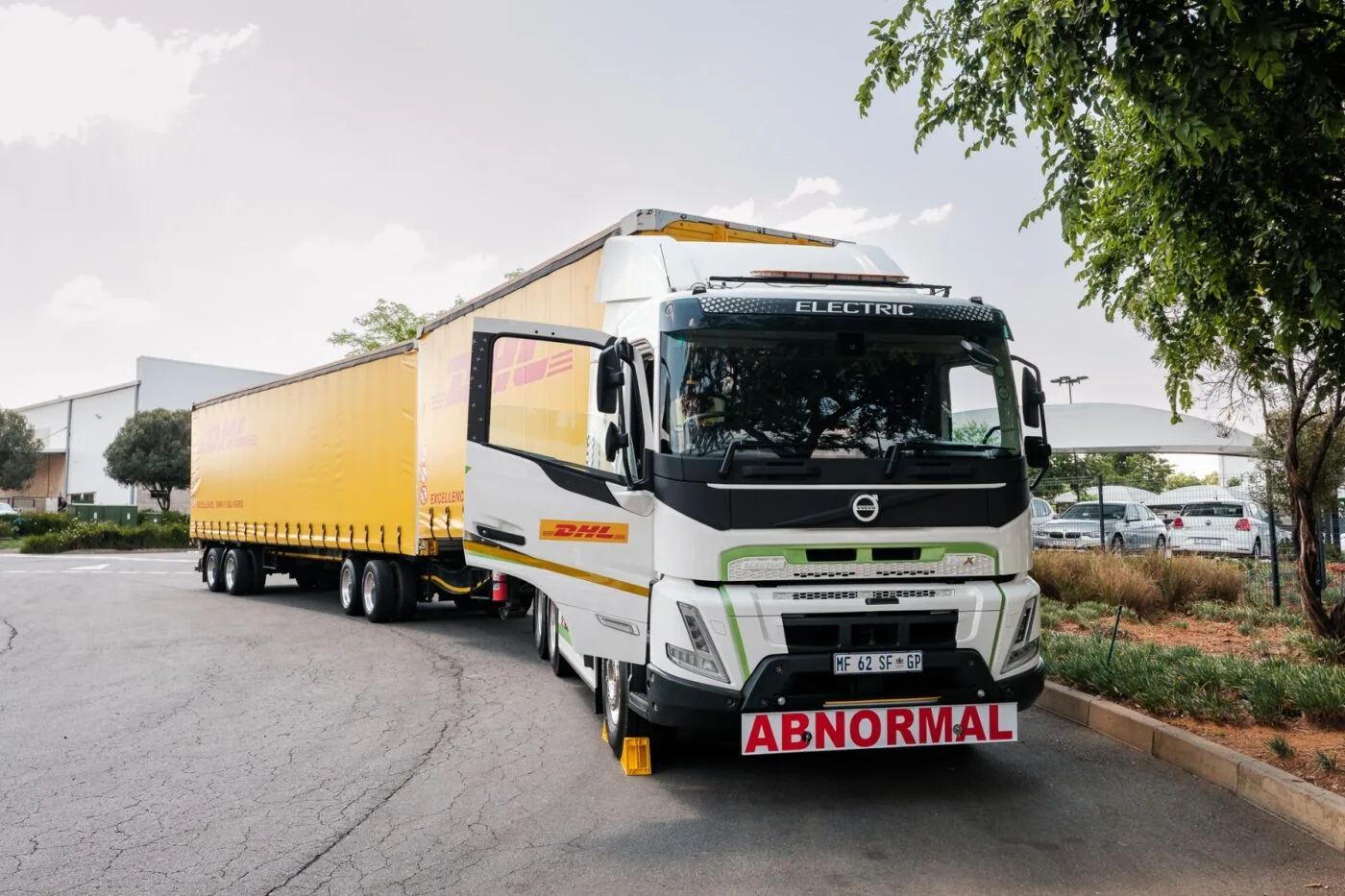
Differences in national regulations — including vehicle length and weight limits — add further complexity. “Our road legislation must be more open-minded,” he said, noting that battery-electric tractor-trailers in South Africa exceed legal limits by only a few centimetres.
Commercial and operational constraints also pose challenges. Pauw cited the need for viable business models, improved payload capacity and stronger aftermarket support. Nevertheless, he sees growing momentum across the logistics sector, with more manufacturers now conducting pilots. “That’s how change happens,” he said. “You invest in the best technology, remove barriers and find ways to make it work. Doing it at scale in Africa is still challenging, but with volume, collaboration and mindset, we’ll get there.”