
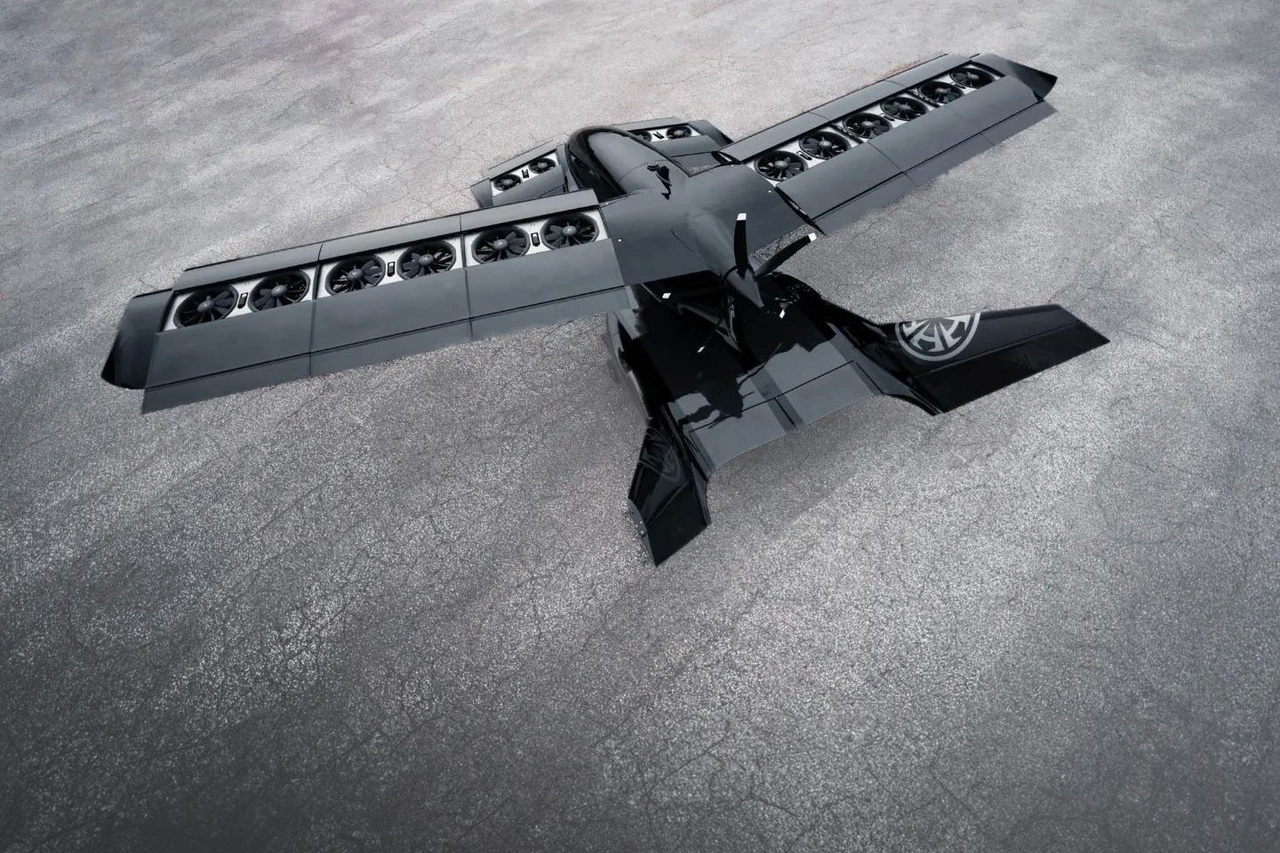
Horizon Aircraft, a Canadian developer of hybrid-electric vertical takeoff and landing aircraft, said on Thursday it has partnered with Britain’s Motion Applied to design a critical power-control component for its planned flying taxi.
The agreement centres on the development of a custom motor drive inverter for Horizon’s Cavorite X7 aircraft, a hybrid-electric model designed to carry up to seven passengers with a projected range of about 800 km (497 miles). The air-cooled inverter will use silicon carbide technology, weigh less than 3 kg and be responsible for controlling the aircraft’s electric motors.
See also: ZeroAvia, Horizon Aircraft to Develop Hydrogen-Electric VTOL
Motion Applied, which was spun out of the McLaren Group in 2021 and rebranded earlier this year from McLaren Applied, supplies engine control units to multiple motorsport series and also produces electric-vehicle charging systems. As part of the partnership, the company will also support Horizon in building a full-scale prototype and advancing its certification programme.
“This partnership is a key step in bringing our hybrid-electric aircraft closer to reality,” Horizon said in a statement, adding that the inverter will play a central role in power management for the aircraft’s propulsion system. The Cavorite X7 is scheduled for initial flight testing around mid-2027, with Horizon targeting certification and production by 2030.
See also: Horizon Aircraft Advances eVTOL Development with Cavorite X7 Prototype
The deal underscores growing competition in the global eVTOL sector, as manufacturers race to secure suppliers and move toward regulatory approval for what they see as a future market for faster, lower-emission urban transport. Unlike U.S. rivals such as Joby Aviation and Archer Aviation, which are focused on fully electric designs, Horizon is pursuing a hybrid-electric approach and selected Pratt & Whitney Canada’s PT6A engine in October to support that strategy.