
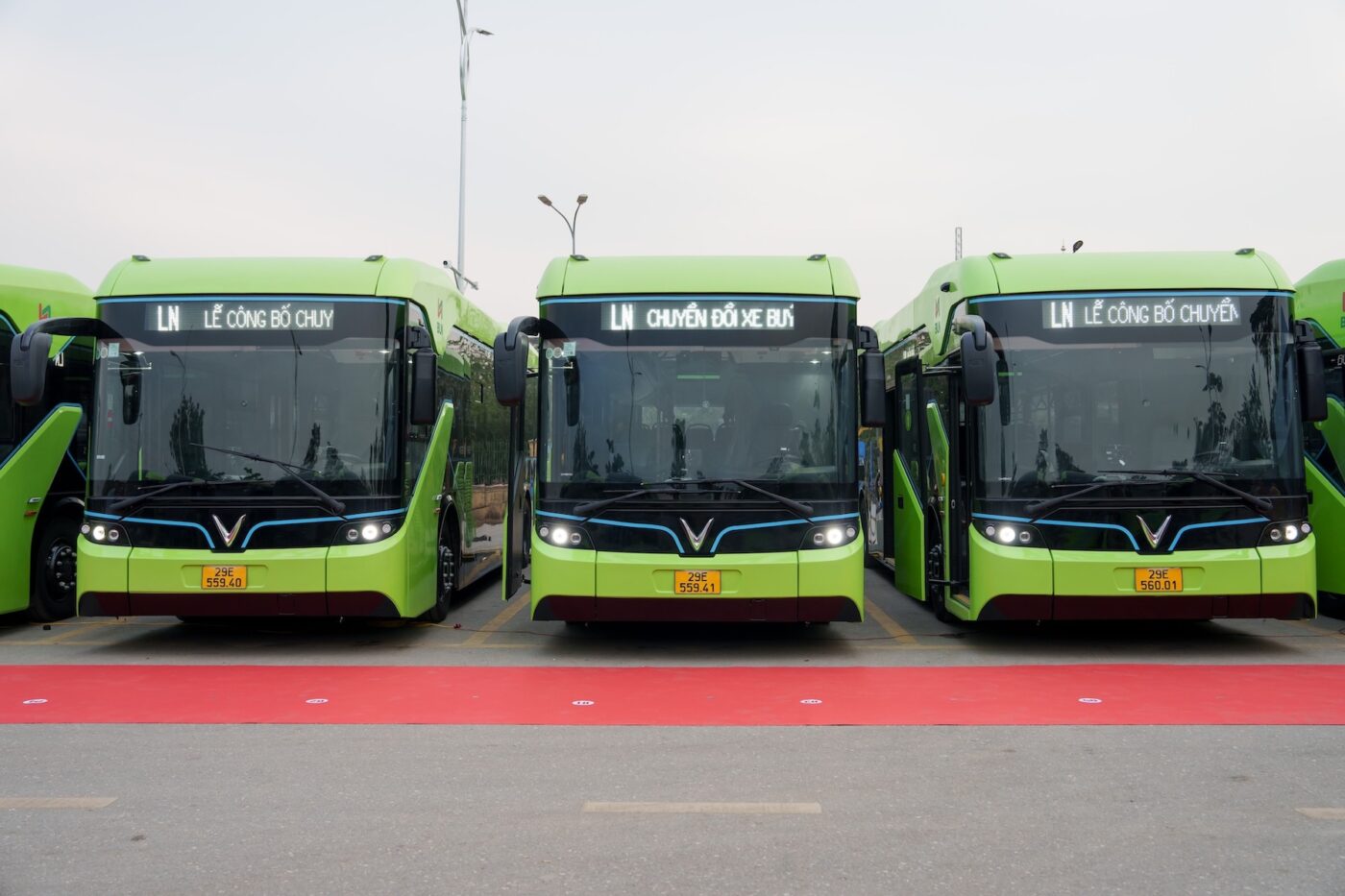
Vietnamese public transport operator Lien Ninh has begun deploying an all-electric bus fleet in Hanoi, confirming that all 111 vehicles across its nine routes will be converted to battery-powered models this month in line with the capital’s long-term clean transport strategy.
The first batch of electric buses entered operation on Thursday, marking the start of a full fleet transition from conventional vehicles to zero-emission models. Hanoi has set a target to shift all bus services to electric and green energy-powered vehicles by 2030 as part of broader efforts to reduce urban pollution.
See also: Vietnam’s Kim Long Motor to Build Battery Pack Facility with LG Energy Solution Cells
Lien Ninh is sourcing all 111 buses from domestic electric vehicle manufacturer VinFast. The order includes 13 units of the small EB 6 model, 72 medium-sized EB 8 buses and 26 large EB 10 vehicles. To support continuous operations, the operator has also installed 40 charging points across parking areas and terminal facilities.
The EB 6 model can carry up to 29 passengers and has a driving range of up to 340 kilometres on one charge. The EB 8 provides seating for 24 passengers with additional standing capacity, transporting up to 60 people with a range exceeding 290 kilometres per charge. VinFast has not yet released detailed technical specifications for the larger EB 10 variant.
See also: VinFast Launches EB 6 Electric Minibus for Urban and Interstate Use in Vietnam
According to VinFast, all three electric bus models feature low-floor designs to improve accessibility for passengers with reduced mobility, older people and children. Standard equipment includes onboard Wi-Fi, automated stop announcements, digital information displays, security camera systems and advanced driver-assistance features such as collision warnings and lane monitoring.
“Switching to electric buses is a strategic decision of Lien Ninh in the journey to accompany Hanoi in building a clean and green public transport system,” said Lien Ninh Director Doan Van Phan. “This is not only about upgrading the fleet, but also an opportunity to establish a new transport standard, cleaner, safer and more stable.”