
Vulcan Energy has finalised a €2.193 billion financing package to fund the first phase of its lithium extraction project in Germany, clearing the final hurdle for construction of what is expected to become Europe’s largest source of domestically produced battery-grade lithium.
The German-Australian company said the funding brings together private, institutional and public-sector investors. Germany’s newly established Raw Materials Fund will invest up to €150 million, marking its first allocation since being set up to strengthen strategic mineral supply chains. Australia’s export credit agency, Export Finance Australia, has also committed €120 million in early-stage support.
Vulcan plans to extract lithium from geothermal brine under its Lionheart project in the Upper Rhine Valley, positioning the site as a sustainable supply source for Europe’s electric vehicle battery sector. A definitive feasibility study published in 2023 confirmed annual production capacity of 24,000 tonnes of lithium hydroxide monohydrate, a target the company said will now be achieved under the secured financing. Vulcan said the output would be enough “to suffice for the production of approximately 500,000 batteries for electric vehicles per year.”
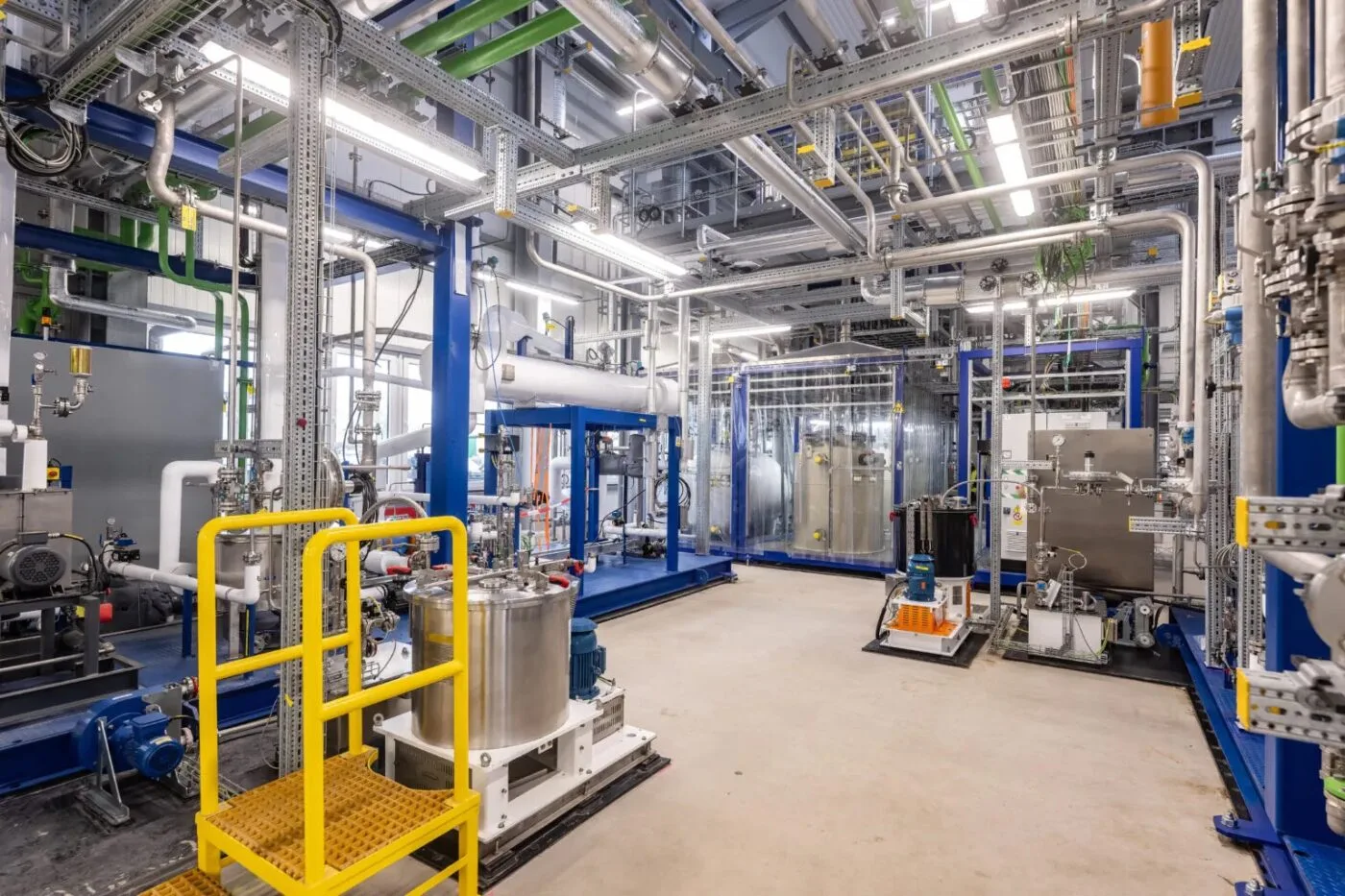
Lithium extraction will take place in Landau, with downstream processing at Frankfurt-Höchst. Vulcan already operates pilot facilities at both sites, which will serve as scaled models for the full commercial plants.
See also: Vulcan Energy Secures €104 Million in German Grants to Advance Domestic Lithium Production
Building permits for the two main facilities were granted in September and November, allowing construction to begin following the financing close. Germany’s Ministry of Economic Affairs has said construction activity is already under way, with Vulcan targeting the start of commercial production in 2028.
Offtake agreements for the first phase have already been signed with battery and automotive groups Umicore, LG Energy Solution, Stellantis and Glencore. LG Energy Solution is set to receive 31,000 tonnes of lithium hydroxide over six years, Umicore 23,000 tonnes over the same period, Stellantis 128,000 tonnes over 10 years and Glencore between 36,000 and 44,000 tonnes over eight years.
See also: Vulcan Energy Secures Permit for Lithium Plant in Frankfurt-Höchst
The financing structure includes €1.185 billion in senior debt from a group of 13 financiers led by the European Investment Bank and multiple export credit agencies, along with €204 million in federal German funding. Strategic investors including Siemens, Demeter and Hochtief are contributing €133 million in preferred equity, while Vulcan will raise €528 million through a capital increase. Additional support is coming from institutions including Export Development Canada, the Danish Export and Investment Fund, Bpifrance Assurance Export and Italy’s SACE.
German Economy Minister Katherina Reiche said the project strengthens strategic supply chains. “With the first project from the German Raw Materials Fund, Germany and Australia are sending a strong signal for a more resilient and strategic raw materials supply,” she said.
Source: handelsblatt.com, eqs-news.com, bundeswirtschaftsministerium.de