
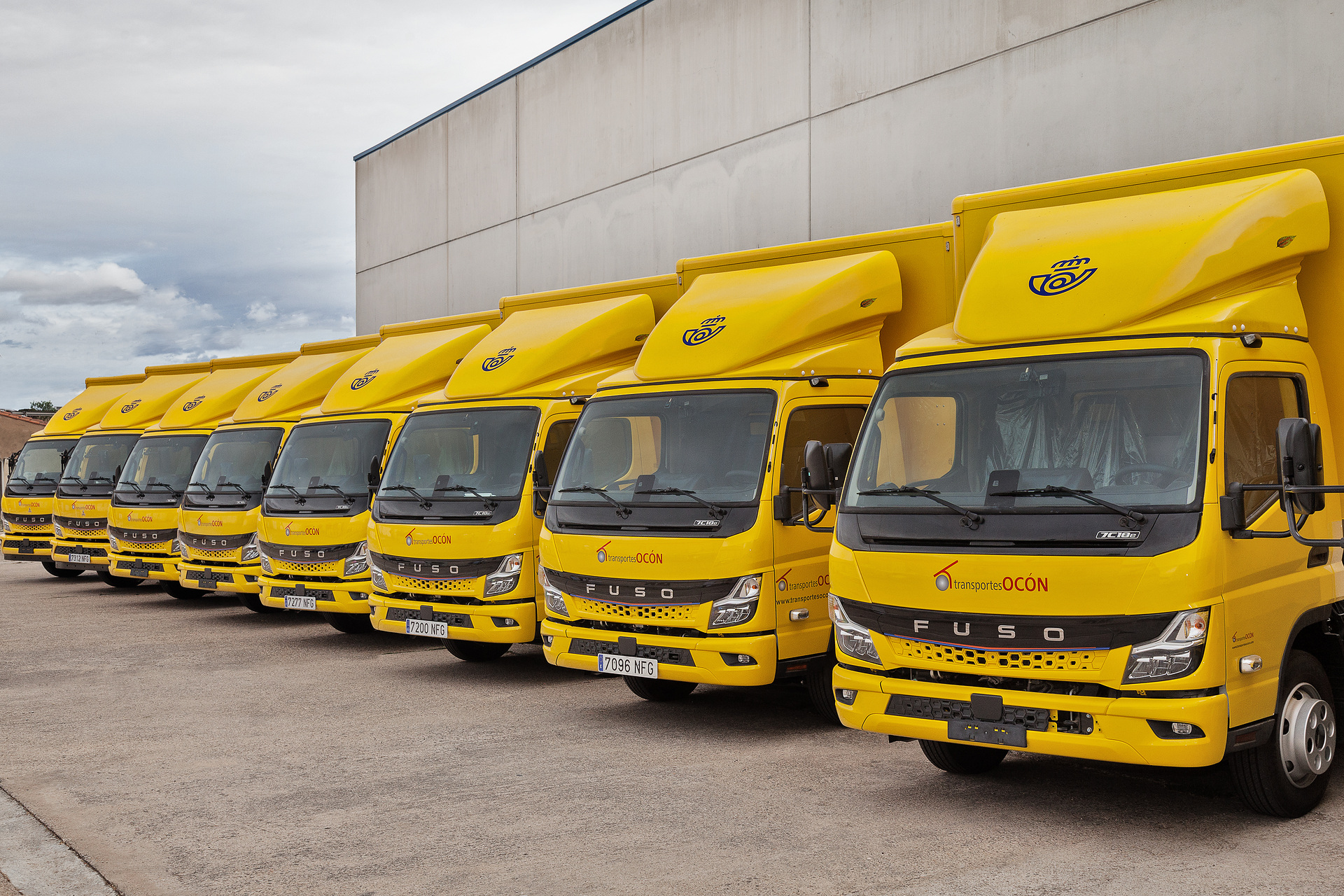
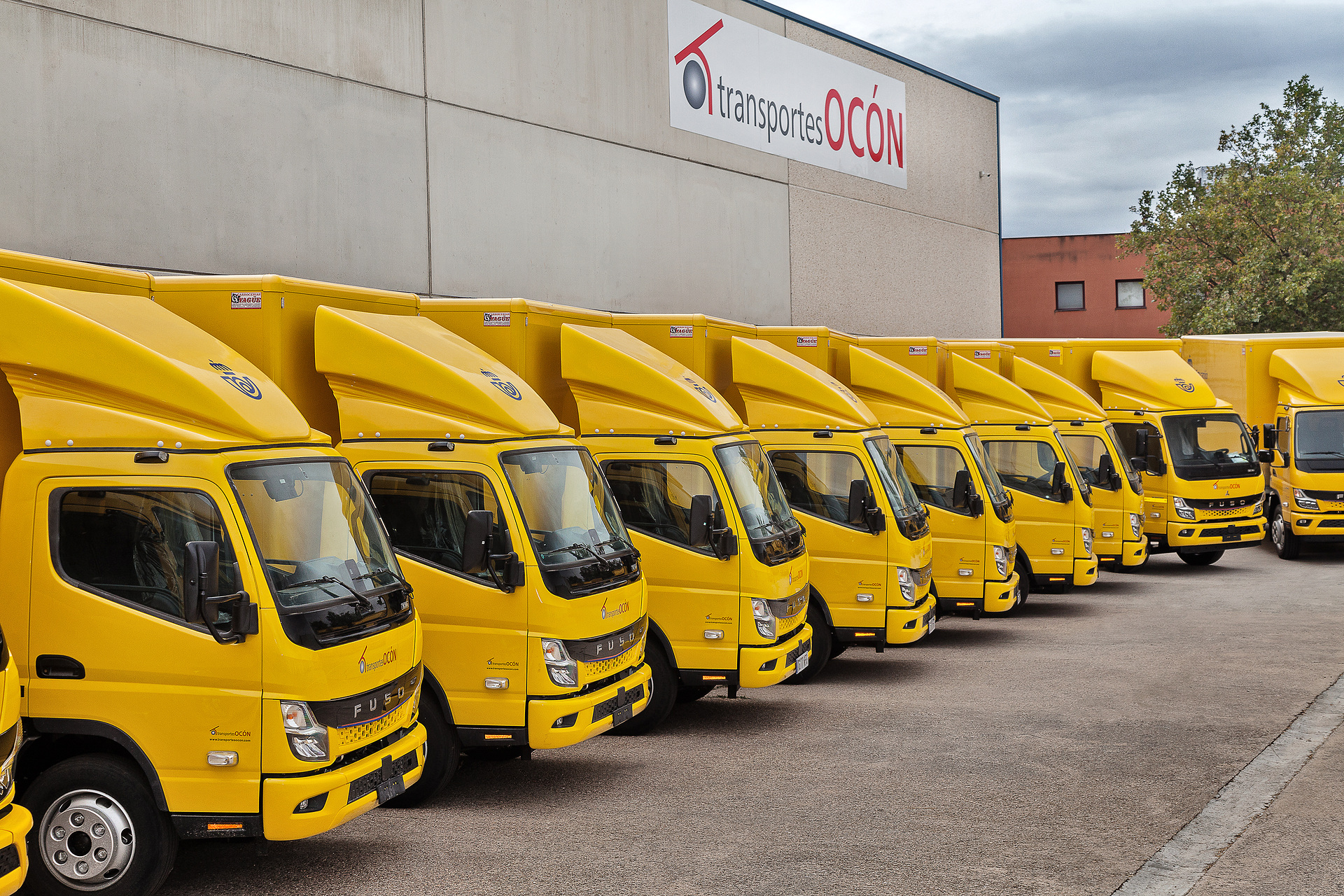
Spanish transport company Transportes Ocón has begun deploying 15 fully electric Fuso eCanter light-duty trucks as part of a broader renewal of its delivery fleet, with the vehicles assigned to operations for Correos, Spain’s national postal service.
The new vehicles include the 7.49-ton 7C18e and the 8.55-ton 9C18e variants. All units are equipped with box bodies and tail lifts and can be charged using either direct current (DC) or alternating current (AC). The trucks are fitted with either M or L battery packs, enabling ranges of up to 140 km or 200 km per charge.
See also: Mitsubishi Fuso Partners With REE Automotive on Software-Defined Delivery Vehicle Technology
“Integrating 15 FUSO eCanter trucks into our fleet underscores our commitment to sustainable, competitive, and socially responsible logistics, which are the cornerstones of our vision for the future,” said Eduardo Alcázar, owner of Transportes Ocón.
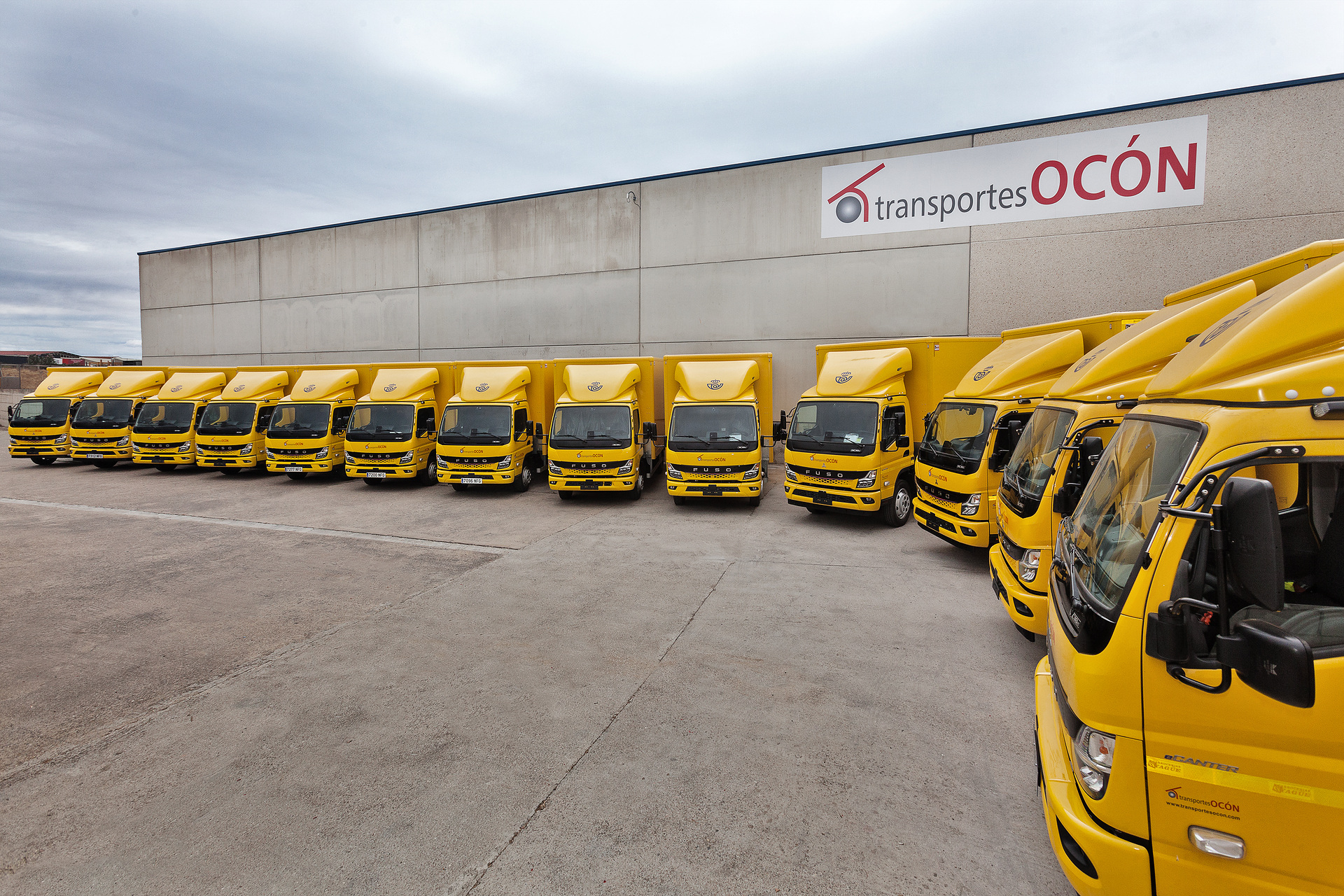
Transportes Ocón, which marked its 25th anniversary this year, operates a fleet of about 1,120 vehicles and employs more than 1,000 drivers. The company specializes in comprehensive transport and logistics services, including temperature-controlled freight, pallet distribution and delivery operations across Spain. It said the deployment of electric trucks forms part of a wider strategy to reduce emissions and modernise urban delivery operations.
See also: Mitsubishi Fuso and Foxconn Sign MoU to Collaborate on Electric Buses
The delivery expands Fuso’s presence in the Spanish market. Late last year, logistics provider Planway Logística added 22 Fuso eCanter trucks to its fleet in Orense, northern Spain. Correos also operates a large fleet of electric motorbikes for last-mile delivery.
Fuso, which is part of Daimler Truck, is undergoing a major corporate restructuring. The truck maker is set to merge with Japan’s Hino Motors to form a new commercial vehicle group called Archion, which is scheduled to begin operations in April next year. The merger was first announced in May 2023, and both brands are expected to continue operating independently under the new structure.
The rollout highlights growing pressure on logistics providers in Spain and across Europe to decarbonise urban freight transport in response to tightening emissions regulations and sustainability targets.