
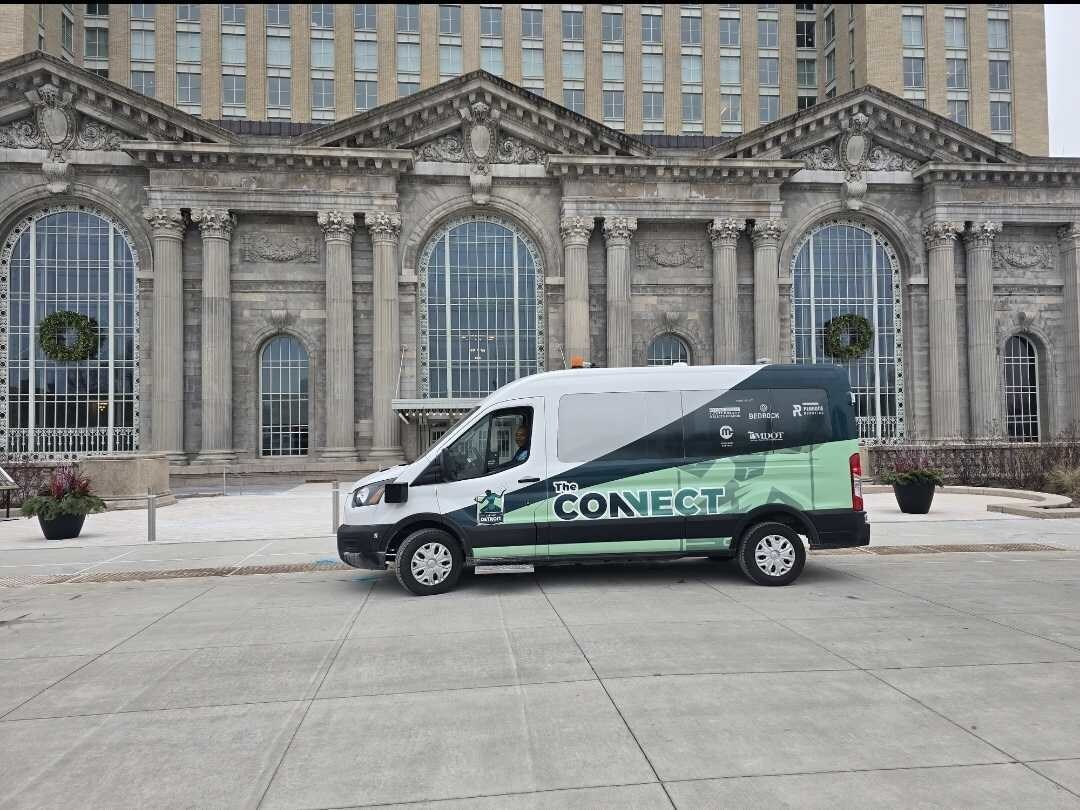
Perrone Robotics has reached a one-year milestone for its autonomous shuttle operations in Detroit, making the city’s CONNECT program the longest-running public autonomous electric shuttle deployment in the United States.
The service, which began in August 2024, uses Ford E-Transit vans equipped with Perrone’s TONY® and MAX® autonomous driving platforms. According to the company, this marks the first time autonomous public transit technology has been deployed on the Ford E-Transit platform nationwide.
The autonomous shuttle fleet operates across a route covering more than 10 miles of mixed urban environments, connecting the Rivertown Warehouse District with central Detroit and Corktown. Service stops include entertainment venues, grocery stores, retail areas and community destinations.
The vehicles run on a zero-emission Ford E-Transit platform and incorporate Perrone’s autonomous systems, which the company says have been tested for more than two years on this vehicle type.
The deployment complies with U.S. Federal Motor Vehicle Safety Standards, the Americans with Disabilities Act and Buy America requirements. The $1.5 million contract includes vehicle procurement, technology integration, operational support and safety protocol implementation.
Tim Slusser, Detroit’s Chief of Mobility Innovation, said the initiative has helped the city understand how autonomy could support broader transportation access, adding, “Through our Connect AV pilot, we deployed the nation’s first fleet of autonomous Ford E-Transit vans, powered by Perrone’s TONY AV platform.”
Perrone Robotics, which has worked on automated vehicle systems for more than two decades, said the long-term deployment in Detroit supports its goal of providing scalable solutions for transit, commercial and government partners.
Founder and CEO Paul Perrone noted the city’s role in demonstrating the technology’s viability, stating, “Detroit has shown the world that autonomy can be done safely, reliably, and at scale.” The company’s TONY and MAX systems form the technical basis for its autonomous and driver-assistance offerings.