
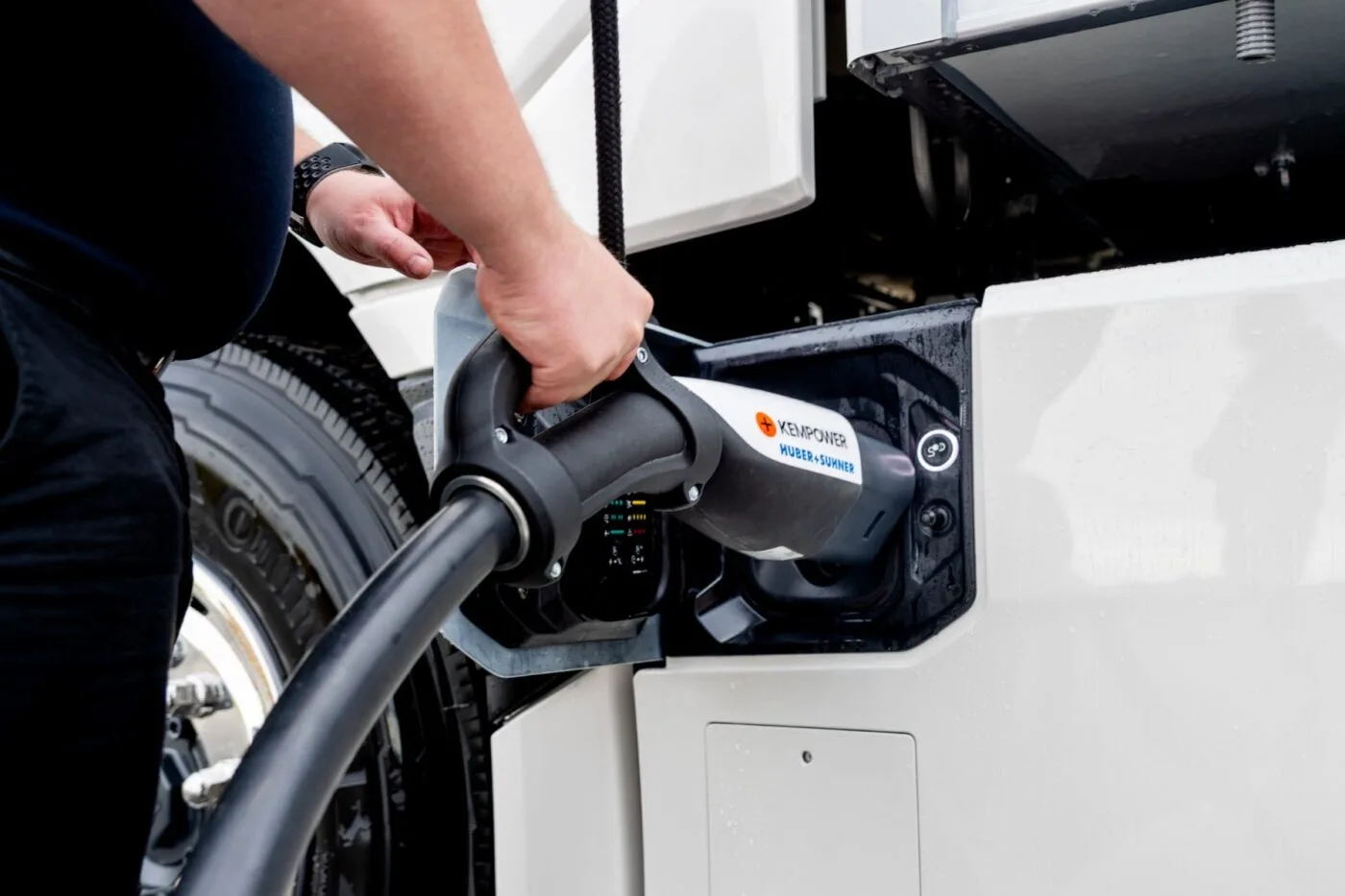
Germany will continue exempting battery-electric trucks from motorway tolls until 30 June 2031, following a Bundestag decision that extends the current exemption beyond its original end date of December 2025.
The move prevents zero-emission trucks from becoming subject to toll payments from January 2026, a scenario that would have resulted from existing legislation aimed at covering infrastructure costs.
The extension aligns with an EU-level decision adopted this autumn and provides a longer-term planning horizon for manufacturers and fleet operators. Germany and France currently remain the only European countries offering full toll exemptions for electric trucks, while ten other states apply partial or special rules.
See also: EU Parliament Backs Extension of Toll Exemption for Zero-Emission Trucks Until 2031
The European Automobile Manufacturers’ Association (ACEA) has urged more harmonisation across the bloc, warning that inconsistent national policies risk slowing the transition to zero-emission freight.
Thomas Fabian, ACEA’s Chief Commercial Vehicles Officer, criticised the fragmented policy landscape, saying, “The clock is ticking fast. We have just 56 months left for a tenfold increase of the market share of zero-emission trucks – from today’s 3.5% to at least 35% by 2030.
Why are at least 15 member states still not using this instrument? Europe has set the world’s most ambitious CO2 reduction targets for vehicle manufacturers, yet still largely fails to provide the necessary enabling conditions.”
See also: Europe’s Truck Market Slumps as Electric Buses Gain Ground; Switzerland Leads in EV Trucks
The Bundestag’s approval of the government’s ‘Fourth Act Amending Toll Regulations’ also introduces several administrative changes. Vehicles subject to tolls will be able to register via mobile devices, supplementing existing onboard technology. The law additionally requires the list of blocked vehicle devices to be transmitted to the Federal Office for Logistics and Mobility (BALM), and mandates a review—and potential reclassification—of vehicles in emissions classes 2 and 3 every six years from initial registration.
Industry reactions have been largely positive, though some stakeholders raised concerns. Kim Johanna B. Kohlmeyer, Head of the Berlin Office at MAN Truck & Bus, welcomed the swift passage of the toll exemption with broad political backing, but criticised the exclusion of logistics companies from newly approved industrial electricity pricing rules and tax relief under §9c of the Electricity Tax Act. “Berlin is moving in the right direction – but on many issues, the laws must finally be adapted to the new reality of commercial vehicles,” she said.
Source: heise.de, bundestag.de