
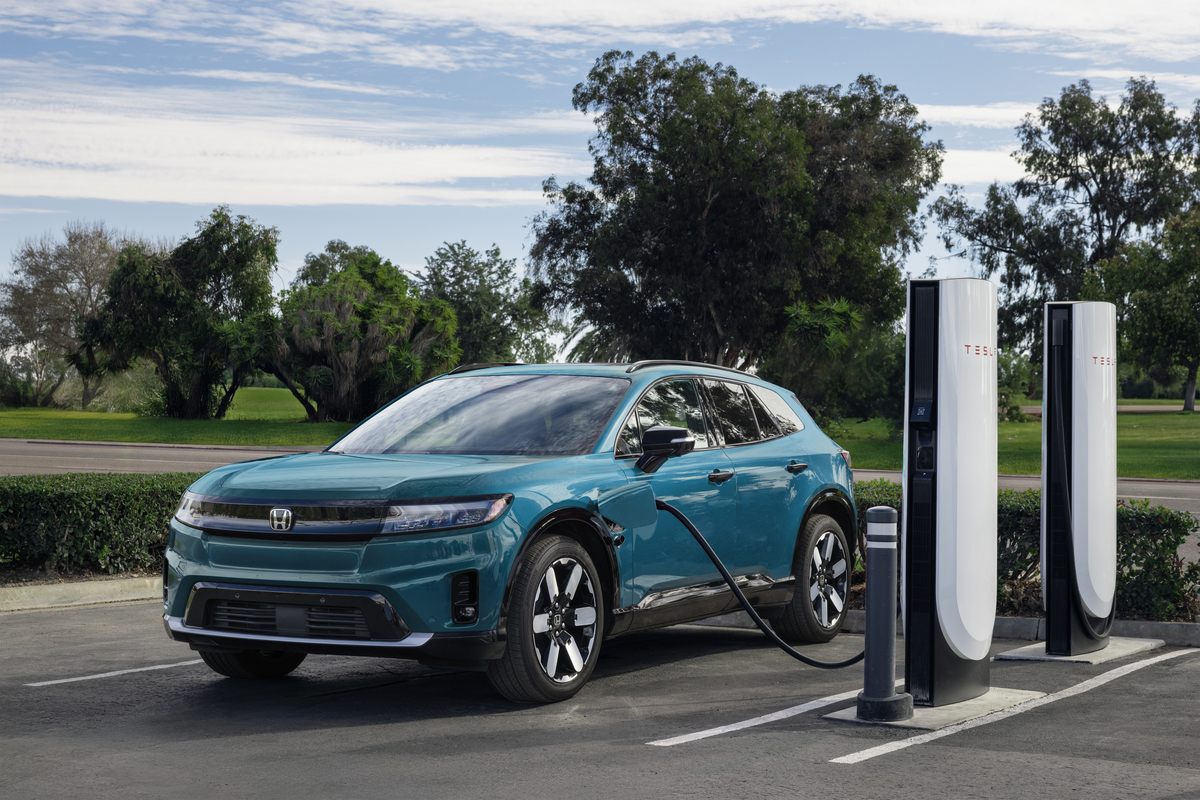
Honda Motor on Friday slashed its full-year operating profit forecast by 21% to 550 billion yen ($3.65 billion), hurt by one-time electric vehicle costs, declining sales in China and other Asian markets, and a shortage of parts equipped with Nexperia chips. The revised figure is down from the 700 billion yen projected earlier for the year through March 2026.
For the first half of the current financial year, Honda’s automobile division reported an operating loss, largely due to 224 billion yen in one-time expenses related to its electric vehicle business. The automaker also scaled back its global EV sales ratio target to 20% by 2030, compared with a previous goal of 30%. It now expects to sell 925,000 vehicles in Asia—including China—this fiscal year, down more than 10% from the prior target of 1.09 million.
See also: Honda Unveils Two Electric Prototypes at Japan Mobility Show 2025
Competition in Southeast Asia has intensified following the entry of Chinese automakers, forcing regional firms to offer higher incentives or cut prices, Executive Vice President Noriya Kaihara said on Friday. “We recognise that a fundamental review is necessary for Asia,” Kaihara said. “However, from this fiscal year through the next, there’ll be no particularly new models.”
The automaker’s lowered profit outlook also reflects a 150 billion yen impact from a shortage of chips sourced from Dutch firm Nexperia. Kaihara said Honda was working to restore operations, noting that the company plans “to resume normal production in the week of November 21” after output suspensions at a Mexican plant and adjustments in the U.S. and Canada. The supply disruption, he added, stemmed from Honda’s reliance on a single supplier for some components.
Honda expects to take a 385 billion yen hit from U.S. tariffs—65 billion yen less than previously estimated—while benefiting from strong hybrid demand in North America due to its high local production ratio. The company posted a 25% decline in operating profit for the July-to-September quarter to 194 billion yen, down from 257.9 billion yen a year earlier.
While Honda’s motorcycle division saw weaker sales in Vietnam, robust demand in Brazil and Thailand helped sustain profitability. Last month, Reuters reported that Japan’s embassy in Hanoi had warned the Vietnamese government that a proposed ban on petrol-powered motorbikes in the capital could threaten employment in industries tied to the country’s vast motorcycle market.