
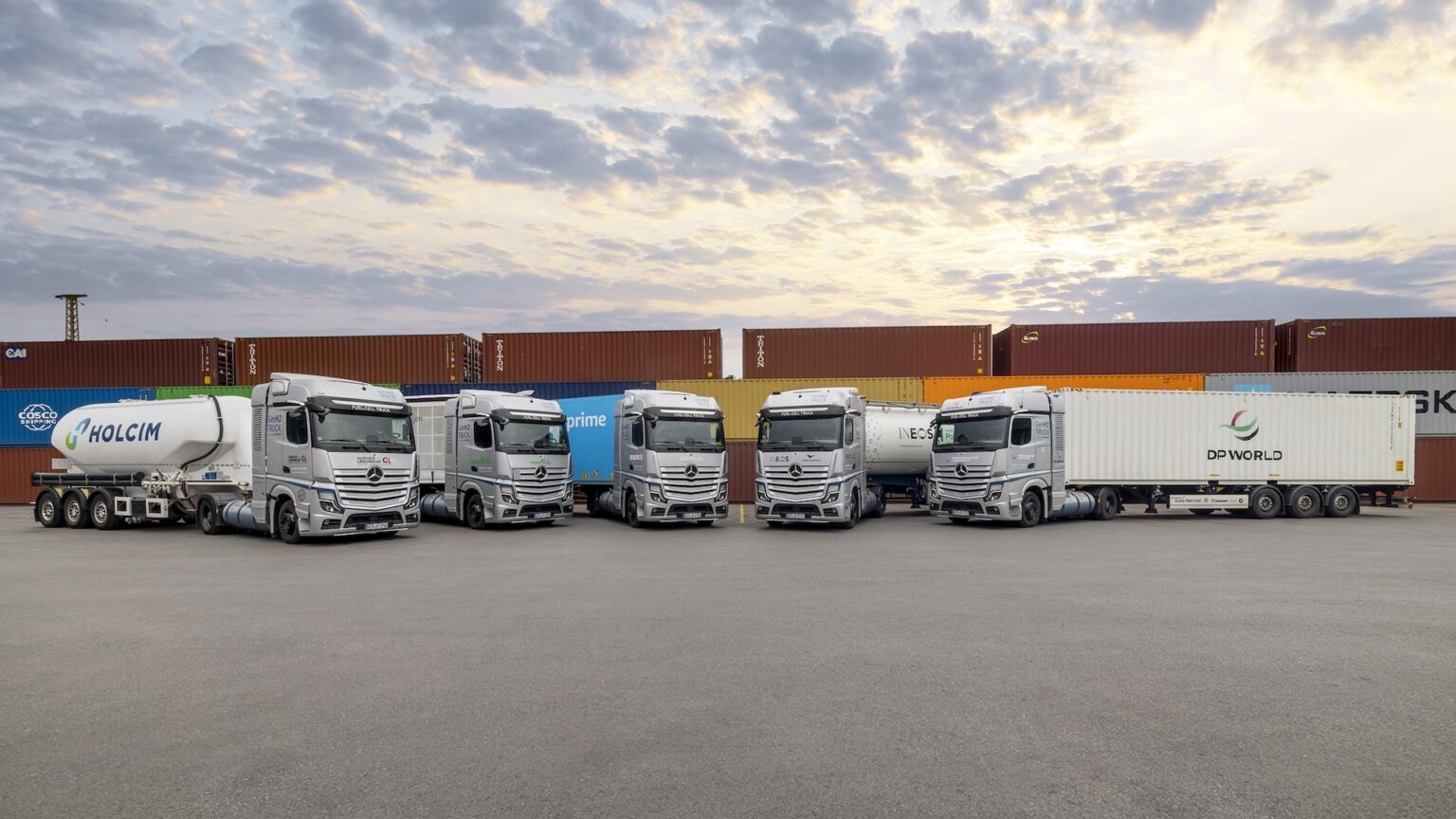
Daimler Truck said on Thursday its Mercedes-Benz GenH2 hydrogen prototypes have completed initial customer trials in Germany, covering more than 225,000 kilometers and demonstrating fuel consumption as low as 5.6 kg per 100 km, comparable to diesel in range and practicality.
Five prototypes were tested with partners including Amazon, Air Products, Holcim, INEOS Inovyn and Wiedmann & Winz, using about 15 tons of liquid hydrogen across 285 refueling sessions. The trucks, equipped with a 300 kW fuel cell from cellcentric and a 70 kWh buffer battery, achieved ranges of 1,000 km or more per refueling, with stop times of 10 to 15 minutes. Daimler Truck said an equivalent diesel fleet would have emitted roughly 154 tons of CO2 over the same distance.
Michael Scheib, Head of Entire Vehicle Development at Mercedes-Benz Trucks, said the trials provided critical data for refining the GenH2 for series production. Customer feedback cited reliability, driving comfort, and suitability for long-haul logistics, though some pointed to challenges with hydrogen costs and total cost of ownership. “The trucks consistently achieved ranges of over 1,000 kilometers while maintaining daily schedules,” said Amazon’s Fabian Duex. Holcim’s Roger Haschka called the technology “a milestone for decarbonization,” while cautioning on economics.
The trial underscored infrastructure bottlenecks, with Daimler Truck urging faster expansion of Europe’s hydrogen network. The company favors liquid hydrogen for its higher energy density, allowing up to 40 kg per tank. Daimler Truck will begin a second testing phase in late 2025 with additional partners and aims to start small-series GenH2 production in Woerth in 2026. The company maintains a dual-track strategy of battery-electric and hydrogen-powered trucks, though it expects widespread hydrogen operations only from the early 2030s due to infrastructure delays.