
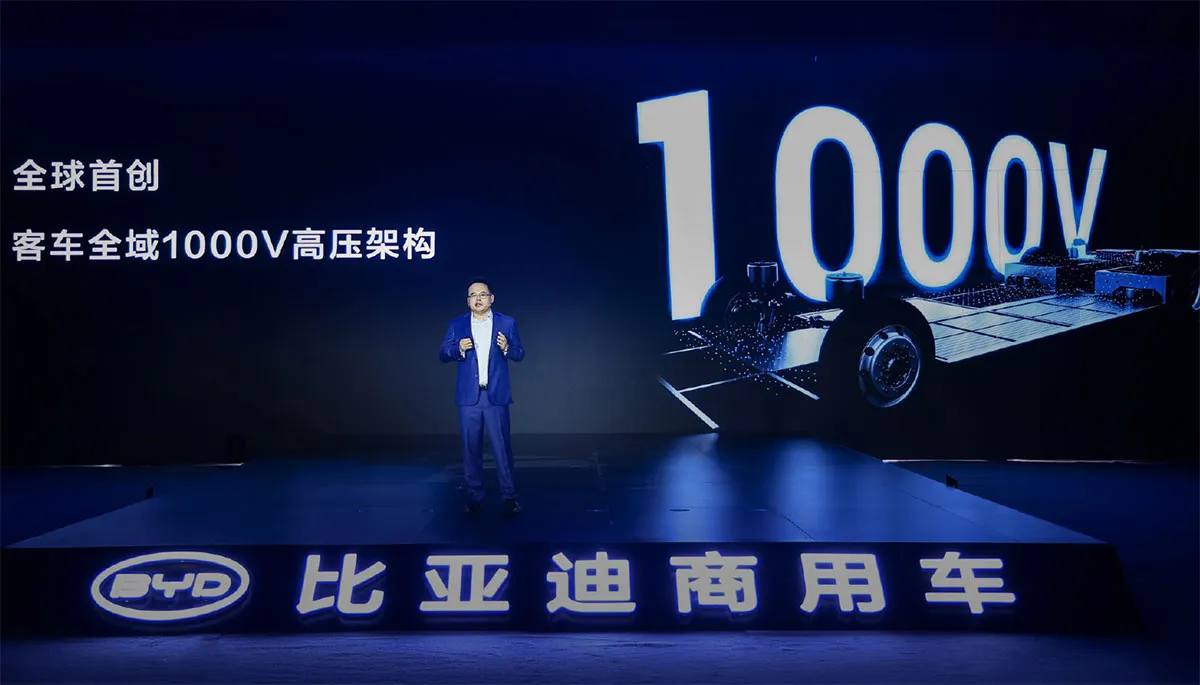
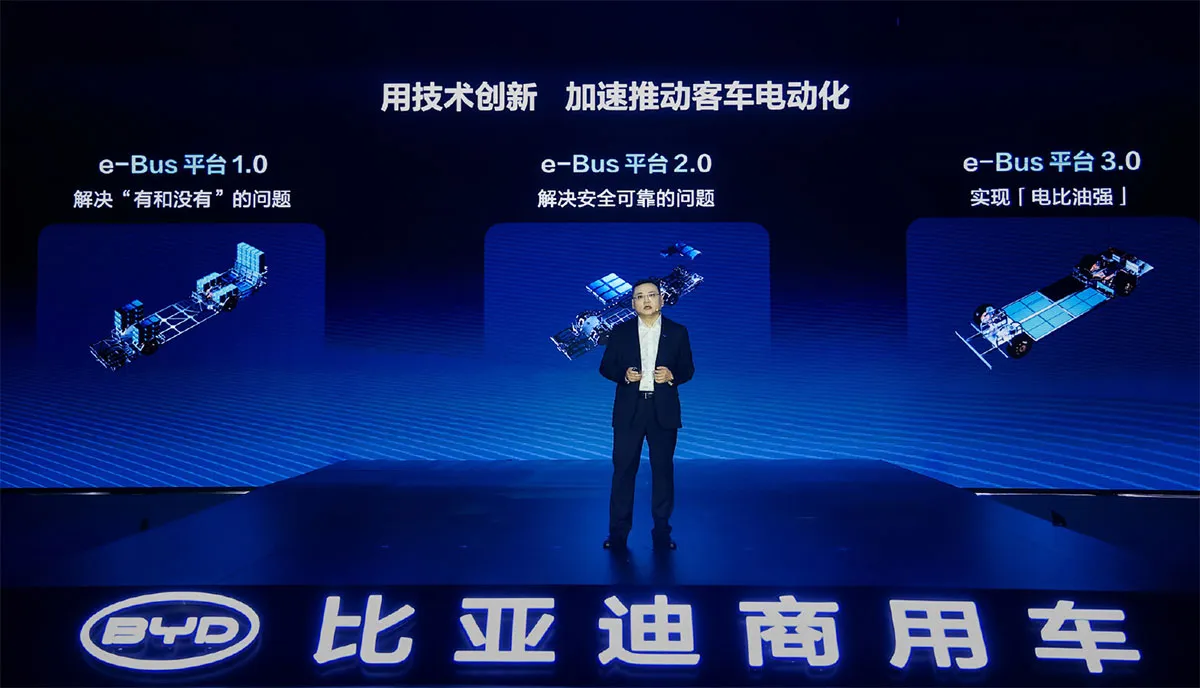
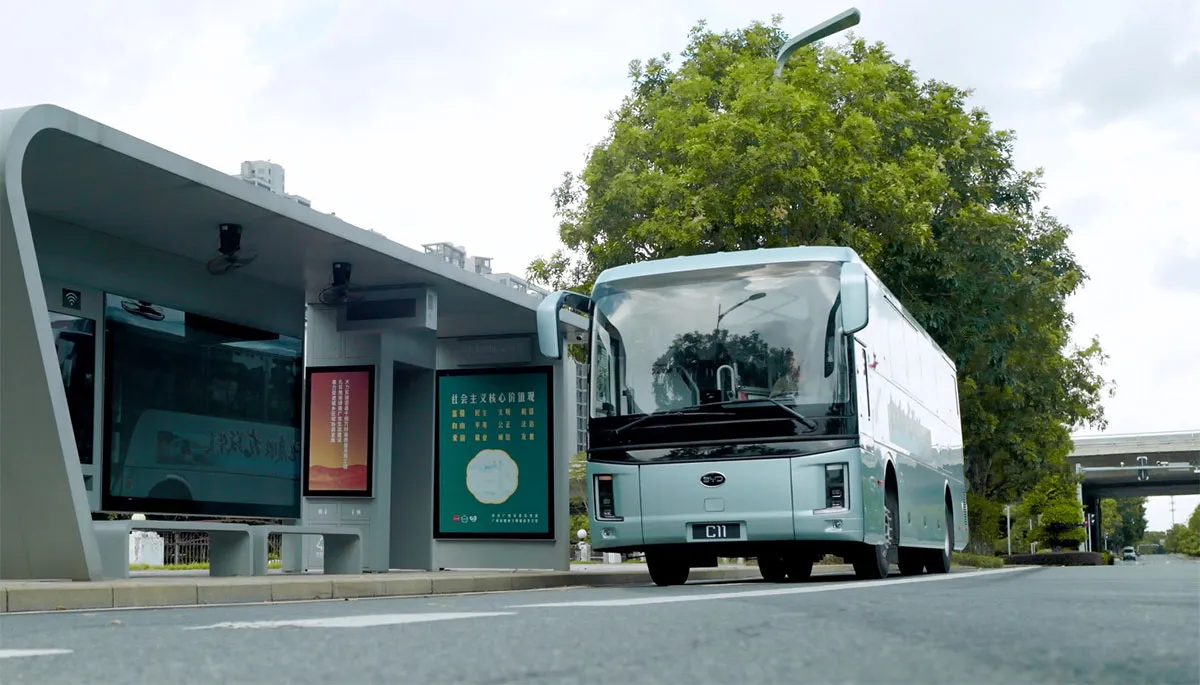
BYD has unveiled its latest electric bus architecture, introducing the e-Bus Platform 3.0 and a new C11 model built on the system. The move extends the Chinese automaker’s technology push from passenger cars to commercial vehicles.
The e-Bus Platform 3.0 incorporates BYD’s blade battery with cell-to-chassis (CTC) technology, embedding lithium iron phosphate (LFP) batteries into the vehicle’s frame to boost structural strength and free up cargo space.
The 1,000-volt high-voltage system, which the company said is a global first for buses, supports five battery configurations ranging from 184 kWh to 593 kWh. The new C11 bus, measuring 11 meters in length, delivers between 220 km and 730 km of range depending on configuration, with more than 400 km under full load and air conditioning.
The platform also introduces a suite of safety and comfort features, including BYD’s DiSus-A body control system, active suspension, and a high-speed tire blowout stability system capable of reacting within milliseconds at up to 100 km/h. A Driver Disability Assistance System 2.0 enables passengers to activate an emergency stop if the driver suffers a health incident.
BYD, the world’s largest new energy vehicle maker, has invested more than RMB 14 billion ($2 billion) in commercial vehicle R&D since 2008 and now employs over 7,000 research staff. The company said the launch of e-Bus Platform 3.0 represents its third major iteration of bus architecture and underscores its long-term commitment to electrifying public transport.